1. Feature Overview
LeadSquared Pulse is an AI-powered assistant embedded directly into LeadSquared. With Pulse, you can perform CRM actions, retrieve information, and get answers to product questions through natural-language prompts, without navigating to specific pages or opening API documentation.
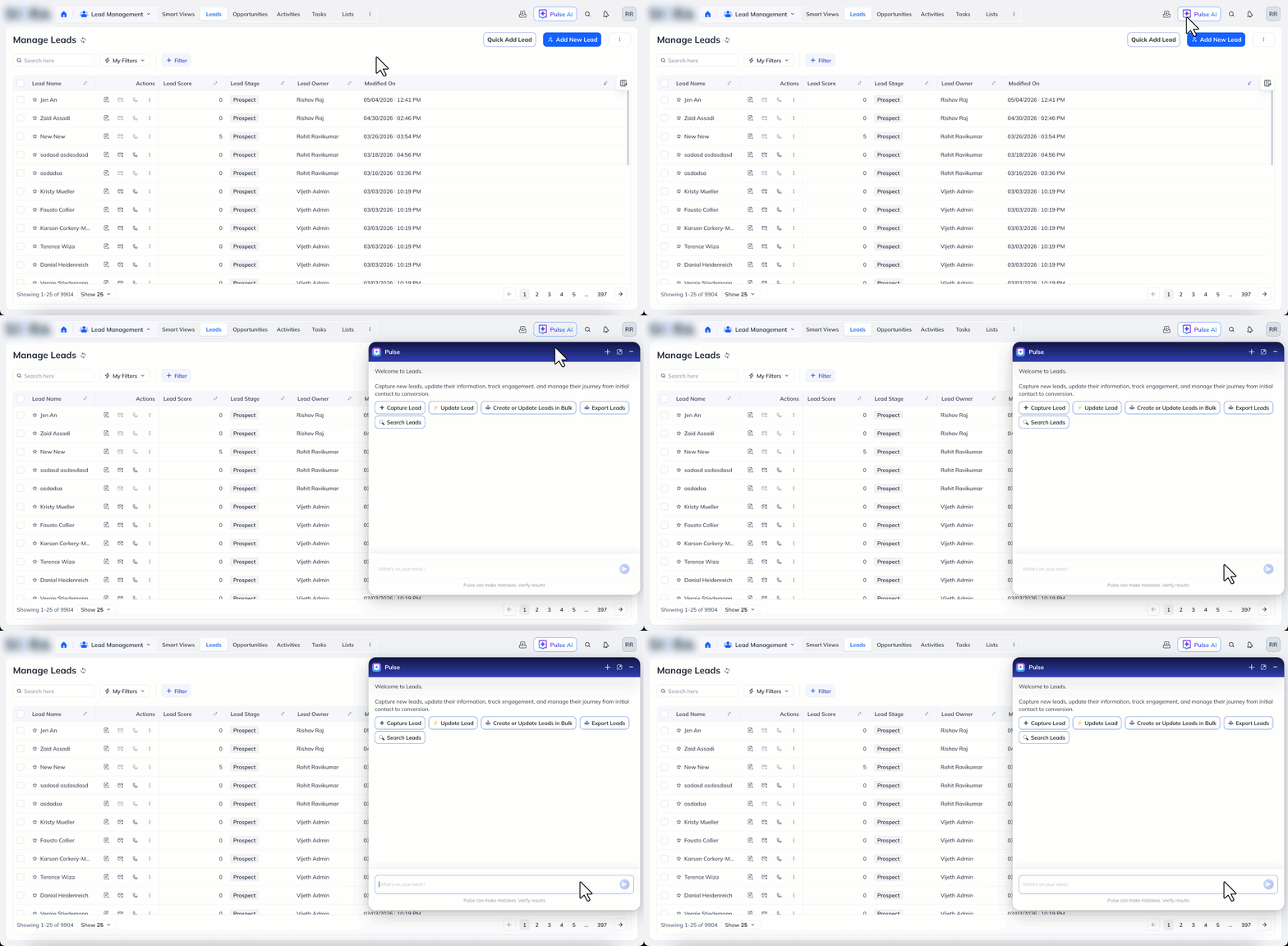
Pulse is available as a chat panel that opens from the Pulse AI button in the top navigation bar. It is context-aware, which means the actions it suggests change based on the page you are on. For example, on the Leads page, Pulse surfaces lead-related actions such as Capture Lead, Update Lead, and Search Leads. On the Opportunities page, it surfaces opportunity-related actions, and so on.
Pulse currently supports 84 prompt-driven actions across four CRM modules: Lead Management, Task Management, Opportunity Management, and Activity Management. It also answers product questions by querying the LeadSquared help site and returning answers within the chat panel.
2. Prerequisites
- You have access to a LeadSquared account where Pulse has been enabled. To enable it on your account, contact support@leadsquared.com.
- Your user role has the necessary permissions to perform the underlying CRM actions. Pulse respects the same permissions that govern the corresponding API calls and UI actions. For instance, if your role cannot delete leads, Pulse will not be able to delete leads on your behalf.
- You are signed in to LeadSquared. Pulse uses your session to authenticate API calls.
3. How It Works
Pulse interprets your prompt, identifies the intent, and maps it to the corresponding LeadSquared API.
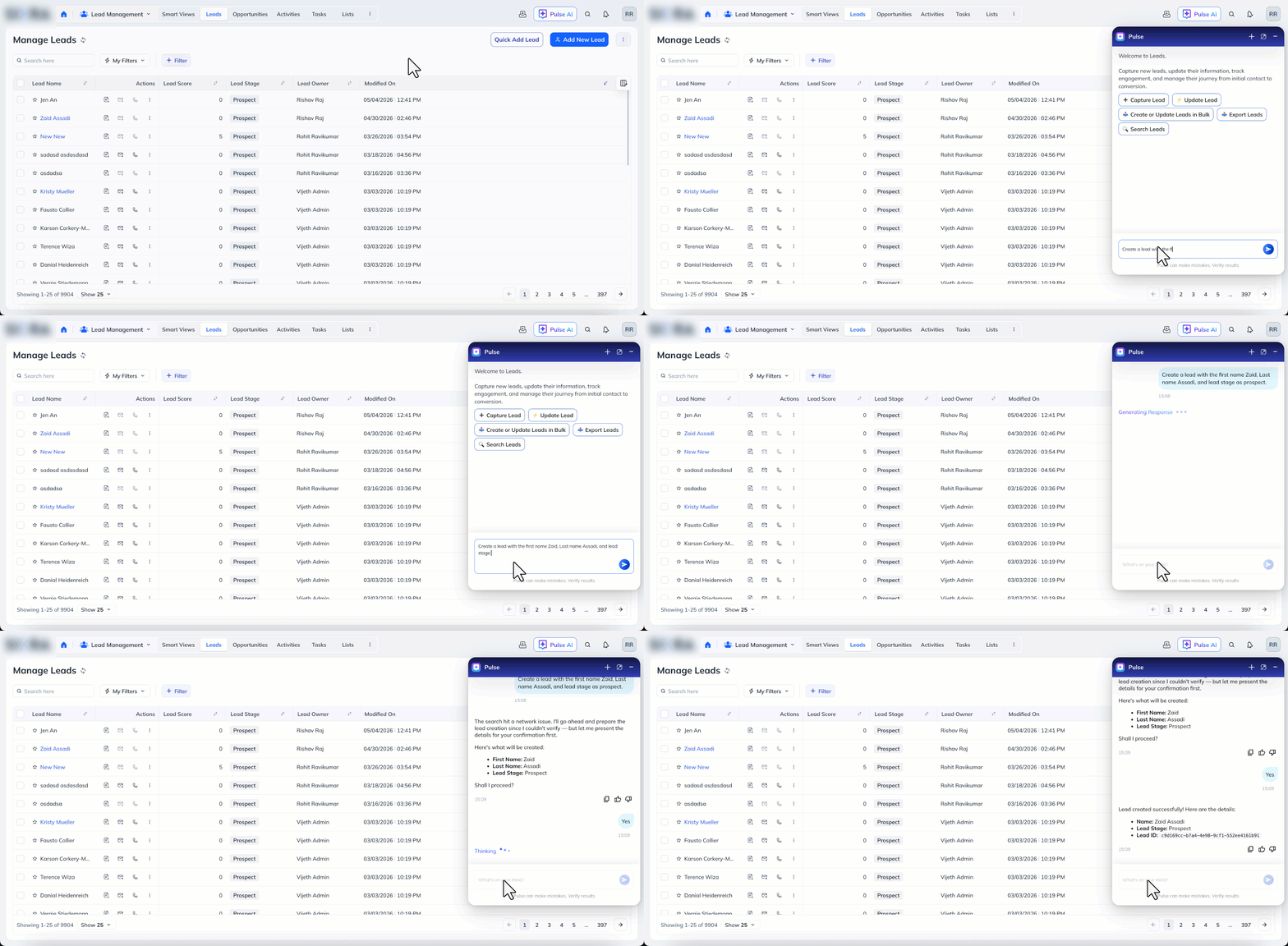
For example, if you type create a lead with first name Jen and last name An, Pulse creates the lead and returns the lead ID.
Destructive operations such as deleting a lead, task, opportunity, or activity always require explicit confirmation in the chat before execution.
Pulse also recognizes the page context when you open it. If you open Pulse on the Leads page without typing anything, it greets you with a welcome message and surfaces quick-action buttons for the most common lead operations. Clicking a quick-action button starts the prompt for you.
4. Launch Pulse
To launch Pulse:
- Sign in to LeadSquared.
- On any page, click the Pulse AI button in the top navigation bar. The Pulse chat panel opens on the right side of the screen.
- Type your prompt in or click one of the quick-action buttons surfaced for the current page.
- To start a new chat, click the plus (+) icon on the top-left corner of the panel.
- To close Pulse, click the minimize (–) icon in the top-right corner of the panel.
5. Use Pulse to Run an Action
To run a CRM action through Pulse:
- Open Pulse.
- Type a natural-language prompt describing the action. For example:
- Create a lead with first name and a last name.
- Get all tasks for a specific lead ID.
- Update opportunity status to Won for a specific opportunity ID.
- Pulse executes the action and returns a confirmation message with the record ID.
If Pulse is missing a required field, it asks you for the value before proceeding.
6. Use Pulse to Ask Product Questions
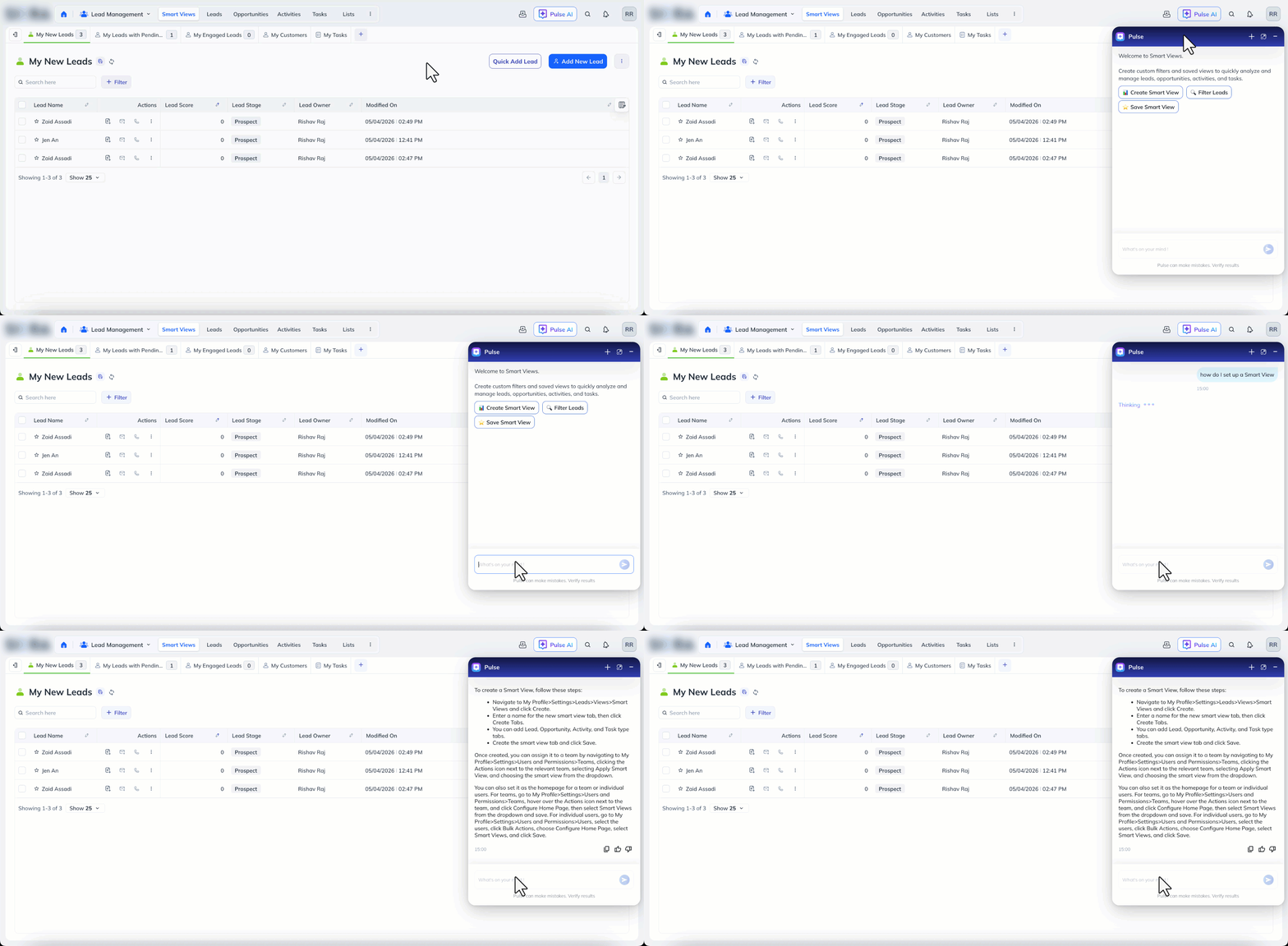
In addition to running actions, Pulse can answer questions about LeadSquared features by querying the help site.
To ask a product question:
- Open Pulse.
- Type your question in plain language. For example, how do I set up a Smart View, or what is the difference between a lead and a prospect.
- Pulse returns an answer summarized from the relevant help articles.
7. Supported Actions
Pulse supports 84 prompt-driven actions across four modules. The sections below list each supported action with a brief description. Each action maps to a LeadSquared API endpoint. For full request and response details, refer to the API documentation.
7.1 Lead Management
Lead Management covers 25 actions for creating, retrieving, updating, and deleting leads and lead notes.
Create
| Action | Description |
|---|---|
| Capture Leads | Creates or updates a lead from a lead source. |
| Create a Lead | Creates a new lead with attribute-value pairs. |
| Create Leads in Bulk | Creates up to 50 leads in a single call. |
| Create or Update a Lead | Creates a new lead, or updates an existing one matched by email or phone. |
| Create a Lead and Activity | Creates a lead and posts an activity in a single call. |
| Create a Note | Creates a note on a lead, with an optional attachment. |
Retrieve
| Action | Description |
|---|---|
| Get Metadata | Returns the schema and metadata for all lead fields. |
| Get a Lead Field’s Properties | Returns the properties of a specific lead field, identified by its schema name. |
| Get a Lead by Email | Retrieves a lead by email address. |
| Get a Lead by Phone Number | Retrieves a lead by phone number. |
| Quick Search Leads | Quick-searches leads using a field key and value. |
| Search Leads by Criteria | Searches leads using filter criteria with paging. |
| Get Leads by Date Range | Retrieves leads modified within a date range. |
| Get a Lead’s Notes | Retrieves all notes for a given lead. |
| Get Info on Merged Child Leads | Returns merged child lead information for a given audit ID. |
Update
| Action | Description |
|---|---|
| Update a Lead | Updates field values on an existing lead. |
| Update Leads in Bulk | Updates a single field across multiple leads, identified by their IDs. |
| Merge Leads | Merges a child lead into a master lead. The child lead is deleted. |
| Mark Lead Invalid | Marks a lead’s email address as invalid. |
| Update a Note | Updates the text of an existing note on a lead. |
| Update Mailing Preferences | Updates the mailing preferences attribute on a lead. |
| Add Values to a Lead Drop-down Field | Adds new option values to a lead dropdown field. |
| Remove Values from a Lead Drop-down Field | Removes option values from a lead dropdown field. |
Delete
| Action | Description |
|---|---|
| Delete a Lead | Permanently deletes a lead by ID. |
| Delete a Note | Permanently deletes a note by ID. |
7.2 Task Management
Task Management covers 23 actions for creating, retrieving, updating, and deleting tasks, including To-Dos and appointments.
Create
| Action | Description |
|---|---|
| Create an Appointment | Creates a meeting or appointment task. |
Retrieve
| Action | Description |
|---|---|
| Get List of Task Types Names | Returns a list of all task type names. |
| Get List of Task Types | Returns full task type details. |
| Get a Task by Id | Retrieves a single task by its ID. |
| Get Tasks by Lead Id | Retrieves all tasks linked to a lead. |
| Get Tasks by Opportunity Id | Retrieves all tasks linked to an opportunity. |
| Get Reminders | Returns reminder tasks for the authenticated user. |
| Get Available Slots by Search Criteria | Returns available appointment slots filtered by user search criteria. |
| Get Available Slots by Id | Returns available slots for given user IDs. |
| Get Available Slots by Email Address | Returns available slots for users by email address. |
| Get Appointments by Search Criteria | Returns appointments filtered by user search criteria. |
| Get Appointments by User Id | Returns appointments for given user IDs. |
| Get Appointments by Email Address | Returns appointments for users by email address. |
| Get To-Dos by User Id | Returns To-Do tasks for given user IDs. |
| Get To-Dos by Email Address | Returns To-Do tasks for users by email address. |
Update
| Action | Description |
|---|---|
| Update a Task | Updates fields on an existing task. |
| Bulk Update Appointment Timings | Reschedules multiple appointments to new times. |
| Bulk Update Appointment Timings by Minutes | Shifts appointment times forward by a specified number of minutes. |
| Mark a Task Complete | Marks a task as completed. |
| Cancel Appointments in Bulk | Cancels multiple appointments by their IDs. |
Delete
| Action | Description |
|---|---|
| Delete a Task | Deletes a task by ID. |
To-Do
| Action | Description |
|---|---|
| Get To-Dos by Search Criteria | Retrieves To-Do tasks filtered by user search criteria, date range, and pagination. The fromDate and toDate parameters are required, and the date range cannot exceed 100 days. |
Appointment
| Action | Description |
|---|---|
| Bulk Update Appointment Timings by Hours | Reschedules a list of tasks by shifting their appointment times by a specified number of hours. |
7.3 Opportunity Management
Opportunity Management covers 12 actions for creating, retrieving, updating, and deleting opportunities, and for posting activities on opportunities.
Create
| Action | Description |
|---|---|
| Add Opportunities in Bulk | Adds opportunities to multiple leads in bulk, matched by a lead field. |
Retrieve
| Action | Description |
|---|---|
| Get Metadata of an Opportunity Type | Returns the fields and schema for a given opportunity type code. |
| Get Opportunity Types | Returns all opportunity types configured in the account. |
| Get an Opportunity by Id | Retrieves details of a specific opportunity by ID. |
| Get Opportunities by Lead Id | Retrieves all opportunities for a specific lead. |
| Opportunity Advanced Search | Searches opportunities using advanced filter criteria. |
| Get Tasks by Opportunity Id | Retrieves tasks linked to an opportunity. |
Update
| Action | Description |
|---|---|
| Update an Opportunity | Updates fields on an existing opportunity. |
| Bulk Update Opportunities | Updates multiple opportunities by their IDs. |
| Post an Activity on an Opportunity | Posts a custom activity on an opportunity. |
| Post Bulk Activities on Opportunities | Posts activities on multiple opportunities. |
Delete
| Action | Description |
|---|---|
| Delete an Opportunity | Deletes an opportunity by ID. |
7.4 Activity Management
Activity Management covers 24 actions for creating, retrieving, updating, and deleting activities, as well as managing activity attachments.
Create
| Action | Description |
|---|---|
| Post an Activity on a Lead | Posts a custom activity on a lead. |
| Post Activities on Leads in Bulk (Lead Id) | Posts activities on multiple leads using their IDs. |
| Post Activities on Leads in Bulk (Unique Lead Field) | Posts activities on leads identified by a unique field, such as email. |
| Post an Activity on an Opportunity | Posts a custom activity tied to both a lead and an opportunity. |
| Create a Lead and Activity | Creates a lead and posts an activity in a single call. |
| Create a Custom Activity Type | Creates a new custom activity type in the account. |
| Attach a File to a Custom or Sales Activity | Attaches a file URL to an existing activity. |
Retrieve
| Action | Description |
|---|---|
| Get List of Activity Types | Returns all activity types configured in the account. |
| Get Activity Details | Returns full details of a specific activity by ID. |
| Get Activity Type Details | Returns the field schema and settings for a specific activity type code. |
| Activity Advanced Search | Searches activities using an advanced JSON search string. |
| Get Activities of a Lead | Retrieves all activities posted on a lead. |
| Get Activities of an Opportunity | Retrieves activities linked to a specific opportunity. |
| Get Activities by Date Range | Retrieves activities modified within a date range. |
| Get Activities by Activity Event | Retrieves activities for a specific event code within a date range. |
| Get Custom Fields of an Activity | Retrieves custom field values for a specific activity. |
| Get Custom Activity Drop-down Values | Returns dropdown option values for a custom activity field. |
| Get Activities by Lead Reference | Retrieves activities referencing a lead, filtered by event. |
Update
| Action | Description |
|---|---|
| Update Activity | Updates fields on an existing custom activity. |
| Add Values to Custom Activity Drop-down Field | Adds new option values to a custom activity dropdown field. |
| Remove Values from Custom Activity Drop-down Field | Removes option values from a custom activity dropdown field. |
Delete
| Action | Description |
|---|---|
| Delete Activities of Lead | Deletes activities on a lead within a specified date range. |
| Delete Custom Activity by Id | Deletes a specific custom activity by its ID. |
Attachments
| Action | Description |
|---|---|
| Get Attachments of an Activity | Retrieves all attachments associated with a specific prospect activity by its ID. |
8. Tips for Writing Effective Prompts
To get the best results from Pulse, keep the following in mind when writing prompts:
- Be specific – Include the field names and values you want Pulse to use. For example, create a lead with first name Jen, last name An, and email jen.an@example.com is clearer than create a lead for Jen.
- Use IDs where possible – When updating, retrieving, or deleting a specific record, include the record ID. This avoids ambiguity when multiple records match the same name or email.
- Confirm before destructive actions – Pulse always asks for confirmation before deleting a record. Read the summary carefully before replying Yes.
- Break complex requests into steps – If you need to perform multiple actions, run them one at a time so you can review each result.
- Use the quick-action buttons – On context-aware pages such as Leads, Opportunities, and Activities, the quick-action buttons start your prompt with the correct phrasing.
9. Limitations
Note the following when using Pulse:
- Pulse honors LeadSquared API rate limits. Bulk operations are subject to the same thresholds as direct API calls. Refer to the API rate-limit documentation for details.
- Pulse can make mistakes. Always verify the results displayed in the chat panel, especially for bulk and destructive operations.
- Pulse executes actions using your user session, so all actions are logged against your user account in the audit trail.
Any Questions?
Did you find this article helpful? Please let us know any feedback you may have in the comments section below. We’d love to hear from you and help you out!