


Get Started

Sales Suite
Field Ops
Marketing
Service CRM
Integrations & Apps
FloStack
Set Up Your Workspace on FloStack

1. Feature Overview
This article will help Administrators set up their workspace settings on FloStack. Workspace settings let the administrator configure the company profile, add members, define lead fields, create routing and scheduler forms, and integrate a CRM with FloStack.
2. Prerequisites
- You must be an Admin user on FloStack to configure workspace settings.
- To learn more about FloStack (www.flostack.io), and enable it on your account, contact flostack@leadsquared.com.
3. Workspace Settings
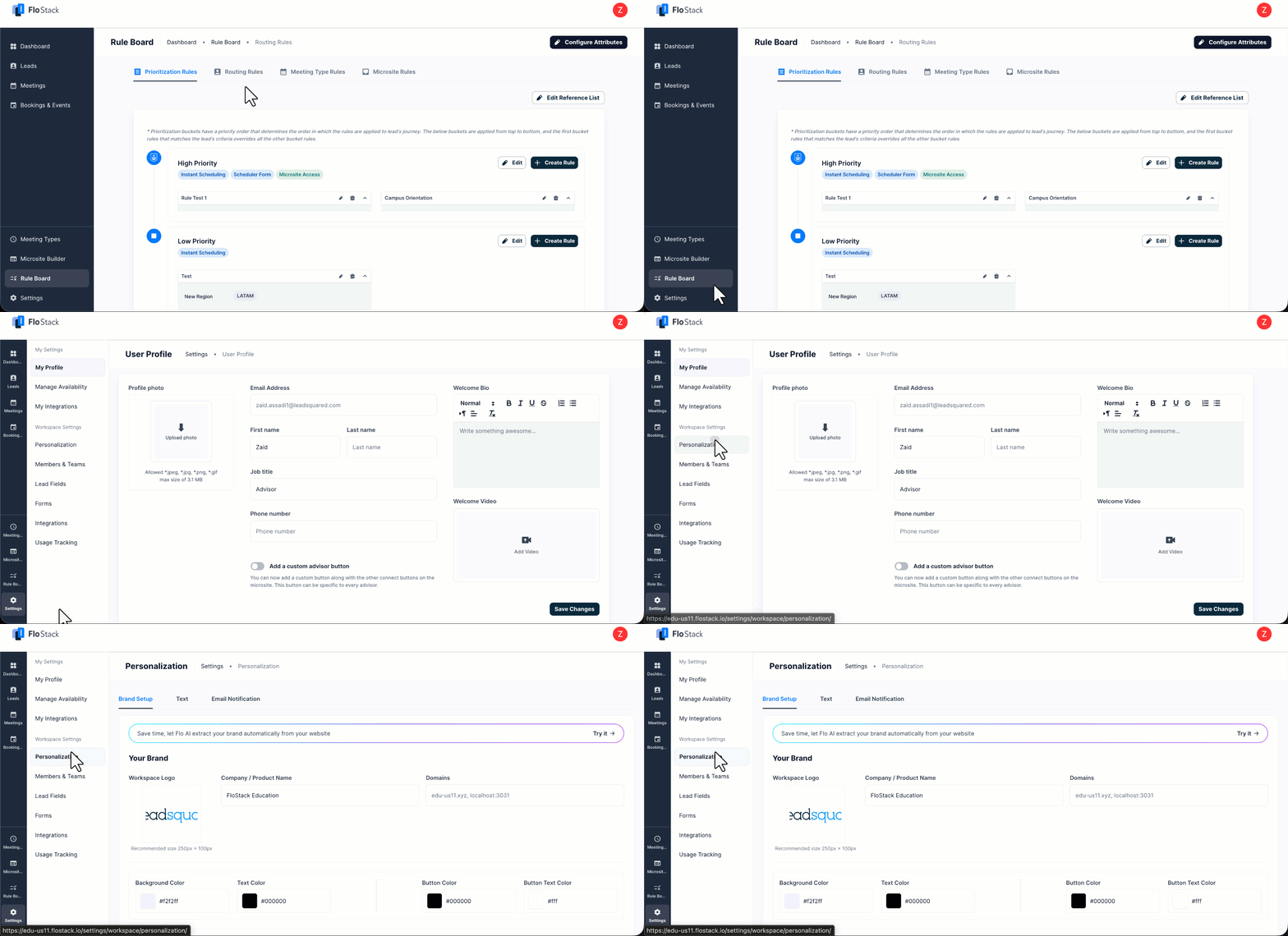
To find your workspace settings, navigate to Settings>Workspace Settings.
The following settings are available:
- Personalization – Configure your company logo, brand colors, and customer-facing text.
- Members & Teams – Add members, assign roles, and group members into teams.
- Lead Fields – Define the attributes FloStack captures for a lead.
- Forms – Create Routing Forms to capture leads from your website, and a Scheduler Form to collect additional details during booking.
- Integrations – Connect your CRM to FloStack.
4. Personalization
The Personalization section allows you to customize your company profile
4.1 Brand Setup
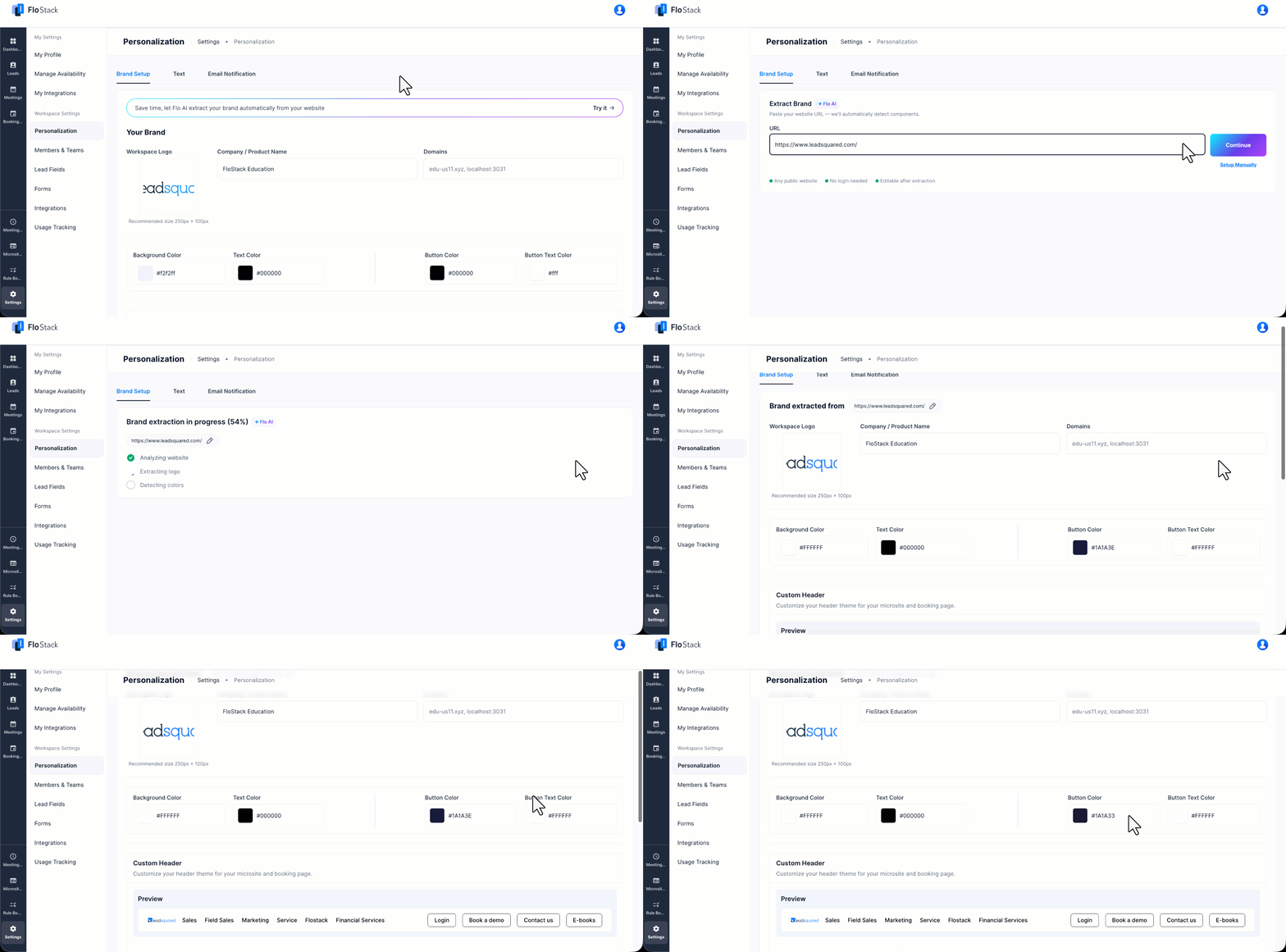
Instead of uploading your branding manually, you can set up your brand automatically from your website. In the Personalization section, enter your website URL, and FloStack fetches your logo, brand color, text color, and content from the site, then applies them across your FloStack experience. You can edit or override any of these details after they’re imported.
4.2 Text
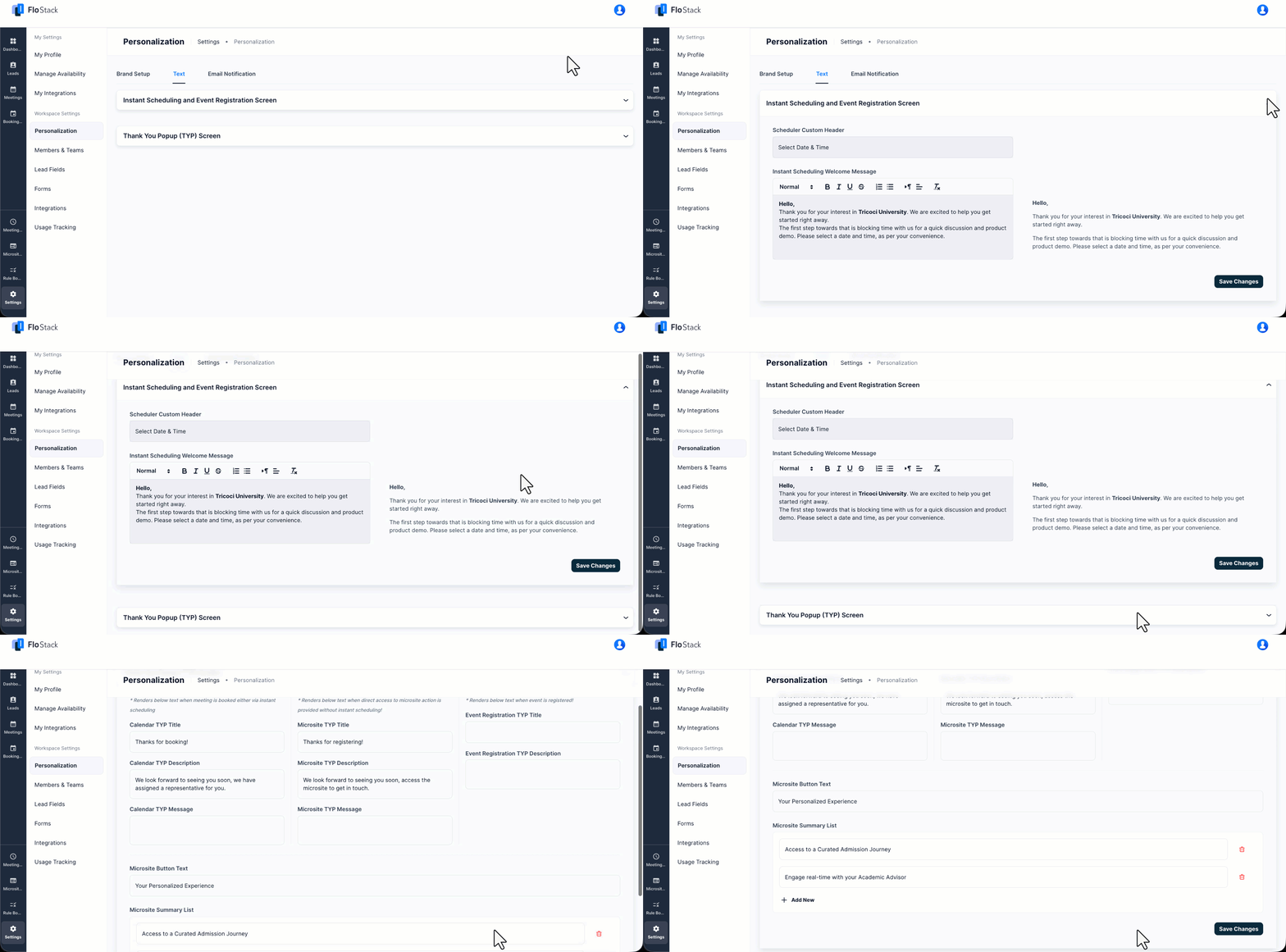
Configure the messages displayed to leads and customers during call scheduling, event registration, and on the Thank You Popup.
4.3 Email Notification
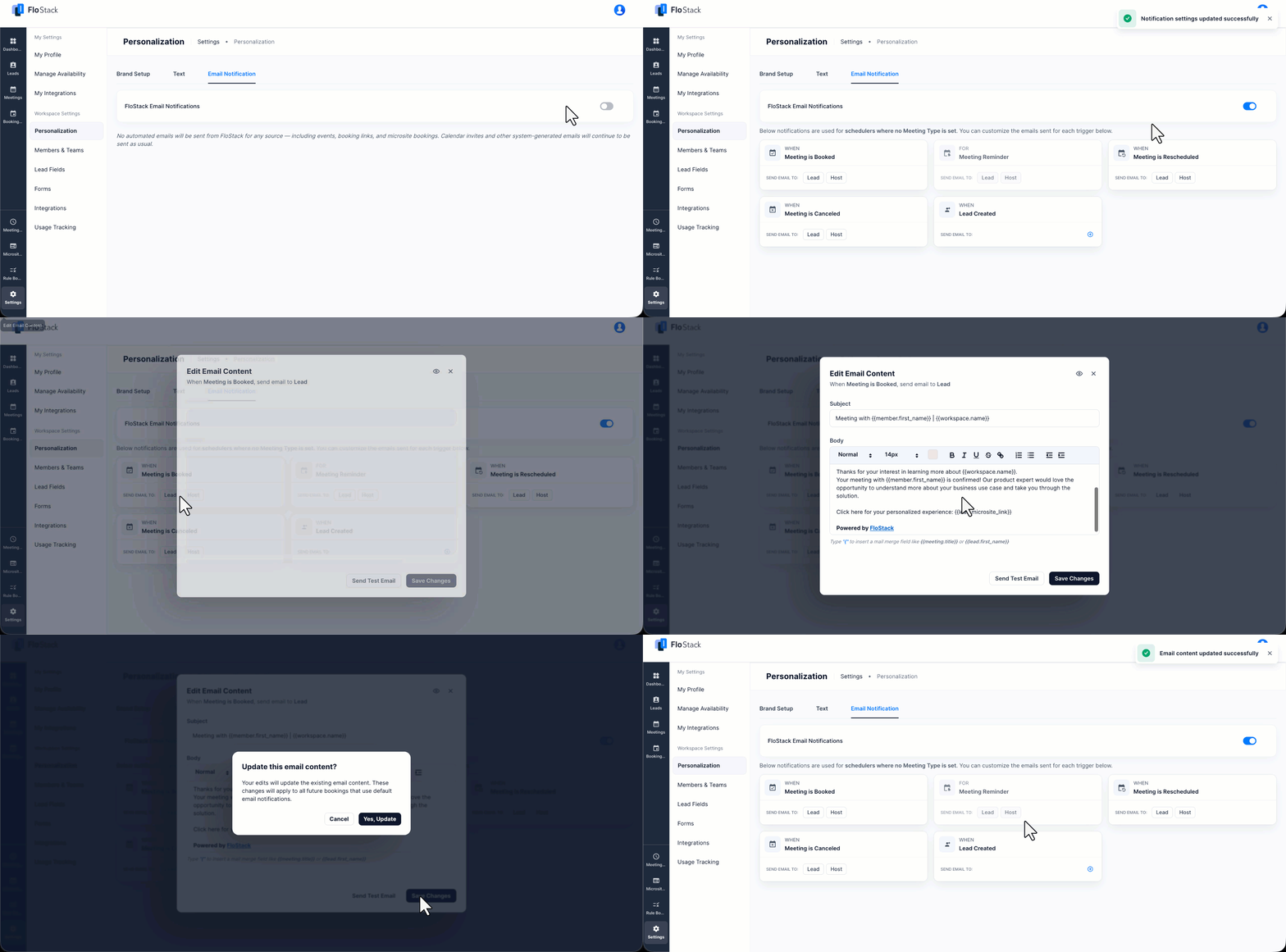
Email notifications are based on templates that you can set up. FloStack sends automatic emails to leads and hosts at key points in the meeting lifecycle. The templates on this tab are used for schedulers where no meeting type is set. If a scheduler uses a meeting type, FloStack uses the notification templates configured on that meeting type instead. To learn more, refer to Meeting Types on FloStack.
5. Members & Teams
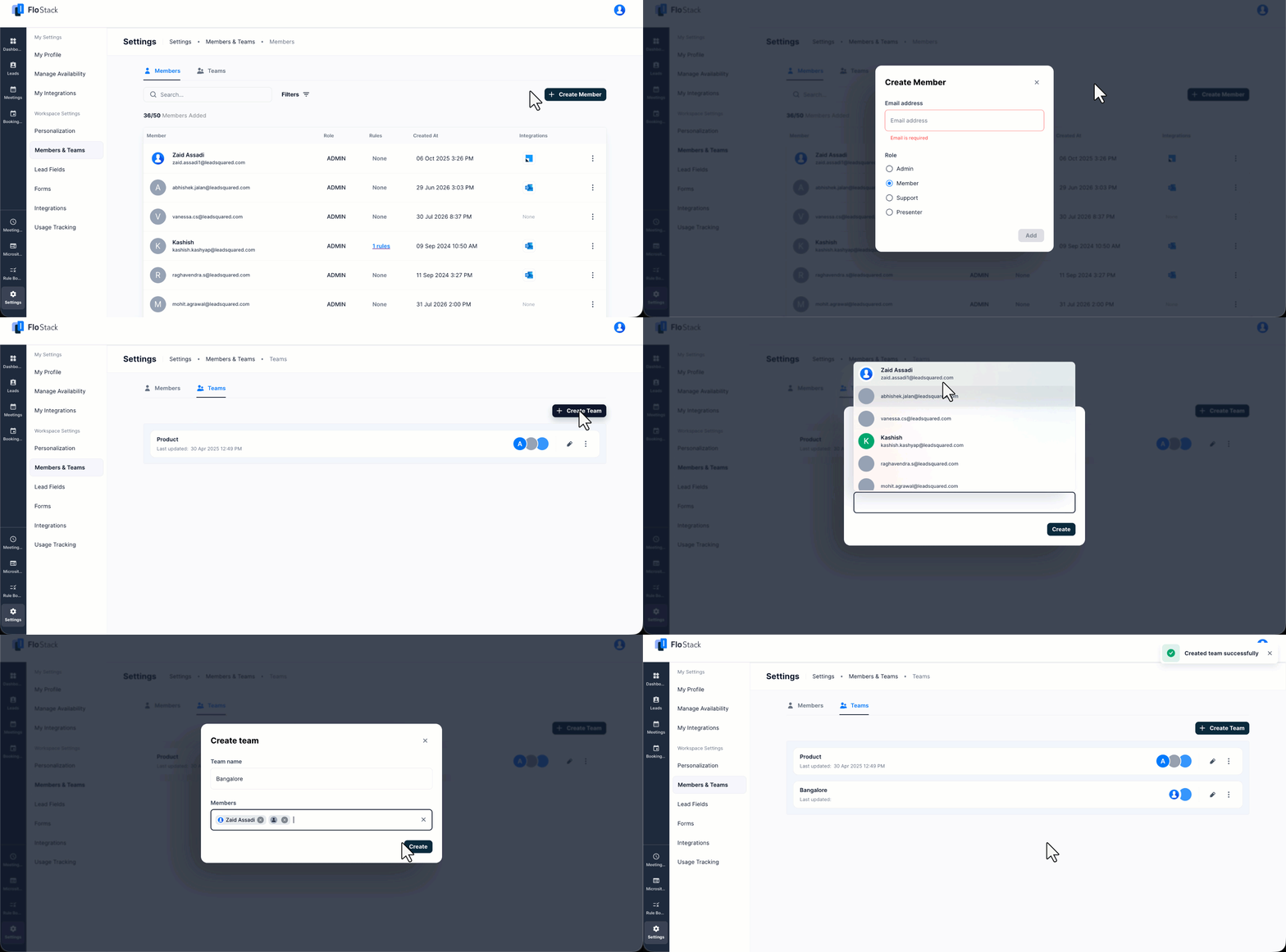
Create members for your FloStack account; you can even assign them an administrator role. Once the members are set up, you can create different teams and assign specific members to each team.
6. Lead Fields
Lead Fields is where you define every attribute FloStack can capture for a lead. You create a field once at the workspace level, and it becomes available in Routing Forms, Scheduler Forms, and Rule Board conditions.
This keeps the meaning of each attribute consistent across your workspace. Earlier, forms mapped values to generic custom attributes, so the same attribute could refer to a program on one form and a campus on another, which produced unreliable rule matches. A lead field has one meaning everywhere it is used.
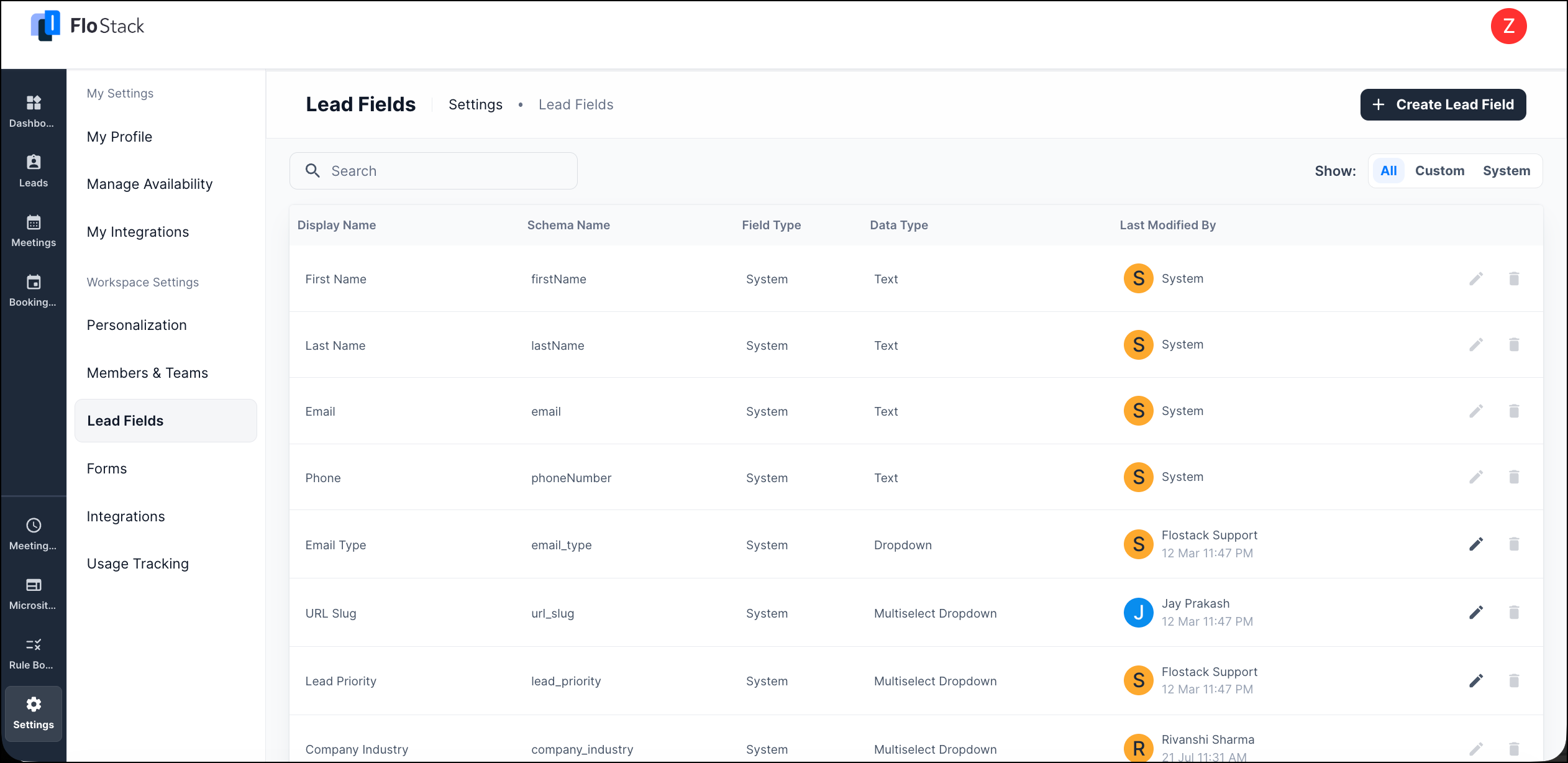
To view your lead fields, navigate to Settings>Workspace Settings>Lead Fields.
The Lead Fields page shows the following columns:
- Display Name – The name shown to your team inside FloStack.
- Schema Name – The internal name used for form mapping and mail merge.
- Field Type – Whether the field is a System field or a Custom Only Custom fields can be added to a Scheduler Form.
- Data Type – The data input type configured for the field.
- Last Modified By – The member who last updated the field, and when.
Use the Search box to find a field. Under Show, click All, Custom, or System to filter the list.
6.1 Create a Lead Field
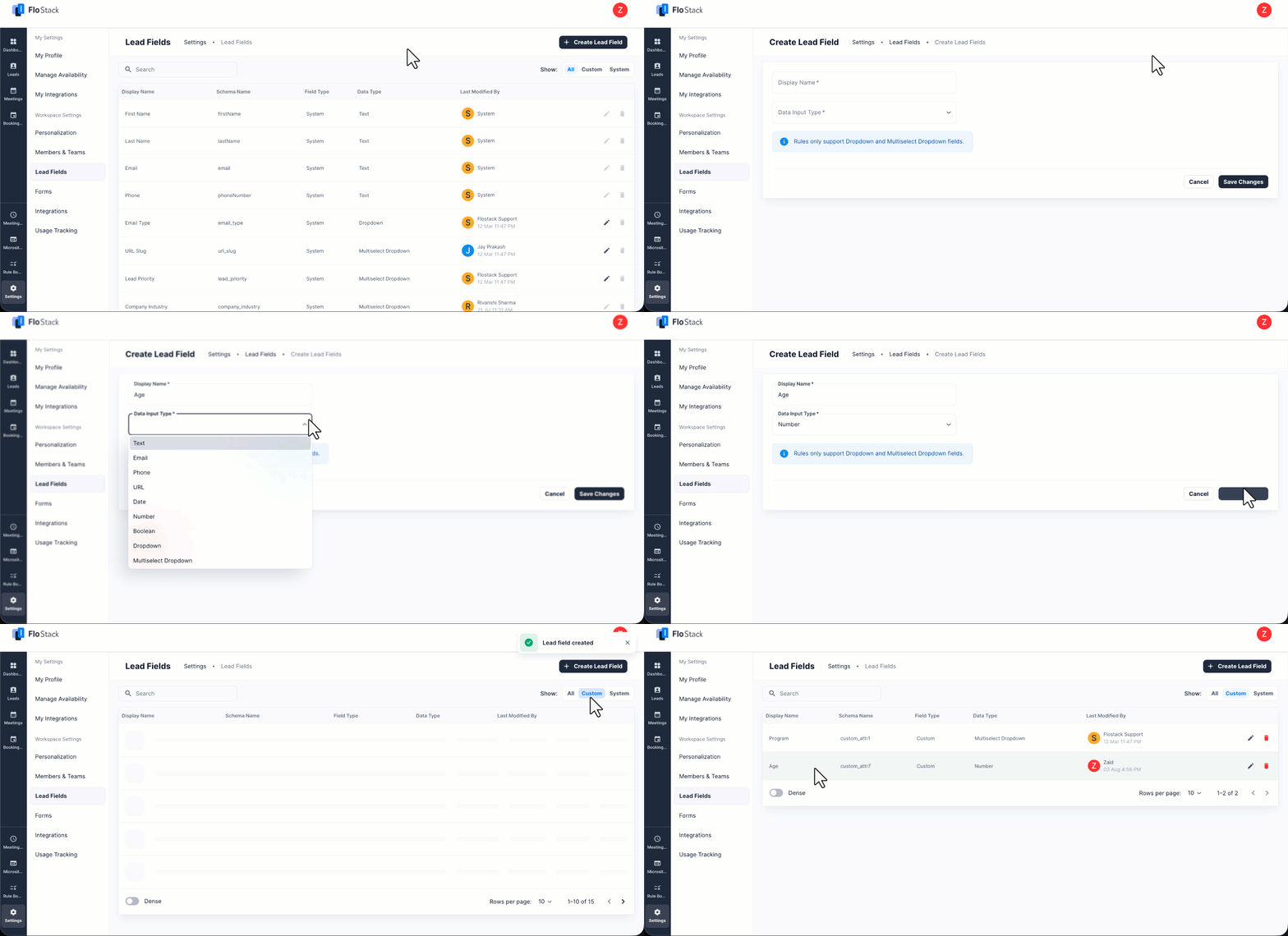
To create a lead field:
- Navigate to Settings>Workspace Settings>Lead Fields.
- Click Create Lead Field.
- Enter a Display Name.
- On the Data Input Type drop-down, select a data type.
- For Dropdown and Multiselect Dropdown fields, add the options leads can select.
- Click Save Changes.
Data Input Types
| Data Input Type | Use it to capture |
| Text | Free-form text, such as a city name or a comment. |
| An email address, with format validation. | |
| Phone | A phone number. |
| URL | A web address. |
| Date | A calendar date, such as a date of birth. |
| Number | A numeric value, such as an age or a score. |
| Boolean | A true or false value, such as consent to be contacted. |
| Dropdown | A single choice from a fixed list of options. |
| Multiselect Dropdown | One or more choices from a fixed list of options. |
The field is available in your Rule Board conditions, Routing Forms, and Scheduler Forms as soon as you save it.
6.2 Edit or Delete a Custom Lead Field
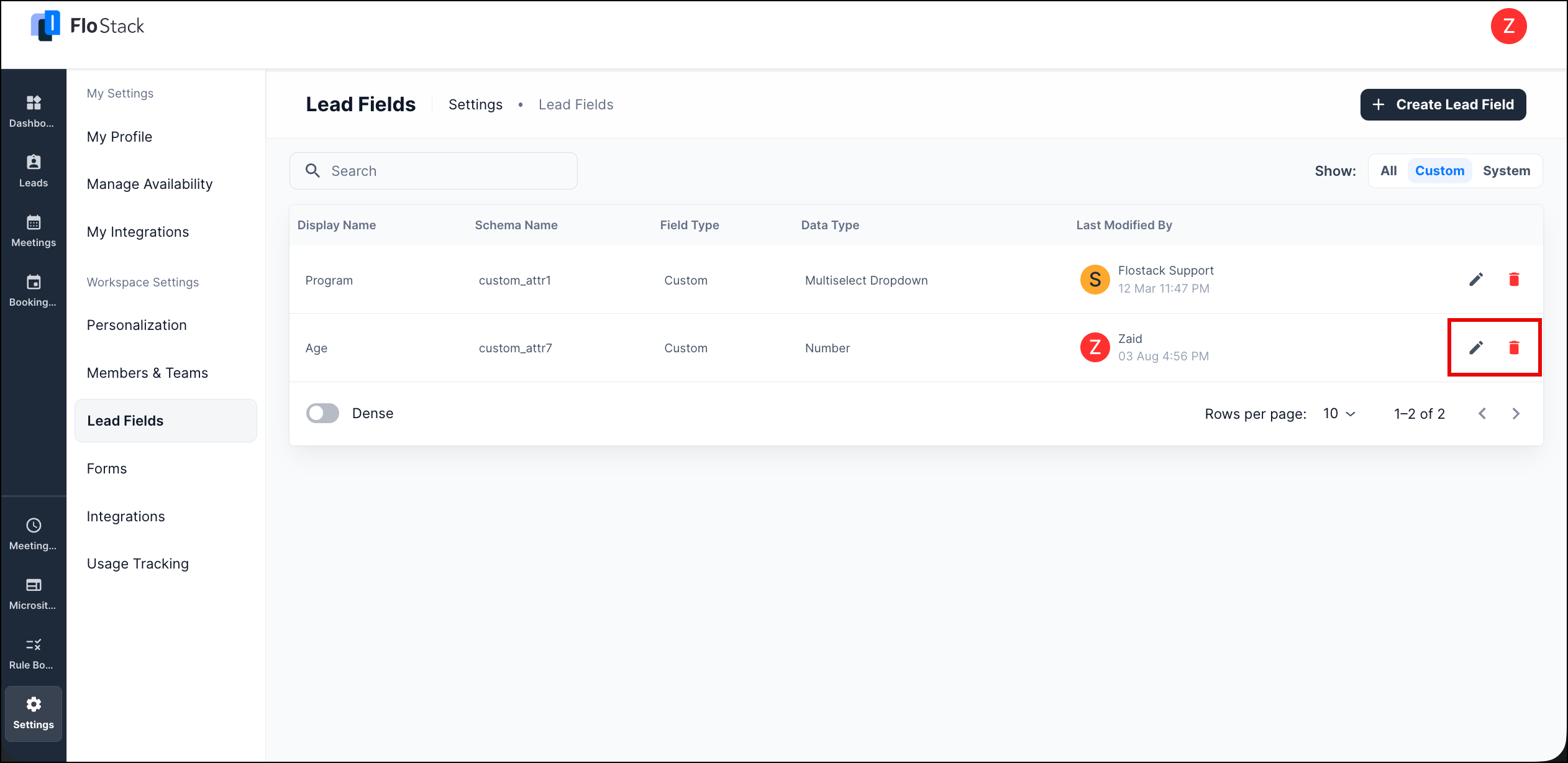
On the Lead Fields page, hover your cursor over a custom field row and click the edit icon to change the field, or the delete icon to remove it.
Note:
- Data type of the custom field cannot be changed once it’s created.
- You cannot delete a lead field that is used in a rule or a form. FloStack displays an error naming the dependency. Remove the field from the rule or form first, then delete it.
6.3 Use Lead Fields in Emails
Custom lead fields are available as mail merge fields in FloStack emails. Reference the lead field by its schema name so the lead’s value resolves when the email is sent. For example, {{lead.custom_attr1}}.
7. Forms
The Forms page is where you configure how lead data enters FloStack, and what additional data you collect while a lead books a meeting.
To find your forms, navigate to Settings>Workspace Settings>Forms. The page has two tabs:
- Routing Forms – Connect your website lead capture form to FloStack, so submissions are routed and mapped against your lead fields.
- Scheduler Forms – Collect additional details from a lead after they select a meeting slot.
On both tabs, use the Rows per page drop-down and the pagination arrows to move through the list, and enable the Dense toggle to fit more rows on screen.
7.1 Routing Forms
If your website has a lead capture form, you can enhance it by creating a Routing Form in FloStack and adding a script to your web page to route and map the details in FloStack. While setting up the Routing Form, enter the IDs of the lead fields from your existing lead capture form into the Routing Form. Assign a unique ID to the Routing Form as well. Once configured, you can embed the Routing Form script into the webpage containing your lead capture form.
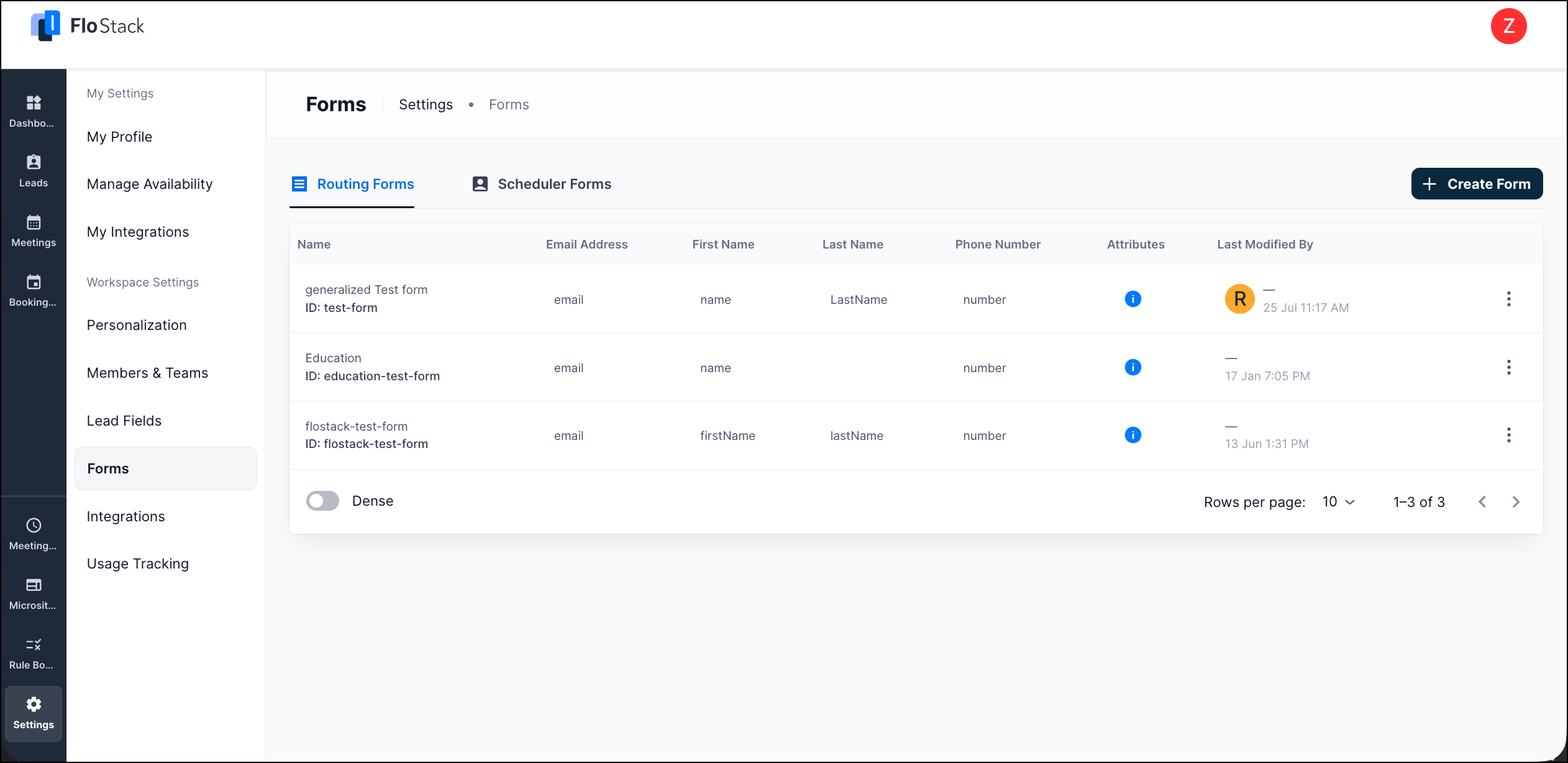
The Routing Forms tab lists each form with its Name and ID, the mapped Email Address, First Name, Last Name, and Phone Number IDs, the Attributes mapped to the form, and Last Modified By. Click the more options icon on a row to manage a form.
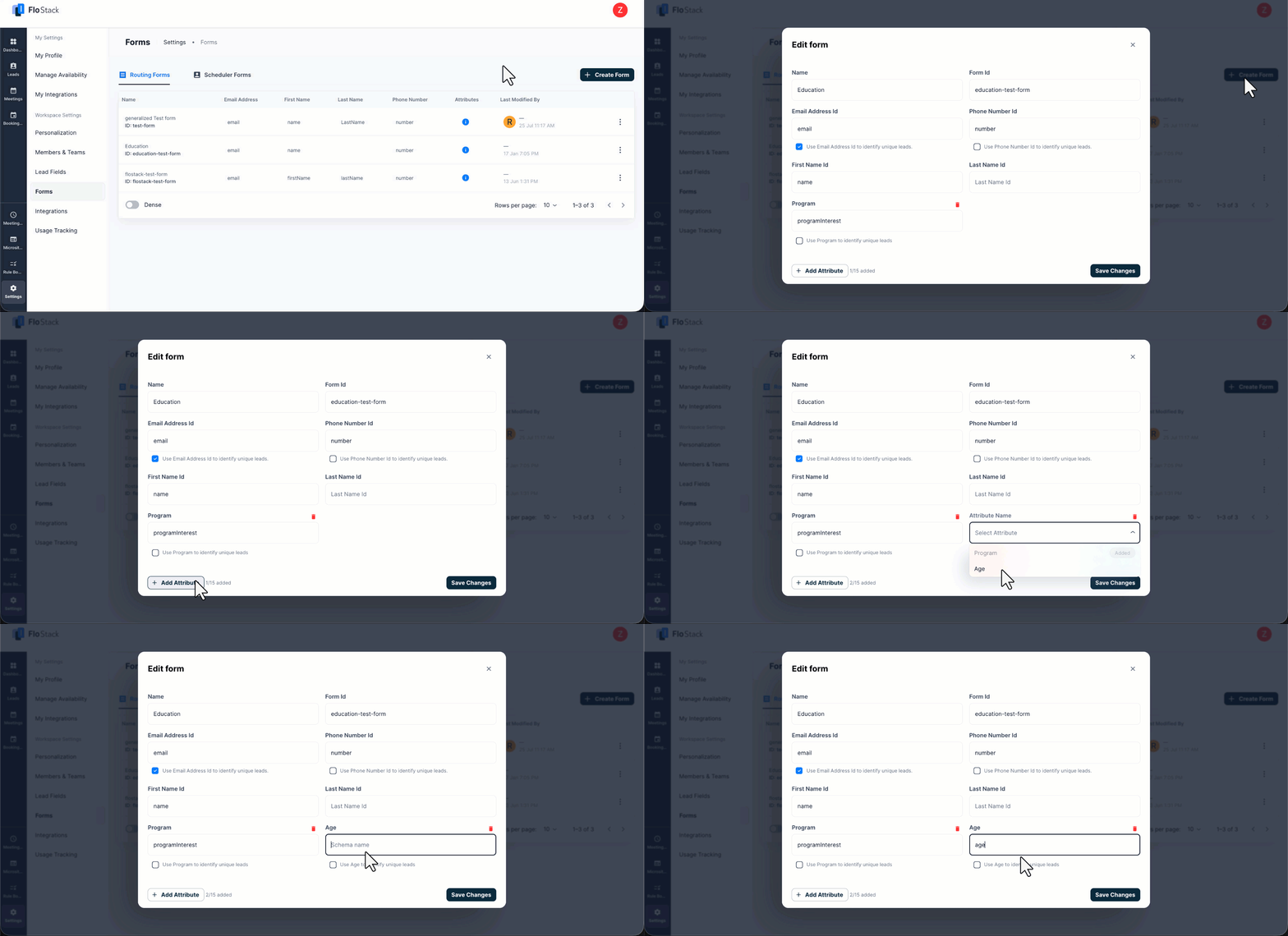
To create a Routing Form:
- Navigate to Settings>Workspace Settings>Forms.
- On the Routing Forms tab, click Create Form.
- Enter a Name and a Form Id.
- Enter the Email Address Id, Phone Number Id, First Name Id, and Last Name Id from your website form.
- Select Use Email Address Id to identify unique leads or Use Phone Number Id to identify unique leads.
- Click Add Attribute, select a lead field under Attribute Name, and enter its corresponding ID from your website form.
- Click Create.
Note:
- The IDs you enter must match the field IDs on your website’s lead capture form. These are the values FloStack reads from the incoming submission, so they do not change when you change a lead field.
- Under Attribute Name, you select from the lead fields created in your workspace. This defines what the attribute means inside FloStack, so the same attribute carries the same meaning across every form.
- You can add up to 15 attributes to a Routing Form.
7.2 Add Custom Scripts to LeadSquared Widgets and Your Custom Website
7.2.1 LeadSquared Widgets
Depending on your requirement, you can add either the Scheduler Script or Microsite Script listed below. Follow these steps to insert the script into the widget –
- Edit the Widget where you need to add the script.
- Go to the Settings(Top-Left Hamburger) Menu.
- Navigate to Scripts.
- Scroll down to the End of Body section.
- Paste the required script (given below).
- Click Save.
Note:
- Ensure the form ID in the script matches the form IDs configured in both LeadSquared and Flostack.
- Always ensure you paste the script inside the End of Body section.
- Only one script is required per form setup (choose Scheduler or Microsite).
- Test your form after saving to confirm the redirection works correctly.
1. Scheduler Script
Use this script if you want the form submission to redirect users to a Scheduler page.
< script > window.addEventListener("LSQ_FORM_SUBMITTED", function() {
    const leadID = document.lsqformevaluator.leadId;
    console.log("LeadID:", leadID);
    let formEntity = document.lsqformevaluator.lsqformfield.prepareRequestData("save", undefined, true).FormEntity;
    console.log("Form Data", formEntity);
    const formParams = {};
    formEntity[0].LeadFields.forEach((field) => {
        formParams[field.SchemaName] = field.Value;
    });
    if (leadID) {
        formParams.LeadId = leadID;
    }
    let payload = {
        formId: "lsq-form",
        formParams: formParams
    };
    fetch("https://api-us11.flostack.io/v1/leads/route", {
        method: "POST",
        headers: {
            "Content-Type": "application/json",
        },

        body: JSON.stringify(payload),
    }).then((response) => {
        return response.json();
    }).then((data) => {
        console.log("Data sent successfully", data);
        if (data?.schedulingUrl) {
            window.top.location.href = data?.schedulingUrl;
        }
    }).catch((error) => {
        console.error("Error sending data:", error);
    });
}); < /script>
2. Microsite Script
Use this script if you want the form submission to redirect users to a Microsite page.
< script > window.addEventListener("LSQ_FORM_SUBMITTED", function() {
    const leadID = document.lsqformevaluator.leadId;
    console.log("LeadID:", leadID);
    let formEntity = document.lsqformevaluator.lsqformfield.prepareRequestData("save", undefined, true).FormEntity;
    console.log("Form Data", formEntity);
    const formParams = {};
    formEntity[0].LeadFields.forEach((field) => {
        formParams[field.SchemaName] = field.Value;
    });
    if (leadID) {
        formParams.LeadId = leadID;
    }
    let payload = {
        formId: "lsq-form",
        formParams: formParams
    };
    fetch("https://api-us11.flostack.io/v1/leads/route", {
            method: "POST",
            headers: {
                "Content-Type": "application/json",
            },
            body: JSON.stringify(payload),
        })

        .then((response) => {
            return response.json();
        }).then((data) => {
            console.log("Data sent successfully", data);
            if (data?.micrositeUrl) {
                window.top.location.href = data?.micrositeUrl;
            }
        }).catch((error) => {
            console.error("Error sending data:", error);
        });
}); < /script>
7.2.3 Custom Website or LeadSquared Landing Pages Pro
Add the below script to the tag in your site’s HTML markup:
<script type="text/javascript" src="https://assets-us11.flostack.io/js/flo.min.js"> </script>Add the below code just before the closing </body> tag in your site’s HTML markup. Depending on your CMS/Website builder, you can also add this to the footer section :
<script type="text/javascript"> FloStack.route('lsq-<your_form_id>'); </script>lsq tag isn’t required. Instead add this to the footer: <script type="text/javascript"> FloStack.route('<your_form_id>'); </script>7.3 Scheduler Forms
A Scheduler Form collects additional lead details inside the instant scheduling flow, after the lead selects a meeting slot. This lets you keep your website form short while still capturing the details your team needs before the meeting.
Long forms increase drop-offs at the point of capture. Restrict your website form to the fields your Rule Board rules need to identify the lead and the meeting type, and collect the remaining details on the Scheduler Form, where the lead has already chosen a slot and is more likely to complete the form. As a guideline, keep your website form to fewer than seven fields.
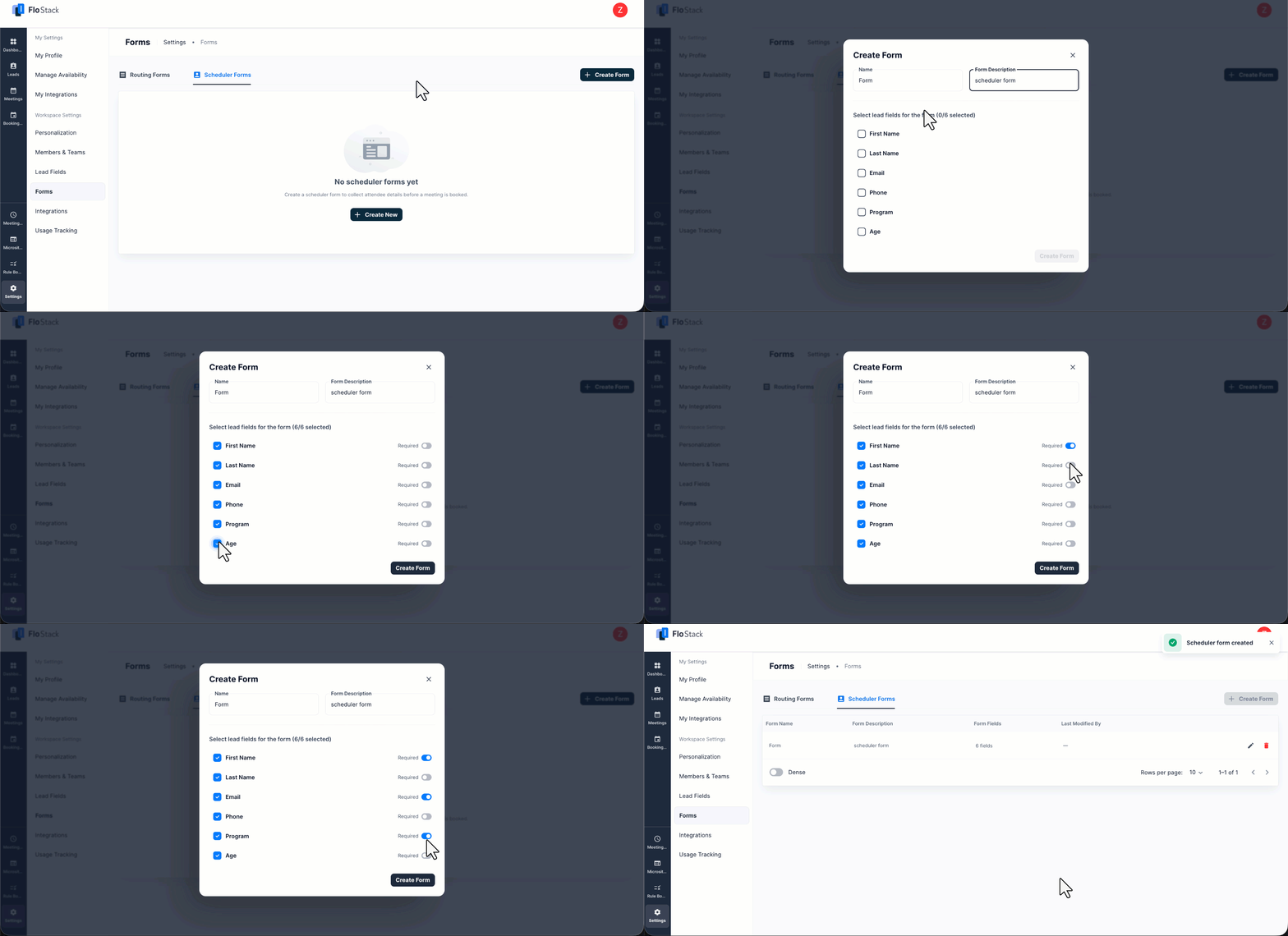
To create a Scheduler Form:
- Navigate to Settings>Workspace Settings>Forms.
- Click the Scheduler Forms
- Click Create Form.
- Enter a Name and a Form Description.
- Under the Select lead fields for the form section, select the lead fields you want to show on the form.
- Click Create Form.
Note:
- The list shows the First Name, Last Name, Email, and Phone fields, along with every lead field that has the field type Custom. System fields are not available, because FloStack populates them through enrichment rather than through a form.
- If a field you need is not listed, create it as a lead field first. For more information, refer to section 6. Create a Lead Field.
- The count beside Select lead fields for the form shows how many of the available fields you have selected. It is not a limit on the number of fields you can add to the form. The number of fields available grows as you create more custom lead fields, up to the workspace limit of 50.
Enable the Scheduler Form
The Scheduler Form is shown only to leads that qualify for a prioritization bucket where the Scheduler form action is enabled. Leads in other buckets continue to book directly.
To enable it, refer to Configure Rule Board on FloStack.
Note:
- Scheduler form is available only when Instant Scheduling is enabled for the bucket.
- When a Scheduler Form is enabled, the meeting is created only after the lead submits the form. Selecting a slot and clicking Register does not create the meeting. If the lead closes the form without submitting it, no meeting is created and the slot stays available.
8. Integrations
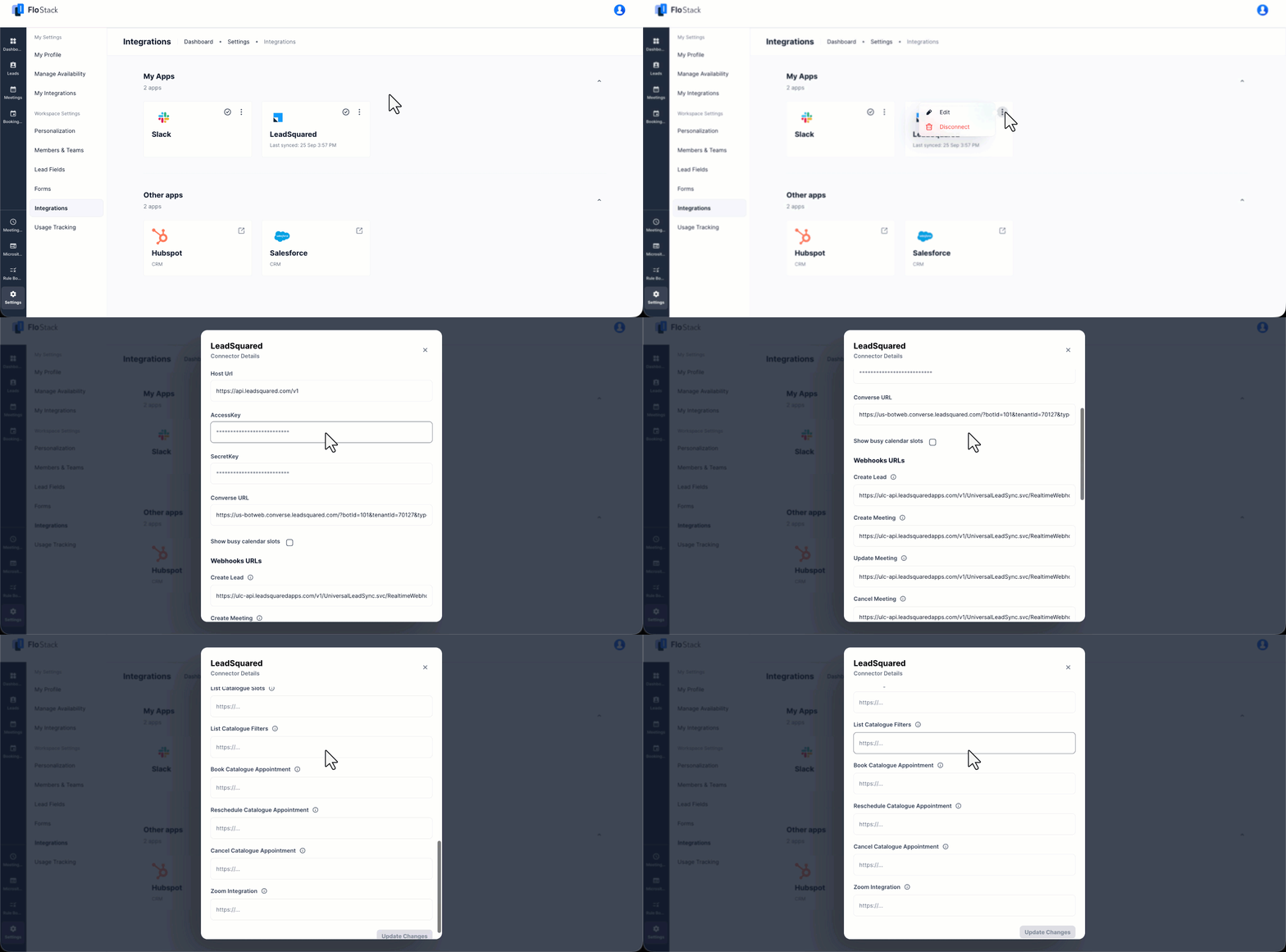
When you integrate your CRM with FloStack, data from FloStack can then be pushed to your CRM. In addition to updating lead data back in your CRM, automation can also be triggered within the CRM to send relevant information to leads like their unique microsite URL, appointment timings, reminders, etc.
Note:
- Once you integrate your CRM on FloStack there might be additional configuration required on the CRM platform. For more information, contact flostack@leadsquared.com.
- To integration Flostack with LeadSquared’s Universal Data Sync (UDS), refer to this article: Integrate Flostack with UDS.
Any Questions?
Did you find this article helpful? Please let us know in the comments section below if you have feedback or questions. We’d love to hear from you and help you out!