Lead/Visitor Tracking Limitations with Mozilla Firefox Private Browsing Mode

If your leads or visitors are using Mozilla Firefox (version 59 or later) private browsing mode, we won’t be able to capture UTM parameters when they land on your website/landing pages. This is because Firefox has made changes to prevent leaking user data to third parties when users choose private browsing mode. For more information, see Mozilla Security Blog -Preventing data leaks by stripping path information in HTTP Referrers.

How to Preserve Historical Created On date for leads while importing them in LeadSquared?

This article helps you to understand how to import the CreatedOn field while doing a Lead import using a CSV file in your LeadSquared CRM. The CreatedOn field contains the date and time of when the Lead was created in your CRM.

For more information on how to import Leads using a CSV file into your LeadSquared system, refer to How to import leads to LeadSquared?

Procedure

Consider that you have several Leads in a different sales CRM. All the Leads have a Lead field called CreatedOn which contains the date-time value of when the Lead was created.

When you import these Leads to your LeadSquared system using a CSV file, it allows you to also import the CreatedOn field as well.

  • In Step 02 Map Fields of Lead Import, if there is a Created On field under Fields in CSV file, then that field is automatically mapped to the Created On field of LeadSquared. By doing so, the historical data of when the Lead was created is preserved even while importing to LeadSquared from another CRM. Please see the below image for reference.

import

  • If the Created On field in your CSV file is not automatically mapped to the Created On field of LeadSquared, you can also select Created On from the Map to LeadSquared field drop-down menu.

created on

After importing, you can view this value from the Lead Details window of the corresponding Lead in LeadSquared.

Configure page

In the above image, the Created On field has the date time value which was the same in the previous CRM.

How to Export More than 1 Lakh Leads?

1. Feature Overview

LeadSquared allows you to export up to 1 lakh (100,000) leads per export request. If your database contains more than 1 lakh leads, you must export them in multiple batches. You can achieve this by creating lists containing fewer than 1 lakh leads and exporting each list separately. Lists can be created using any filtering criteria such as lead fields, activities, or tasks.

This article explains a simple approach using the Lead Number field to split your data into manageable batches.

Note: ESS tenants can export up to 5 lakh (500,000) leads in a single request. To enable this feature, contact your account manager or email support@leadsquared.com.


2. How It Works

Every lead in LeadSquared is automatically assigned a Lead Number when it is created.

  • The first lead receives Lead Number 1.
  • The second lead receives Lead Number 2, and so on.
  • Lead numbers increase sequentially and are not reused, even if a lead is deleted.

For example:

Lead Created

Assigned Lead Number

First lead

1

Second lead

2

Third lead

3

If lead number 2 is deleted, the next lead created will still receive Lead Number 4, not 2.

Because of this sequential numbering, you can export leads in ranges of Lead Numbers (for example, 1–100000, 100001–200000, etc.) to retrieve your entire database in batches.


3. Export Leads Using Lead Number

Follow these steps to export leads in batches.

Step 1: Navigate to Lists

  1. Navigate to Lead Management>Lists.
  2. Click Add List.

Step 2: Add List Criteria

  1. In the Create List window, add the following condition:
    Lead Number Less than equal or to 100000
  2. Click Add.

The filter criteria will appear on the panel.

Step 3: Find Leads

Click View Leads to generate the list of matching leads.

Step 4: Save the List

  1. Review the leads.
  2. Click Proceed to Save.
  3. Choose Save List As a Static List.
  4. Enter a List Name and Description.
  5. Click Create List.

Step 5: Export the Leads

  1. On the Manage Lists page, click the newly created list.
  2. In the List Details page, under Actions (three-dotted menu), click Export Leads.
  3. In the Export Leads popup, select either all lead fields or specific lead fields.
  4. Click Export.

export more than 100000 leads

Export Additional Lead Batches

If your account contains more than 1 lakh leads, create additional lists with the following criteria.

Lead Batch

Filter Criteria

First 1 lakh leads

Lead Number ≤ 100000

Second 1 lakh leads

Lead Number between 100000 and 200000

Third 1 lakh leads

Lead Number between 200000 and 300000

Repeat the export process for each list until all leads are exported.


Any Questions?

Did you find this article helpful? Please let us know any feedback you may have in the comments section below. We’d love to hear from you and help you out!

Custom Task Actions Connector

The Custom Task Actions connector lets you add new custom actions to the default list of actions (Edit, Mark Complete, View Details, Cancel, etc.) on the Manage Tasks page. These actions also reflect in task type tabs set up in Smart Views.

custom task action

Here are some examples of custom actions you can create –

  • Post task-related data to another tool/application
  • Send a customized notification to a lead/task owner
  • Open a new window with lead-related data from another application

You can create many more actions depending on your use cases. The connector gives you the ability to define the type of action, add a callback URL where you can mail merge task, lead and user parameters, display an Iframe and even get/post data.


Prerequisites

  • You must be administrator user of your LeadSquared account.
  • This connector is not available on all plans. If you want to enable it for your account, contact us at support@leadsquared.com.


Installation

First, install the connector from the Apps Marketplace –

  1. On the main menu, navigate to Apps>Apps Marketplace.
  2. Search for ‘Custom Task Actions’ in the search bar. Alternatively, you can navigate to the ‘UI Customization’ category on the left pane.
  3. Click Install on the Custom Task Actions connector.
  4. Once the installation is complete, hover your cursor over the settingsSettings iconicon and click Configure. Alternatively, you can click on the connector to open up a new page with the connector details, then click Settings>Configure.

custom task actions connector


Configuration

You can create task actions in two areas –

1. The tasks grid row action menu on the Manage Tasks page (and smart views).

custom task manage tasks

2. The bulk actions menu on the Manage Tasks page (and smart views).

bulk custom actions

On the Configure Custom Task Actions pop-up, first select the area you want the action to appear (from the left pane), then click Add Action.

add new custom task action

Enter the details of the custom action, then scroll to the bottom of the pop-up and click Save.

add new custom action

Attribute Description
Action Label The display name of the action.
Task Type The task type you want the action to appear for. For information on task types, see Managing Task Types.
Action Type 3 action types are available –

  • Show as Popup
  • Call an API
  • Open in New Window
Show in Tab Currently, only the Web App option is available.
Callback URL Enter the HTTPs URL which will be rendered as a custom action. The URL should be of an action that accepts LeadSquared mail merge fields as parameters and passes them to an external application (e.g., a support system, another CRM or marketing system, another LeadSquared account, etc.) to get the data. Hover your cursor over the question markquestion mark iconicon to view the available mail merge fields.

Note: This attribute is mandatory.

Height Enter the height and width of the pop-up. Applicable only for the ‘Show as Popup’ action type.
Width
Iframe Attributes Pass Iframe attributes you want to render on the pop-up. Applicable only for the ‘Show as Popup’ action type.
HTTP Method GET and POST methods are supported.
Content-Type application/json is the only supported content type.
Data You can pass any data here in JSON format.

Once you’ve created a custom action it will appear as shown below.

  • Click the delete delete icon to delete the custom action
  • Click the expandexpand icon icon to edit the custom action

Click the Add Action button to create more custom actions.

create more custom actions

Your custom task actions will now appear as configured on the Manage Tasks and Smart Views grid rows or bulk action menu for the chosen task type.


Any Questions?

If you still have doubts about this feature or any feedback you’d like to share, please leave a comment below.

Automation Best Practices

1. Feature Overview

This article will help you understand the best practices to follow when configuring and running your Workflow Automations on LeadSquared.


2. Prerequisites

  • You must be the Administrator of your LeadSquared account to create and configure an Automation.
  • Automation is a paid feature. To enable it, reach out to your account manager, or write to support@leadsquared.com.


3. Best Practices to Avoid Automation Failure

Most automation failures are due to configuration errors that might have occurred when setting up the automation. Here are a few points to keep in mind during the configuration process – 

1. Send Email Action

When usingSend Email action, make sure the email address of the lead field has a valid email address. Navigate to Manage Leads>Lead Details to edit or verify the lead’s email address. 

automation email id check

Also, make sure the Do Not Email flag is disabled (“No“) for the lead. To find this option, navigate to Manage Leads>Lead Details Page>Lead Details Tab.

automation do not email

2. Mail Merging an Empty Field to a Mandatory Field

When mail merging a field to a mandatory field, make sure it is not an empty field. For example, if you mail merge the Last Name lead field, the Last Name lead field must contain a value (e.g., Smith, etc.). Fields marked with “* are mandatory.

automation last name

3. Mail Merging an Empty Date Field in Schedule Field for Create Task Action

On the Create Task Action, when you are mail merging a date field in the Schedule field, the date field must contain a value. For example, if you mail merge Application Submitted On as the date field, this field will need to have a value on the Lead Details page.

automation create task schedule

4. Mail Merging a Field with Invalid Data Type

When mail merging a field in automation, make sure it is a valid data type. For example, when you are mail merging the Age lead field, make sure the Data Input Type is a Number (and not Text, Boolean, etc.).

automation data type

5. Deleting a Field Configured in a Published Automation’s Advanced Search Condition

If you have configured a field through the advanced search condition and published the automation, make sure to edit the field in the automation when deleting the particular field.

For example, if you have configured ID Proof as a Custom Activity Field through the advanced search condition, and if you are going to delete the Custom Activity Field in the future, make sure to edit this field in the published (live) automation.

automation delete field


2. Common Reasons for Call Lapp and Webhook Failure

Here are some reasons why your Call Lapp or Webhook might be failing –

1. API Rate Limit Exceeded

The API Rate Limit is a configurable limit and varies for different accounts. Ensure you’re not exceeding the rate limits configured on your account.

For example, if your API Rate Limit is five per second, but you have exceeded this number, then you will receive a 429 error. You can view your API Limits by navigating to Settings>Profile>Billing and Usage.

automation api rate exceed

2. Gateway Timeout

When the automation calls a Lapp or a Webhook, it’ll wait for a response for 30 seconds. If there is no response from the Lapp or Webhook within this time frame, it will throw a 504 Gateway Timeout error.

automation gateway timeout

3. Incorrect API URL

If the API URL you’ve configured is not valid, the automation will throw a 403 error. For example, the API could have been valid at the time the automation was published, but if there are any changes made to the API after the automation was published, then your endpoint might not be valid anymore.

automation api url


3. Best Practices for Increasing Automation Efficiency

There are certain pointers to keep in mind if you want to increase the efficiency (execution count) of your automation workflow –

1. Add Additional Conditions in Advanced Search on Each Trigger

Instead of adding an If/Else condition on a trigger, you can add the condition in the trigger itself.

For example, you might want the automation to trigger on lead creation, and run for leads whose City is Mumbai. Instead of adding an If/Else card on the trigger for the City, you can include the City on the trigger itself.

automation inclusion criteria

2. Use “Multi If/Else” Over Multiple “If/Else” Conditions

If you have to configure multiple conditions, it’s more efficient to use a Multi If/Else, instead of adding different If/Else conditions.

multi if else example

3. Reduce the Retry Numbers on Call Lapp and Webhook

When you configure a Call Lapp or a Webhook, you can also specify the number of retries the automation can attempt if it fails while being called. The maximum number of retries you can configure is 3 and the minimum can be left at 0. The automation will wait five minutes before each retry.

To increase the efficiency of the automation, it’s best to set the Retry Count to either 0 or 1.

automation retry count

4. Select Criteria to Exit Automation

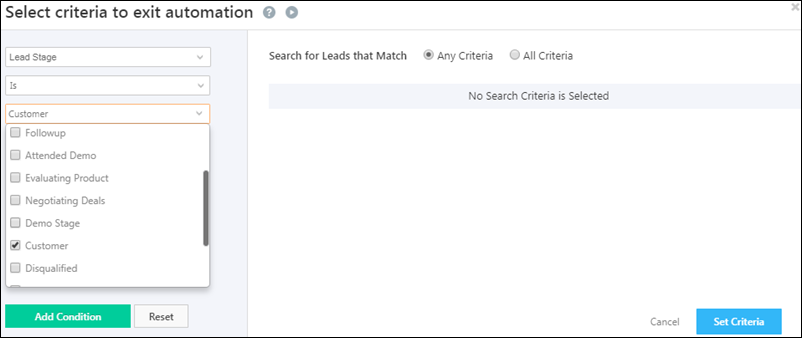
Use the exit criteria advanced search to stop automation execution in hard-stop cases. For example, If Lead Stage is Not Interested or Invalid, you do not need the automation to run for that lead anymore. 

automation exit condition


Any Questions?

Did you find this article helpful? Please let us know any feedback you may have in the comments section below. We’d love to hear from you and help you out!

Lead Prioritization

This Help Video allows you to understand the Lead Prioritization feature of your LeadSquared CRM in detail.

Lead Prioritization from Maanas Kalivarapu on Vimeo.

Email to List Reports

The Email to List Report allows you analyze the performance of the Emails you had sent to a list of Leads. The Report allows you know the success/failure rate of the Emails through various metrics available in the report.

Prerequisite

  • You have logged into LeadSquared.
  • You have created and sent the email to the List of Leads using Email Campaign or from the Manage List window

Procedure

Email campaign

  • From the Type drop-down filter, select Email to list. The Emails that are sent to a list appears in the display grid below:

Email to list drop-down 

Email to list report

  • Under Name, click email to list icon against the required Email to List. The corresponding to Email to List report appears.

Email to list report1

Related Articles

How to send SMS to multiple leads from LeadSquared Mobile App?

This help article allows you to understand how to send SMS to multiple leads at the same time from the LeadSquared Mobile App.

Prerequisite

  • You should have installed LeadSquared mobile app android version 5.5 or higher.

Procedure

  • From the LeadSquared Mobile App, go to Leads. The Leads list appears:

  • Multi-select the leads and click the menu in the top right corner and click Send SMS.

The SMS screen appears where you can see your selected recipients and proceed or go back and select more leads.

Send the SMS and the following dialogue box appears which implies that sending the messages involves the cost for sending regular SMSs.

  • Click OK and the SMS is sent to multiple leads. If there is a failure, you will receive a ‘Notification’ from where you can always retry sending your message to the failed recipient list.

Note: You cannot send SMSs to more than 20 leads at a time.

Capture Google Adwords Value Tracking Parameters in LeadSquared

1. Feature Overview

This article helps you capture Google Adwords value tracking parameters keywords and devices.


2. Procedure

2.1 Create Lead Fields

  1. From the default LeadSquared dashboard, go to My Account>Settings>Customization>Lead Fields. The Lead Fields area appears.

Google Adwords

2. Click Create. Complete the details as highlighted in the image below and click SaveFor detailed information, refer to How to create Custom Fields in LeadSquared?

Google Adwords

3. Create another custom field for the keyword UTM_term, as described in the step above.


2.2 Create Tracking Templates for Adwords

Create your tracking URL (with 2 additional values) – utm_term and utm_device.

A sample code –

{lpurl}?utm_source=Pay%20per%20Click%20Ads&utm_medium=adwords&utm_campaign=LeadConvsw&utm_term={keyword}&utm_device={device}

By adding this code, Adwords tracks the device and keyword values dynamically, and captures this in your LeadSquared system.

Note Make sure these parameters in the code is in the proper format. UTM_keyword={Keyword}. If the code is UTM_Keyword=%7keyword%7, the following value is captured  =%7keyword%7.


2.3 Place the Tracking Templates in Adwords

  1. Enter the landing page URL & tracking template in correct places of Adwords which is the step where you create the ad.

Google Adwords

2. Enter the desktop Landing page URL in the first text box.
3. Under Ad URL Options (advanced), enter the mobile Landing Page URL in the first box.
4. In the second box (highlighted with blue in the above image), enter the tracking template.

Note – Enter the template in the text box as highlighted in the image only.


2.4 Value Capture in LeadSquared

When a user clicks your ad from a desktop or any mobile device, the corresponding value is automatically captured in LeadSquared.

  • For Desktop or Laptops, value for UTM_device = “C”
  • For Mobile, value of UTM_device = ”M”
  • For Tablet, value of UTM_device = ”T”

How do the details appear in LeadSquared?

If you notice Step 1, you had created UTM_device field under the Additional Details section (highlighted in black). As per your convenience, you can create a field under any sections like Lead Details, Company Details and so on.

Google Adwords

To view the captured value –

  • Open the lead from Adwords campaign and click the Lead Details section. Under the Additional Details section, you can view the lead fields & the values that are captured.

Google Adwords

Google Adwords

Google Adwords


Any Questions?

Did you find this article helpful? Please let us know any feedback you may have in the comments section below. We’d love to hear from you and help you out!

How to Create a Facebook Custom Tab for Lead Capture?

This article would help you to understand how to create a Facebook Custom Tab for Lead Capture using LeadSquared landing pages and iFrame host. This would help you capture leads from your Facebook page, when someone fills the form out.

Your end product would look something like this:

LeadSquared Integration with Facebook

How to create the Facebook custom tab

Here are the steps to display your landing page as an iframe on your Facebook page:

Step 1: Go to iframehost.com. The window in the below image appears:

LeadSquared Integration with Facebook

Step 2: Click Install Page Tab. It redirects you to a window where you can select the Facebook page where you wish to add this custom tab.

LeadSquared Integration with Facebook

Step 3: Click the drop-down list highlighted in the image above and select the page to which you want to add your landing page.

Step 4: Click Add Page Tab. It redirects you to your Facebook page.

Step 5: Click Configure Page Tab.

LeadSquared Integration with Facebook

Step 6: You will now be redirected to the following woobox page.

Under the Page Source column, click URL.

LeadSquared Integration with Facebook

Step 7: Enter the URL of your landing page. Select height as per your preference (around 700px would be visible in one fold). Keep FanGate settings as “off.”

Note: The URL should be https, as Facebook does not accept an unsecured URL. (Get the https url of your LeadSquared landing page. Here’s how you can do it.)

LeadSquared Integration with Facebook

Step 8: Click Save Settings.

Step 9: Click Tab settings to change the Name and Image to completely customize your Facebook custom tab.

LeadSquared Integration with Facebook

Step 10: Once the settings are changed, click Save Settings.

Once this is done, go to your Facebook page and refresh. Your required tab along with the landing page is now live on your Facebook page.

How to Manually Assign or Change the Ownership of Leads?

1. Feature Overview

You can assign or change the ownership of a Lead to another user in your LeadSquared system. You can also assign the ownership of multiple leads to another LeadSquared user as well.

Example: A sales user in London is assigned a lead from London. However, the lead changed their location to Manchester. In this scenario, you would want to assign this lead to a sales user in Manchester, to work with the lead.

This articles helps you to understand the following:

  • How to Change the Lead Owner of a Single Lead
  • How to Bulk Update the Lead Ownership of Leads
  • How to Change the Lead Owner of Multiple Leads


2. Prerequisites

  • You should be logged into your LeadSquared application.
  • You should be an Administrator/ Marketing User/Sales Manager or the Manager of a Sales Group to change the ownership of a lead to another user.


3. How to Change the Lead Owner of a Single Lead?

  1. From the default LeadSquared dashboard, Navigate to Leads>Manage Leads.
  2. Alongside the relevant lead, click on the Leadsquared - Menu icon. From the dropdown, select Change OwnerThe Change Owner pop-up box appears.
  3. From the Update To dropdown, Select the relevant Lead Owner you want to change the leads to.
  4. Click Save.

Leadsquared - Lead owner management


4. How to Change the Lead Owner of Multiple Leads?

  1. From the Manage Leads window, determine and select the required leads under the list of leads.
  2. Above the list of leads, click on More Actions on the menu that appears. From the dropdown that appears, click on Change Owner.
  3. From the Update To dropdown, Select the relevant Lead Owner you want to change the leads to.
  4. Click Save.

Leadsquared - Lead owner management


5. How to Bulk Update the Lead Ownership of Leads?

From the Manage Leads window, you can only select upto 200 Leads in a page to change the ownership. To bulk update the ownership of all the leads in your system –

  1. From the Manage Leads window, select all the leads by clicking on the checkbox alongside the Lead Name tab.
  2. Click on Bulk Update from the menu that appears. The Bulk Update pop-up box appears.
  3. Enter the following details:
    • Lead Field – Select the value Owner from the dropdown list.
    • Update To – Select the relevant Lead Owner you want to change the leads to from the dropdown list.

4. Once the correct details are entered, click Save.

Leadsquared - Lead owner management

Note: You can also bulk update the ownership of leads matching certain criteria. Filter the Leads using the required search criteria through Advanced Search and then bulk update the ownership of the leads.

Any Questions?

Did you find this article helpful? Please let us know any feedback you may have in the comments section below. We’d love to hear from you and help you out!


How to Record Inbound/Outbound Calls for Leads in the Mobile Application?

1. Feature Overview

This article explains how to enable inbound and outbound call recordings on the LeadSquared mobile app and where to access them.

You can record your users’ inbound/outbound calls for review and quality control. The calls are automatically posted as activities in the Activity History section of the Lead Details page. Recorded calls can also be downloaded.

Note: This feature may not be supported in some mobile phones as it is device dependent. If it is not supported on your mobile, reach out to your account manager or write to support.


2. Prerequisites

  • Install the latest version of the LeadSquared mobile app.
  • Install the latest version of the Call and SMS tracker app and enable all related permissions.
  • You must have an Android mobile device. The call recording feature is not supported on iOS devices.


3. Enable Call Recording on Your Device

3.1. For Android Users

  1. From the dashboard, tap LeadSquared - Mobile app menu.
  2. Tap Setting icon and then tap Call and SMS.
  3. Under Call Settings, enable the following permissions –
    • Show lead identification popup.
    • Show popup for unknown numbers.
    • Record calls.
Note: If you’re using Xiaomi mobile phone, enable call recording through Mobile device settings.

LeadSquared - Enable Call Recording on Your Device


3.2. For iOS Users

Previously, call tracking was not available for iOS devices. We have now introduced this feature on our iOS app as well. However, the following setting must be enabled to access this feature.

LeadSquared - call and sms permissions

  • On the mobile application,
    1. On the mobile app From the dashboard, tap LeadSquared - Mobile app menu.
    2. Tap Setting icon and then tap Calls.
    3. Under Call Settings, enable Track Outbound Phone Calls.

Note:

  • Outbound calls made directly from the dial pad and inbound calls cannot be tracked in iOS devices.
  • Call and SMS tracker app is not required for outbound call tracking in iOS devices.
  • The mobile app must be running in the foreground for the entire duration of the call. If not, the duration of the call may be recorded incorrectly. For example, if the actual duration of the call is 1 minute, but the app is brought back to the foreground 5 minutes after the call ended, the recorded duration would incorrectly be displayed as 6 minutes.

LeadSquared - Outbound call tracking in ios


4. Set Call Recording Permissions on Web App

  1. From the main menu, navigate to My Profile>Settings>Mobile App>Permissions.
  2. Click Edit.
  3. Under Calls and SMS, set these permissions under the specific user roles to record calls –
    • Track Calls.
    • Record Calls
      • No Calls –  No call activities are recorded.
      • All Calls – All call activities are recorded.
    • Track SMS.
    • Override settings on device – If enabled, the call and sms permissions set by the Admin will override the mobile device level settings enabled by the users.
  4. Click Save.
Note: To know more about setting mobile app permissions on the web platform, see Configure Mobile App Settings from the Web Platform.

LeadSquared - Set Call Recording Permissions on Web App


5. View Recorded Activities

  1. Navigate to Lead>Manage Leads.
  2. Click on a relevant lead and open the Lead Details page.
  3. On the Lead Details tab, click Activity History.
  4. Alongside the call activity,
    • To download the recording, click Cloud Calling.
    • To listen to the recording, click LeadSquared CTM Telephony.
Note: The recorded calls are stored in mp4 format.

LeadSquared - View Recorded Activities


Any Questions?

We’d love to answer your questions or hear your own unique use cases. Feel free to share your experiences in the comments section below.

How to schedule a LeadSquared Report?

1. Overview

You can schedule the delivery of your LeadSquared report to your LeadSquared Email address. The scheduled report is delivered and is available only to the user who schedules it.

Note: The schedule feature for Reports is not available to all the LeadSquared Reports. If you want the schedule feature enabled for any of the Reports, please email to support@leadsquared.com


2. Prerequisite

  • You should be an Administrator, Sales Manager or Marketing User of the LeadSquared system in order to schedule a report.


3. Navigate to Reports

To schedule a Report, first, navigate to Reports>Reports Home.

Report Management home 1


4. Schedule a Report

As an example, let’s select the Activity list by Leads report under the Lead Insights category.

Apply the required filters and click Run Report. Next, click  to bookmark the report with the filter settings to save it to My Saved Reports.

LeadSquared Reports The Name your Bookmark pop-up box appears. Enter the required bookmark name and click Save.

LeadSquared Reports

You can schedule the report using either of the following two methods –

  • From the same report window, click  . The My Report Bookmarks window appears.

Or

  • Go to Reports>My Saved ReportsThe My Report Bookmarks window appears.

LeadSquared Reports

The Bookmark Actions area allows you to re-run the report with new filters, and edit and delete the bookmark. Click  to schedule the report. The Schedule pop-up box appears.

LeadSquared Reports

Select the schedule frequency, Start Time, Start Date, and End Date(if required) and click Create ScheduleThe Report is scheduled and the message appears as shown in the image below:

LeadSquared Reports

The Report is delivered in PDF format to your LeadSquared Email address as shown in the image below –

LeadSquared Reports

Related Article: LeadSquared Reports

Email Settings – Manage Email Subscription Preferences (Email Categories)

1. Feature Overview

You can manage subscription preferences of leads using LeadSquared’s Email Categories feature by –

  • Creating new Email Categories.
  • Assigning Email Categories to every new email sent.
  • Allowing your leads to selectively subscribe or unsubscribe to specific email categories.
  • Allowing your leads to completely unsubscribe from all emails.

Note:


2. Prerequisite

You must be the Administrator of your LeadSquared account.


3. Setting up Email Categories

  1. Navigate to My Profile>Settings>Email Settings>Email Categories.
  2. Next to Mandate category in emails*, click Yes.
  3. Click Create.
  4. Once you can view the Add Email Category pop-up window, enter the relevant details.
  5. Click Save.

Note: 

  • *Enabling Mandate category in emails will force the user to specify a category while creating email campaigns, Autoresponders, one to one emails or sending emails to list.
  • You can add up to 10 email categories.
  • To see how the form will render, click Preview Mailing Preference Form.

LeadSquared - Setting up Email Category


4. Import Mailing Preferences

You can update Mailing Preferences of existing leads by uploading a CSV file. The file must contain the lead’s email address in the first column and mailing preference code in the next column. You can find the code in the Email Categories settings under Code.

Note: You can download a sample CSV file in the Select a CSV to Upload pop-up window to understand the required format.

LeadSquared - sample csv file

To import your mailing preference by uploading a CSV file –

  1. Navigate to My Profile>Settings>Email Settings>Email Categories.
  2. Under Import Mailing Preferences, click Import.
  3. Click Upload CSV and then click Continue.
  4. Click Close.
LeadSquared - Update Mailing Preferences


5. Using Email Categories

Once you set up your mailing preferences, you will see a drop-down to select an Email category whenever you send a new email. Recipients can unsubscribe or manage their mailing preferences by navigating to the footer of the email.

The Unsubscribe option will remove the recipient from the specific Email Category. For example, if the Email was sent under Product Update category, clicking Unsubscribe will ensure that the recipient does not receive emails of this category in the future.

The Mailing Preferences option will give the recipient options to subscribe or unsubscribe to other email categories or even completely unsubscribe from all emails.

Note: The recipient activity will show up in the Activity History of the specific lead.
LeadSquared - unsubscribe


Any Questions?

Did you find this article helpful? Please let us know any feedback you may have in the comments section below. We’d love to hear from you and help you out!

How to set an Administrator as the billing user?

The first Administrator is marked as the billing user in LeadSquared by default. You can have multiple Administrators as the billing users if you have an active subscription. To set another Administrator as the billing user –

  1. Navigate to Settings>Users and Permissions>Users.
  2. Along the row of the Administrator you want to set as the billing user, hover your cursor over   and select Set Billing User.
  3. On the Set Billing User pop-up, click Yes.

Note: 

  • To know more about how to create a User, see Manage Users.
  • You can assign the Billing User role to Sales Cloud Admins as well.

LeadSquared - Setting Admin as Billing User

To view all your billing users –

  1. Click … and in the popup that appears, search “Is Billing User”.
  2. Check the box alongside it and click Show Selected.
  3. All your billing users will be marked with a “Yes” under the “Is Billing User” column.

Leadsquared - Billing User

How to find deleted leads using Deleted Leads History Report?

This article explains how to find deleted leads from your LeadSquared system using the Deleted Leads History Report.

Note:

  • Once deleted, leads can’t be restored in LeadSquared. The Deleted Leads History Report only contains the data of the deleted leads.
  • Before you delete leads, we recommend you export the leads out of LeadSquared. This will ensure a backup of your leads is always available. To know more, refer to How to Export Your Leads/Lead Details?


Prerequisites

You must be an administrator user of your LeadSquared account.


Procedure

To access the Deleted Leads History Report –

  1. On the main menu, navigate to Reports>Reports Home.
  2. Search for “Deleted Leads List”, and click to open the report.
    1. Alternatively, navigate to Lead Insights>Deleted Leads List.
  3. Select the date range, then click Run Report.
  4. Click  LeadSquared Reports to export the report to CSV. You can import the report to create new leads in your account in case you deleted them by accident.

LeadSquared Reports

Lead Stage Distribution (Time-period wise) Report

LeadSquared’s Lead Stage Distribution allows you to view the number of leads allocated to a particular lead stage over a time period. This allows you to analyze the type of leads arriving in your LeadSquared system over a particular time period.

To access this Report:

  • From your default LeadSquared dashboard, go to Reports -> Reports Home. The Reports Home window appears.

reports-home

  • Click Lead Stage Analysis under Categories. The Lead Stage Analysis window appears.

lead-stage-analysis

  • Under Report Name, select Lead Stage Distribution (Time-period wise). The Lead Stage Distribution (Time-period wise) report appears.

lead-stage-distribution

Complete the following details:

  • Select Lead Owner – Select the Lead Owner from the multi-select drop-down list to view the  number of leads which comes under the selected lead owners.
  • Select Lead Stage – Select the Lead Stages from the multi-select drop-down list to view the number leads which comes under the selected lead stages.
  • Select Time Range – Select the time range from the drop-down list to view leads which matches the selected lead owners, lead stages and under the selected time range.

Once the above details are completed, click Run Report. The number of leads which comes under the respective Lead Stages during the selected time period appears in tabular format.

This data can be sorted in day, week or month based on the time range selected using the Show data by filter. Select the required option and click Change.

Capturing leads from Web Forms using JavaScript API

There are three common ways to capture leads from website forms:

If you want to avoid replacing your form or dealing with REST APIs then you can use our JavaScript API to capture leads.

Prerequisites

  1. You should know your LeadSquared account number 
  2. There should be a published landing page (with any form fields) that can be associated with lead submissions. You should know the id of the landing page. To find the landing page id, click on the published page and from the URL copy the alphanumeric text after “LandingPageId=”. An example is shown below:

lpid


Integrating the form

Please follow the below steps to connect your web  form with LeadSquared landing pages.

Step 1

Include following Java Script library:

“https://web.mxradon.com/t/FormTracker.js”

 Example:

<script src=”https://web.mxradon.com/t/FormTracker.js” type=”text/javascript”></script>


Create following Java Script objects of  LeadSquared and map the form fields with the relevant LeadSquared fields by defining the variable.

Example:

var fieldMapping = { }

Objects:

  • MXHOrgCode – This is your LeadSquared Account Number (Mandatory)
  • MXHLandingPageId – The  Landing Page ID for which you wish to capture the submissions (Mandatory)
  • MXHAsc – This is the score you provide for the capture submission. This is an optional property.

Example:

MXHOrgCode: "6049",
MXHLandingPageId: "5f9cec8b-854b-11e6-8f87-22000aa8e760",
MXHAsc: "5",

Fields Mapping:

Format: <LeadSquared Field Schema Name> : “<Form Field Name>”;

Example:

FirstName: "fname",
LastName: "lname",
EmailAddress: "email",
Mobile: "mobile",
mx_Gender: "gender",
mx_City: "city",
mx_Country: "country"

Step 2

Create a new instance of LSQForm() and pass the parameters which is defined in step 1 to the function setupLeadCapture(parameter). Using setupLeadCapture , the form submission is captured automatically no function need to be called.

Format:

new  LSQForm().setupLeadCapture(parameter);

Example:

new LSQForm().setupLeadCapture(fieldMapping);

If you have multiple forms and you wish to capture leads from a specific form, then you can pass the Form ID with parameter as given below.

Format:

new LSQForm().setupLeadCapture(parameters, { id: “form ID” });

Example:

new LSQForm().setupLeadCapture(fieldMapping, { id: "myLandingPageForm" });

Step 3

You can also add an event to run a function on form submission request completion, success or error.

Example:

On Success:

var onSuccess = function (data) {
 console.log("ok");
}

On Error:

var onError = function (data) {
console.log("error");
}

Custom:

var always = function (data) {
console.log("always");
}

Code Snippet:

new LSQForm().setupLeadCapture(fieldMapping,{
onSuccess: onSuccess,   /*optional*/
onError: onError, /*optional*/
always: always   /*optional*/
});

If you have your own code and you do not want to create the lead automatically using setupLeadCapture, then use captureLead , which calls manually and creates a lead in LeadSquared.

To implement the captureLead function instead of setupLeadCapture:

Create a  function like below and inside that function define variables and create instances.

function onFormSubmit() {

/* Step 01 - Map fields*/

var fieldMapping = {
MXHOrgCode: "6049",
MXHLandingPageId: "5f9cec8b-854b-11e6-8f87-22000aa8e760",
MXHAsc: "5",

FirstName: "fname",
LastName: "lname",
EmailAddress: "email",
Mobile: "mobile",
mx_Gender: "gender",
mx_City: "city",
mx_Country: "country"
};

/*Step 02 - Add callbacks*/

var onSuccess = function (data) {
 /* Success callback code goes here*/
console.log("ok");
}

var onError = function (data) {
/*Error callback code is given below*/
console.log("error");
}

var always = function (data) {
/*Always callback code is given below*/
console.log("always");
}

/*Step - 03 Capture Lead in LeadSquared*/
new LSQForm().captureLead(fieldMapping, "myLandingPageForm",
{
onSuccess: onSuccess,   /*optional*/
onError: onError, /*optional*/
always: always /*optional*/
});
return false;
};
Sample Codes:

Make Calls on Your Phone Using the Web Platform

Important:

  • This feature is only supported on Android mobile phones.
  • Before you get started –

1. Feature Overview

Phone calls you initiate through the LeadSquared desktop application can be placed through the LeadSquared mobile app on your smartphone.

Call logs are automatically posted as activities on the respective leads in your account.

Note: To initiate calls directly through the mobile app, see How to make Outbound Calls and Send SMS through the Mobile App.


2. Prerequisites

  • You must be the Administrator of your LeadSquared account.
  • Install the Custom Lead and List Actions connector.
  • You must install the Call and SMS tracker connector.
  • Install and configure the Nudges Connector.
  • The Lead’s details should include their telephone number.
  • You must be logged into your LeadSquared Mobile Application while the call is being placed.
  • Autostart Permission must be enabled in the LeadSquared Mobile Application of your phone.
  • Enable Permissions on the device setting to Make a Call,  Read Contact and Read Call History.


3. How it Works

  1. Install the Call and SMS tracker connector.
  2. You’ll use the Nudge Connector to create a nudge (notification) on the LeadSquared mobile app. When a user taps the nudge, the phone call will be placed to the respective lead. Note down the Nudge template ID.
  3. You’ll create a new ‘initiate/place phone call’ action on the Manage Leads (and Smart Views) and Lead Details pages, using the Custom Lead and List Action connector. When a user clicks this action from the desktop, the phone call nudge (configured in the previous step) is sent to the user’s LeadSquared mobile app.


4. Create a Call Routing Nudge

  1. Navigate to Apps>Manage Nudge Templates>Custom Nudges.
  2. Click Create New Template.
  3. Enter the relevant details in the 1st and 2nd pages of the pop-up window. To know more about creating a nudge, see Nudges Connector.
  4. In the 3rd page, click Add Action and enter the Action Type as Call Routing.
  5. Click Save and close.

Once you’re done creating a call routing Nudge, click on it to view the Nudge Template ID. Copy this ID to use in Section 5.

Note: To learn more, see Nudges Connector.

LeadSquared - Create a call routing nudge


5. Create the Desktop Action

Before you proceed, get the authorization token from your account manager.

  1. From the main menu, navigate to Apps>Apps Marketplace>UI Customization>Custom Lead and List Actions.
  2. Hover your cursor over and select Configure.
  3. On the pop-up window, select Lead Grid Row Action and click Add Action.
  4. Enter the following details –
    • Action Label – Enter an action name (Make a Call, Call from Mobile, etc.)
    • Action Type – Select Call an API.
    • Callback URL – Paste the following URL – https://nudges-api.leadsquaredapps.com/nudges/notificationPushEvent/api?templateId={TEMPLATEID}&leadId=@{Lead:ProspectID,}&to=@{User:UserId,}
      • The Template ID to be entered here can be obtained from the Manage Nudge Templates page once you create a Nudge.
    • HTTP Method – Select POST.
    • Data{"x-auth-token":"AUTHORIZATION TOKEN"}
  5. Click Save.

Note: To obtain the Authorization Token for the Data field, contact your account manager or write to support@leadsquared.com.

LeadSquared - Create the desktop action


6. Make a Call

Once the setup is completed, you can make a call from your mobile using the web application. To do so –

  1. Navigate to Leads>Manage Leads.
  2. Hover your cursor over and select the name of the action you’ve created (Make a Call, Call from Mobile, etc.).
Note: Once you’ve selected the action (Make a Call, Call from Mobile, etc.), your mobile app will redirect you to the dial pad with the lead’s phone number entered in it. You must tap the call button to place the call. The notification that the call is being placed is silent.

LeadSquared - Make a call

The nudge for call routing is available on the mobile app as well –

LeadSquared - call routing nudge

Once the call ends, an activity is posted on the Lead Details page.

LeadSquared - Call logs on Lead Details


7. Troubleshooting

If your phone call doesn’t get placed, copy the reference ID shown below. Write an email to  support@leadsquared.com with this reference ID for help.

LeadSquared - Troubleshooting message


Any Questions?

Did you find this article helpful? Please let us know any feedback you may have in the comments section below. We’d love to hear from you and help you out!

How to Structure and Align Your Emails Better in LeadSquared

There are some great email templates in LeadSquared to work with. But, I am sure you would want to customize them more.

This video tutorial tells you how to modify the default templates, add structures and change the alignment of the content.

How to Easily Resend Emails to New Leads

If you hate redoing the same work again and again, this nifty little hack is for you. What happens if you have sent out a great campaign to your lead list and a few days later new lead gets added to that list? Well, you don’t have to set up the whole campaign again – just one click would do.

This tutorial would show you how to easily resend your emails to new leads.

How to Change Fonts to Make Your Emails More Readable

Want to improve your click-rates? Making your emails more readable would help. You will be surprised to know that small things like changing your email fonts can also have a major impact on the readability of your emails.

This video tutorial shows you how you can change fonts easily in LeadSquared:

How to Create Recipient and Suppression Lists for Your Emails

The Recipient and Suppression lists make sure that your emails reach a very specific group of people. Check out how you can do it easily in LeadSquared. (You need to be on Step 3: Select Recipients and Tags of creating your email campaigns to use this tutorial.)

P.S: We increased our email click rates by 48% by using this feature very effectively. You can read about it here.

How to Add Hyperlinks to Your Emails in LeadSquared

Nothing builds trust with your leads like sending them useful content. Hyperlinks in emails allow you to quickly direct the email recipients to this content – be it on a landing page or a web page.

This quick tutorial helps you to understand how to add Hyperlinks to your Emails in LeadSquared. (You need to be on Step 2: Compose Message of creating your email campaigns to use this tutorial.)

How to Edit Images in your Email

Images allows you to improve the look and feel of your email, and capture the recipients’ attention very easily. In LeadSquared, inserting and editing images are simple.

Here’s how you can do it. (You need to be on Step 2: Compose Message of creating your email campaigns to use this tutorial.)

How to Attach Documents to Your Emails with LeadSquared

Looking to share important documents with your leads through email? It’s very easy to do in LeadSquared.

This video tutorial shows you how. (You need to be on Step 2: Compose Message of creating your email campaigns to use this tutorial.)

How to Improve Look and Feel of Your Emails with LeadSquared

If your emails are getting opened, but not getting enough clicks, (even with great offers), maybe the look & feel and readability of your email is the problem.

This quick video (2 minutes) helps you understand how to fix the look and feel of your emails and enhance their readability in LeadSquared. (You need to be on Step 2: Compose Message of creating your email campaigns to use this tutorial.)

Dependent Lead Fields

1. Feature Overview

In some instances, there’ll be a dependency between two lead fields (e.g., the Campus field is dependent on the Department field for an account created for colleges) . Here, you can create a dependency between these lead fields by selecting one as the parent field (Campus) and the other (one or more) as the child field (Department).

You can also create multi-level dependencies by assigning multiple child fields to a parent field. For example, you can add both Department and Courses Offered as the fields dependent on the Campus field. When a user enters a value for Campus, only the Department and Courses Offered in that particular Campus will be shown.

Note:

  • When adding Dependent dropdown fields, you can add up to 1,000 parent options, and up to 5,000 child options (across all the parent fields).
  • To create multi-level dependencies, select the child field of the original dependent pair as the parent field of the new pair.
  • Dependencies can only be created for Dropdown and Dropdown with Others type lead fields. It cannot be created for Searchable Dropdown.


2. Prerequisites


3. Create Dependent Lead Fields

  1. Navigate to Settings>Leads>Dependent Lead Fields. and click Create.
  2. From the Select Parent Field dropdown, select a relevant field.
  3. From the Select Child Field dropdown, select a relevant field, and click Next.
  4. For each Parent Field shown in the next window, select the corresponding Child Field.
  5. Once you’re done, click Save.

Note: 

  • You cannot use system lead fields to create dependent lead fields.
  • Lead Source and Lead Stage fields are not displayed in the child field dropdown.
  • If a lead field has the Lock After Create setting enabled, you cannot use it as a child field.
  • If the Use in Lead Clone setting is enabled for the child field, it must be enabled for the parent field as well.
  • The values given to the child field in the Dependent Lead Fields page overrides the default values given to it in the Lead Fields page. If the dependency is removed, the lead fields restore their default values.

LeadSquared - Create Dependent Lead Fields


4. Other Actions

  1. To edit a Dependent Lead Field, click Edit.
  2. To delete a Dependent Lead Field, click delete.
Note: When you delete the dependency of a Lead Field, the respective lead fields will not get deleted.

LeadSquared - Edit Dependent Lead Field


5. Next Steps

Once you have created the dependencies between the dropdown fields, you can add these fields to Lead Forms (see How to create a Form and Lead Form Customization).

Note: 

  • When a Child Field is added to the form, the Parent Field is also added.
  • If you create multiple dependencies on the Parent Field and add the last Child Field to the form, all the dependent fields get added.
  • Before removing Parent Fields from a form, the dependent Child Fields must be removed first to avoid errors.
  • Dependent Fields included in the form cannot be deleted from the Lead Fields page. You must move the field to the Hidden Fields section in the form before deleting it.


Any Questions?

Did you find this article helpful? Please let us know any feedback you may have in the comments section below. We’d love to hear from you and help you out!

How to Enable Geotracking for LeadSquared Mobile App Users

1. Feature Overview

Using Geo-tracking, you can capture the geographical location (physical location) of your Field Sales Users through the LeadSquared mobile app. There are two ways in which Geotracking works –

This feature can be used to monitor authenticity when your Field Sales Users are –

  • Collecting KYC documents from your lead’s location.
  • Collecting the lead’s signature.
  • Delivering parcels to your lead.

Note:

  • Your user’s location is continuously tracked every few minutes through their Android device. But if they’re using an iOS device, they need to show signs of movement for their location to be tracked.
  • To ensure your users complete tasks and post activities only within a defined radius, enable LeadSquared’s Geofencing feature.

LeadSquared - Location tracking screenshot - Web App


2. Prerequisites

  • You must be the Administrator of your LeadSquared account.
  • Ensure location tracking is enabled on your user’s mobile device. To know more, refer to Location Tracking on LeadSquared Mobile.
  • Users must be checked-in to LeadSquared for their locations to be tracked.
  • In order to access this feature, you must be running the following versions of the mobile app –
Note: If the user has checked out of their LeadSquared account, they will no longer be tracked.


3. Enable Geo-tracking

  1. From the LeadSquared web app, navigate to Settings>Leads>Custom Activity & Scores.
  2. Alongside the Custom Activity type for which you want to enable tracking, click Edit.
  3. On the Update Custom Activity Type pop-up box, alongside Track Location, click Checkbox.
  4. Once you’re done, click Next. After you fill in the other details, click Save.
Note: To add an activity through Mobile Application, see Activity Management – Feature Guide.

LeadSquared - Enable Track Location on Web app


4. Track Real Time location

You can track the real time location of your sales users when they are checked-in to LeadSquared. You can also view the user’s location history through LeadSquared Reports.

To enable the Track real-time location setting –

  1. From your LeadSquared web app, navigate to Settings>Mobile App>Permissions. 
  2. Click Edit.
  3. Scroll to the bottom of the page and alongside Track real-time location, click Checkbox.
  4. Once you’re done, click Save.

Note: To know more about Mobile App settings, see Configure Mobile App Settings from the Web Platform.

LeadSquared - Enable Track location permission


5. View Location

The location of your field sales user will be displayed on the Activity History page in Web and Mobile Applications. The entire location history of the user will be displayed on the Reports page.

  • From the Lead Details page.

LeadSquared - Location tracking screenshot - Web App

  • From the LeadSquared mobile app.

LeadSquared - Location Tracking using Mobile App - screen

  • User Location History view from the mobile app.

LeadSquared - User location history report

  • View Location History Reports
    1. From the main menu, navigate to Reports>Reports Home.
    2. Click Field Sales Tracking, and click on any of the following reports –
      • Field Sales Activity Tracker
      • Last Known Location of Users
      • User Location History Tracker

LeadSquared - Location History report


Any Questions?

Did you find this article helpful? Please let us know any feedback you may have in the comments section below. We’d love to hear from you and help you out!

Activity Details Page (Add Activities/Tasks on Activities)

1. Feature Overview

In addition to adding activities and tasks on leads, you can now add them directly to activities (activities on activities, tasks on activities). The Activity Details Page enables you to view and add activities, notes and tasks on existing activities.
This is beneficial for a variety of use cases.

Let us take an example of a service ticket.

  • Consider you have a ‘Service Ticket’ activity.
  • On the service ticket, you can set up another activity to assign the ticket to the relevant team.
  • You can set up a task on the service ticket for the actions to be taken up by the team in resolving the ticket.
  • On the service ticket, you can also set up an activity for when there are escalations on the ticket, and who should receive the escalation.
  • You can set up a completion task on the service ticket.

This means that instead of tracking activities against the lead, you can directly track activities and tasks against the service ticket.


2. Prerequisites

  • You must be an administrator user in your LeadSquared account.
  • To enable this feature, contact your account manager, or write to support@leadsquared.com.


3. Process

3.1 Enable Details View

The first step is to enable the activity details view for an activity. You can enable the view for any activity against which you want to add more activities and tasks.

  1. Navigate to Settings>Leads>Custom Activities and Scores. You can either Add the view to a new Custom Activity, or Edit edit and update an existing activity.
  2. On the page, check the Enable Details View checkbox. After you enter other details, click Next.
  3. Complete the remaining steps, and click Save.

Activity Details

3.2 Add Activity to a Lead

Next, post the activity for which you enabled the view, on a lead. This can be done from the Lead Details page as well as the Manage Activities page.

3.2.1 From the Lead Details Page
  1. From the LeadSquared dashboard, navigate to Leads>Manage Leads and click on any lead.
  2. Click the Activity button on the Lead Details page.
  3. From the Activity Type dropdown, select the activity that you’ve created.
  4. Click Add.
  5. Once you have added the activity, hover on the the activity name and click the icon. This will open the Activity Details page.

Activity Details

Note: You can also post activities on leads from other pages in LeadSquared. To know more, refer to How to Add a Custom Activity.
3.2.2 From the Manage Activities Page

You can also add activities on leads from the Manage Activities page –

  1. Navigate to Leads>Manage Activities.
  2. From the Activity Type dropdown, select the activity you’ve created.
  3. Click the Add Activity button on the right side of the page.

add activity from manage activities

Note: You can also add activities to leads from the Smart Views page.


4. Activity Details Page

Once you have added the activity to a lead, you can now access the Activity Details page. On the Lead Details page, hover on the activity name and click the icon. This will open the Activity Details page.

Activity Details

On the Activity Details page, you can –

  • View all details of your Lead.
  • Use the Activity button to add an activity to your Activity.
  • Use the Task button to add a task to your Activity.
  • Use the Note button to add a note to your Activity.
  • Use the Actions dropdown menu to perform actions on the activity.

Activity Details

4.1 Add Activities on Activities

You can assign as well as keep track of activities. To add an activity to an activity, on the Manage Activities page –

  1. Click the Activity Details button.
  2. Select an activity from the Activity Type dropdown menu.
  3. Enter the activity date and time.
  4. Post a note if required.
  5. Click the Add button.
  6. You can now view the list of activities on the Activity History tab.

4.2 Add Tasks on Activities

You can assign as well as keep track of tasks. To assign a task –

  1. Click the Activity Details button.
  2. Select a Task from the dropdown.
  3. Enter the task details.
  4. Click Save.
  5. You can now view the list of tasks on the Tasks tab.

Activity Details

4.3 Add Notes on Activities

Click the button to add a note. This will ensure all the stakeholders are on the same page.

Note: You can also access the activity details page from Manage Activities page.

Activity Details

As well as from Smart Views activity type tabs.

smart views activity details page


Any Questions?

Did you find this article helpful? Please let us know any feedback you may have in the comments section below. We’d love to hear from you and help you out.

Create Quick Filter to Find Leads

1. Feature Overview

Quick Filters allow you to save frequently used filters, making it easy for you to find leads and opportunities faster. For example, you can create filters like Leads who visited a site last week or Leads who completed demo. Once created, all your Quick Filters appear under the My Filters dropdown, located above the Manage Leads or Manage Opportunities grid. Simply select a filter to instantly view the corresponding records in the grid.

Note: The filters remain saved unless you edit or delete them.

Leadsquared - Create Quick Filters


2. How It Works

  1. Create an Advanced Filter with your preferred search criteria.
  2. Save it as a Quick Filter for future use.
  3. Access the saved filter anytime from the Manage Leads or Manage Opportunities grid to instantly view matching records.


3. Create Quick Filters

  1. Navigate to Lead Management>Leads.
  2. On the Manage Leads page, go to Filter>Advanced Filters.
  3. An Advanced Search pop-up will appear. Select Search Criteria and click on Add.
  4. The selected criteria will appear. Now click Save as a Quick Filter.
  5. Assign a name to the filter and click Save.

You will get a notification on the successful creation of the Quick Filter. You will also see that the new filter has appeared under My Filters dropdown on the Manage Leads/Opportunities page.

Leadsquared - Create Quick Filters


4. Edit or Delete Quick Filters

  1. Locate the saved quick filters under My Filters on the Manage Leads page.
  2. You will find the Edit and Delete icons.
    1. Click on the Edit icon to edit the filter.
    2. Click on the Delete icon to delete the filter.

Leadsquared - Quick Filters


5. Remove Filters

To reset all filters on the page, click the Clear button alongside the filters.

Leadsquared - Create Quick Filters

To remove just the one particular filter, click the X icon alongside relevant filter.

Leadsquared - Create Quick Filters


Any Questions?

Do you have questions or issues with the content in this article? Let us know in the comments section.

Tracking LeadSquared Email opens in Google Analytics

1. Feature Overview

You can track opens events of emails sent using LeadSquared Email in Google Analytics.


2. Procedure

You can do this by specifying a GET request in an HTML image tag in the Email body. This request sends the Email data to Google Analytics when the Email tries to fetch the image from the HTML tag. This can be achieved by following the below steps –

2.1 Create a New Custom Metric

Create a new custom metric in the Google Analytics admin interface for your Web Property. To do this:

  1. Log on to Google Analytics using your credentials and click Admin in the top-left corner.

LeadSquared Google Analytics Integration

2. Select the corresponding Account and Web Property, and click Custom Definitions>Custom Metrics under the Property column.

LeadSquared Google Analytics Integration

3. Click NEW CUSTOM METRICThe Add Custom Metric pop-up box appears.

LeadSquared Google Analytics Integration

4. Enter the required details as shown in the image above and click Create.


2.2 Creating an Email Campaign

  1. From the default LeadSquared Dashboard, go to Marketing>Email Campaign and click Create Email Campaign.
  2. The Create Email Campaign wizard appears. For more information, refer to How to Create and Schedule Email Campaigns?

LeadSquared Google Analytics Integration

3. Select a relevant template and proceed to Compose Message.

LeadSquared Google Analytics Integration

4. Drag-drop an HTML block to the email body, and click the block to edit the HTML content through Content Properties on the right side.

LeadSquared Google Analytics Integration

5. Enter the following content in the Content Properties box:

<img src=”http://www.google-analytics.com/collect?v=1&tid=UA-XXXXXXX-YY&cid=*|UNIQID|*&t=event&ec=email&ea=open&el=*|UNIQID|*&cs=newsletter&cm=email&cn=062413&cm1=1″ />

The parameters in the HTML block is explained in the table below:

Parameter Name Parameter Value Description
v 1 Protocol Version (required)
tid UA-XXXXXX-YY Tracking ID / Web Property ID (required)
cid *|UNIQID|* Client ID (required). This anonymously identifies a particular user, device, or browser. The value – *|UNIQID|*- is a dynamic parameter (merge tag).
t event Hit type (required). The tracking is done with event tracking.
ec email Event Category
ea open Event Action
el *|UNIQID|* Event Label
cs newsletter Campaign Source
cm email Campaign Medium
cn 062413 Campaign Name
cm1 1 Custom Metric 1


Note – The HTML block with the above image tag is hidden from the email recipient.

6. Complete the remaining steps of the Email Campaign Wizard.

When an email is opened, the Email Open is recorded as a Metric in the Event Tracking Reports of Google Analytics.

LeadSquared Google Analytics Integration


Any Questions?

Did you find this article helpful? Please let us know any feedback you may have in the comments section below. We’d love to hear from you and help you out!

Custom Lead and List Actions Connector

1. Feature Overview

This LeadSquared connector allows you to extend LeadSquared’s functionality and create Custom Actions (in addition to the actions available by default) on a lead, group of leads, or a list.

For example, you can create Custom Actions to –

  • Post/retrieve lead data from external systems.
  • Make a phone call to a number stored in a custom field.
  • Send all the phone numbers of the leads in a list to a call center application for automated dialing.
  • Trigger a data post on a custom Webhook.
  • Send a custom notification to the Lead Owner.
  • Show all support tickets stored in external systems (like Zendesk, Freshdesk, etc.) associated with the Leads and display it as a separate window or pop-up.

Note:

custom lead row action


2. Prerequisite

You must be the administrator of your LeadSquared account.


3. How It Works

The connector enables you to create a custom action using a callback URL with mailmerge parameters (such as @{Lead:OwnerId, }, @{Lead:Company, }, etc.). You can also configure Iframe attributes to define how your action will be displayed on the Manage Leads and Lead Details page. You can use this to create single as well as bulk actions. To use the Custom Lead and List Actions connector on your account –

  • Install the connector
  • Configure the connector
  • Use the new custom action (on the Smart Views, Manage Leads, Manage Lists, and Lead Details pages)


4. Install the Connector

  1. From the main menu, navigate to Apps>Apps Marketplace.
  2. In the search box, type “Custom Lead and List Actions”, and click the Search icon.
    • Alternatively, from the left panel, click UI Customization. The Custom Lead and List Actions connector is listed on this page as well.
  3. On the Custom Lead and List Actions connector, click Install.

Install Custom Lead and List Actions


5. Configure the Connector

  1. Once the Custom Lead and List Actions connector is installed, hover your cursor over the  icon, and click Configure.
  2. On the Custom Lead and List Actions pop-up, select the area you want the action to appear from the left panel –
    1. Lead Grid Row Action – Allows you to add a custom action to the lead which is available from the Lead Details and Managed Leads features.
    2. Lead Grid Bulk Action – Allows you to add a custom action that can be applied for multiple leads from the Managed Leads feature.
    3. List Action – Allows you to add a custom action that can be applied to leads in a list. This is available from the Managed Lists feature.
  3. Click Add Action.

Configure Custom Lead and List Actions

Attribute Description
Action Label The display name of the action. This attribute is mandatory.
Action Type Three action types are available –

  • Show as Popup
  • Call an API
  • Open in New Window
Show Tab In To make the tab visible on your Web App and/or Mobile App, click the Checkbox checkbox.
Callback URL Enter the HTTPs URL which will be rendered as a custom action. The URL should be of an action that accepts LeadSquared mail merge fields as parameters and passes them to an external application (e.g., a support system, another CRM or marketing system, another LeadSquared account, etc.) to get the data. Click the question markquestion mark iconicon to view the available mail merge fields. This attribute is mandatory.
Iframe Attributes Pass Iframe attributes you want to render on the pop-up. Applicable only for the Show as Popup action type.
HTTP Method GET and POST methods are supported.
Content-Type application/JSON is the only supported content type.
Data You can pass any data here in JSON format.

Once you’re done, scroll to the bottom and click Save.

Note:

  • To delete an existing custom action, click the delete icon against the action’s name.
  • To edit an existing custom action, on the Configure Custom Lead and List Actions pop-up, click the Down Arrow icon and makes changes, and click then Save.

Edit and delete


6. Use the Custom Row Action

  1. From the LeadSquared main menu, navigate to Leads>Manage Leads.
  2. Against an existing lead, hover your cursor over the  icon, and select the custom action from the dropdown list.

custom lead row action

Note: The Custom Row Action will reflect on the Lead Details page as well.

lead grid row lead details


7. Use the Custom Bulk Action

Follow the same steps as in Lead Grid Row Action to create the actions.

To view the custom bulk action –

  1. From the LeadSquared main menu, navigate to Leads>Manage Leads.
  2. Select the leads you want to view the bulk action for, by clicking the Checkbox checkbox.
  3. Hover your cursor over the Leads button, and select the custom action from the dropdown list.

Bulk lead grid row


8. Use the Custom List Action

Follow the same steps as in Lead Grid Row Action to create the actions.

To view the custom list action –

  1. From the LeadSquared main menu, navigate to Leads>Manage Lists.
  2. Against an existing list, hover your cursor over the  icon, and select the custom action from the dropdown list.

manage lists lead custom action


Troubleshooting

The custom action is not visible on the Manage Leads/Manage Lists page even though it’s added in the connector –

This may be caused by a caching issue or if the action is hidden on the Lead Details View Customization (LDVC).

If you still face issues, contact us at support@leadsquared.com.


Any Questions?

Did you find this article helpful? Please let us know any feedback you may have in the comments section below. We’d love to hear from you and help you out!

Billing and Usage

1. Feature Overview

The Billing and Usage page displays your LeadSquared plan details and product usage. You can see the features available in your plan, their limits, and your current usage. You can also buy more items (users, leads/contacts, emails, automations, API rate limits, Forms, Processes, SMS credits) and view the purchase history for all your orders.

Note: Reach out to your account manager or contact us at support@leadsquared.com to –

  • Receive consolidated invoices at your desired frequency.
  • To send timely billing and usage notifications to specific admins.

LeadSquared Billing and Usage


2. Add Licenses

In case you exceed the usage limit for any feature, or if you’re approaching the limit and want to purchase more licenses, click the add licenses button button. You’ll be directed to the Manage Subscriptions page where you can place orders for add-on license items.

Note:

  • The Add Licenses feature is not available by default. Contact your account manager or write to us at support@leadsquared.com to get it enabled for your account.
  • The prices listed in all screenshots are for illustrative purposes only. Actual pricing will depend on your LeadSquared plan.


3. Manage Subscriptions

You can purchase items on a recurring or one-time basis.

billing and usage LeadSquared

3.1 Recurring Billing

Add-on license items bought through recurring billing are billed monthly, from the current date till the next billing date.

Note: LeadSquared generates a bill at least 15 days prior to the end of your billing cycle. If your next billing date is less than (or equal to) 15 days from the current date, the license amount will be calculated on a pro-rata basis considering your next billing date of the upcoming cycle.

The pro-rata fees are calculated as follows –

  • Daily Subscription Fee = Monthly Fees/30
  • Pro-rata Subscription Fees = (Subsricption End Date – Subscription Start Date) * Daily Subscription Fee

recurring billing

3.2 One-time Billing

Under one-time billing, you can purchase emails (minimum 1000) and SMS/Text credits (minimum 1000). Note that SMS credits can only be purchased if you’re using the SMS Marketing app. Click the SMS Usage Report link to analyze your SMS usage.

LeadSquared Billing and Usage


4. Pre-paid Billing

If pre-paid billing is enabled for your account, you’ll be directed to a payment gateway to complete the payment for the items you’re purchasing. The items will be added to your account only after successful payment.

  1. To purchase items, enter the quantity alongside the item. The invoice amount is automatically calculated. Click the help help icon alongside the total for more information.
  2. Click the place order button button to place your order.

sept 2021 updates

Next, enter your payment information.

place license order

You’ll see the following success message when the payment is processed successfully –

success message for place order

Click the purchase history button button to view your orders. You can also download the invoice by clicking LeadSquared invoice number. The feature limits on the Billing and Usage page will be updated to reflect your purchases.

LeadSquared Billing and Usage


3. Post-paid Billing

If post-paid billing is supported on your account, items you purchase will be added to your account as soon as you place an order, and you’ll be charged on your next billing date.

  1. Specify the quantities for each of the add-on license items.
  2. Click the place order button button
  3. To check your orders, click the purchase history button button.

billing leadsquared

You’ll receive email confirmations for all your orders (pre-paid and post-paid) –

email billing confirmation


Any Questions?

If you have any additional questions, please leave them in the comment section below.

How to Add Email Categories in Landing Pages

Email Categories allows email recipients (Leads) to selectively subscribe/unsubscribe from specific types of emails rather than completely unsubscribing from all emails. For more information on Email Categories, refer to Manage Email Subscription Preferences using Email Categories.

You can add Email Categories in the Landing Pages feature of LeadSquared to allow your customer to selectively subscribe from Emails when they submit information in the Landing page form.

To add Email Categories in Landing Pages:

  • From the default LeadSquared dashboard, go to Marketing -> Landing Pages and click Create Landing Page. The Step 01 Select Landing Page Template window appears.

LeadSquared Email Campaigns

LeadSquared Email Campaigns

  • Select the required template and click Next. The Step 02 Build Landing Page window appears.

LeadSquared Email Campaigns

  • Click the form block section as highlighted in the above image to go to the Form Designer pop-up box.

LeadSquared Email Campaigns

  • Click add-field against Mailing Preferences to add this to the form. You can see that the Email Categories you had created is available under Mailing Preferences in the form. Select the required Email Categories to be added.

LeadSquared Email Campaigns

  • Click the Mailing Preference section and the Lead Field properties section appears on the right display pane. You can edit the display name of the Email Categories and can also make it a mandatory or hidden field from here.

Note: You can move the Mailing Preferences section anywhere in the form using the anchor button  anchor .

  • Click Save.

Once the landing page is published, you can see the Email Categories in the Landing Page as shown in the image below:

LeadSquared Email Campaigns

Export Lists

1. Feature Overview

LeadSquared lets you export lead data by exporting the list that contains those leads. This is useful when you need offline access to data or want to share lead information with external systems or teams.

For example, if you want to export details of all leads located in Mumbai, you can first add them to a list and then export that list. During export, you can choose to:

  • Export all lead fields, or
  • Export only specific fields such as Lead Stage, Lead Score, Owner, and more.

Once the export is complete, the data is sent to your registered email address as a CSV file. To learn more about creating and managing lists, see List Management – Feature Guide.


2. Export Lists

  1. Navigate to Manage Lists and click the name of the relevant list.
  2. On the right side of the screen, above the list of leads, hover your cursor over Actions icon.
  3. Select Export Leads.
  4. On the Export Leads pop-up, choose whether you want to Export all fields or Export selected fields.
    • If you’ve  selected Export all fields, all the lead fields across all pages will be exported into the CSV file.
    • If you’ve selected Export selected fields, only the lead fields you select will be exported into the CSV file –
      1. To select a lead field, click the checkbox alongside it.
      2. Reorder the selected fields as required, by dragging and dropping.
  5. Click Export when you’re done.

Leadsquared - Export Lists


Any Questions?

Did you find this article helpful? Please let us know any feedback you may have in the comments section below. We’d love to hear from you and help you out!

My Teams – Feature Guide

1. Feature Overview

The My Teams feature on the LeadSquared Mobile App gives Sales Group Managers or Reporting Managers real-time, actionable insights into their team’s performance and daily activities. As a manager, you will be able to view your team’s check-in/check-out status, distance travelled and quickly connect with them via call, SMS or WhatsApp. Additionally, you can view the leads added, opportunities created, tasks completed and other activities performed by the users.

Benefits

  • Real-Time Team Tracking: Managers can view check-in/check-out status and track distance travelled for better field oversight.
  • Seamless Communication: Managers can quickly connect with team members from the app.
  • Performance Monitoring & Accountability: Key metrics help track productivity and ensure accountability.

Note:

  • This feature is aligned with the Reporting To or Sales Group hierarchy and is not connected to the Teams feature in LeadSquared.
  • On LeadSquared, you can either use Reporting Manager or Sales Group Hierarchy features, not both. By default, LeadSquared accounts come with the Sales Group feature enabled. If you wish to change this to the Reporting Manager feature, please reach out to us at support@leadsquared.com.
  • My Team is not visible to admins, sales managers and sales users who are not group managers.
  • The reporting manager can view only the data of their direct reportees. For instance, if User A reports to User B, and User B reports to User C, then User C cannot see User A’s data.

Leadsquared - My Teams


2. Prerequisites


3. How It Works

  1. The Administrator must add My Teams to the mobile app menu using the Web App Settings or the Menu Builder. Once added, the feature will appear in the side menu or bottom menu and be accessible to Sales Group Managers or Reporting Manager. The feature can be made visible in the Homepage when configured using Casa Widgets.
  2. From the My Teams page, managers can can view their users’ daily activities including their status, distance travelled, leads, opportunities and activities added, and tasks completed individually.


4. Add My Teams to the Menu

The Admin can configure the mobile app menu via the Web App settings or using the Menu Builder.

4.1 Add My Teams to the Menu via Web App Settings

To add My Teams to the mobile app menu –

  1. Navigate to Settings>Mobile App>Mobile Navigation.
  2. Select My Teams from the Hidden Menu Tabs and drag it to Visible Menu Tabs. Click Save.

Leadsquared - My Teams

4.2 Add My Teams to the Menu using the Menu Builder

If you have Casa enabled, you can use the Menu Builder to add My Teams to the mobile app menu.

  1. Navigate to Apps>Casa from your LeadSquared Dashboard.
  2. From the left menu, select Menu under Mobile.
  3. Click the edit icon alongside the relevant menu and you will be taken to the Menu Builder page.
  4. In the Menu Builder you can configure My Teams to be visible in the Bottom Menu or Side Menu.

Leadsquared - My Teams

Once configured, tap Publish on top of the page. On the Publish Menu popup, click the slider alongside Set as default menu or select a team from the dropdown, as per your preference and tap Publish.

Leadsquared - My Teams


5. Add My Teams to the Homepage using Casa

The Admin can add My Teams to the Mobile App Homepage by configuring it in the following Casa Widgets:

  • Quick Launcher
  • Banner
  • Image Tiles
  1. Navigate to Apps>Casa and select Homepage from the left menu under Mobile.
  2. While configuring the Quick Launcher / Banner / Image Tile widget, select My Teams from the Navigate To dropdown.
Note: You will not be able to view the My Teams option on your mobile app if it is not enabled on your account.

Leadsquared - My Teams


6. List View of your Team

Once the Admin configures My Teams using the Menu Builder, on logging into the mobile app as the Reporting or Sales Group Manager can view their team’s performance.

  1. Navigate to the side menu from your mobile app dashboard.
  2. Tap My Teams. Here, you can view all the users in your team.

Leadsquared - My Teams

As the manager of multiple sales groups, if you want to view the users and performance of one particular group, you can tap the My Teams dropdown at the top and deselect the other teams.

Leadsquared - My Teams     Leadsquared - My Teams     Leadsquared - My Teams

Alternatively, if My Teams is configured in the bottom menu, you can tap the option and view it directly from the homepage.

Leadsquared - My Teams

6.1 Filter by Day

On My Team, you can view the user activities based on the date selected from the Today, Yesterday or Custom date chips. Today is selected by default. If you want to view user activities for a custom date, tap Custom and select the relevant date from the popup calendar. This allows you to view your team’s daily activities for a past date.

Note: If you select Custom, you will only be able to access data for the past three months.

Leadsquared - My Teams

6.2 Checked-In / Checked-Out / Not Checked In

You can get an overview of your team’s activity through the three chips next to the All Users chip. They show the number of users who are checked in, checked out, and those who have not checked in for the selected day. Tap on any chip to see the list of users in that category and contact them if needed.

Leadsquared - My Teams

6.3 User Card

The User Card gives you an overview about the user and his activities.

Leadsquared - My Teams

Username – The name of the user. The current user will be marked with a “(Me)” tag.

Leadsquared - My Team

Status – The dot below the profile icon denotes the status of the user.

  • If it is Leadsquared - My Team, the user has checked in
  • If it is Leadsquared - My Team, the user has checked out
  • If it is Leadsquared - My Team, the user has not checked in for the day

Leadsquared - My Team

Check-In Duration – If the user is currently checked in, this displays the duration of their check-in. If the user has checked out, it shows the duration of their last check-in. If the user has not checked in today, this field will be blank.

Leadsquared - My Team

Distance Travelled – This displays the distance traveled by the user for the day while they are checked in.

Leadsquared - My Team

Contact – Tapping the Leadsquared - My Team icon will open a popup with contact options. You can contact the user via call, SMS or WhatsApp.

Leadsquared - My Team


7. Map View of your Team

An interactive map view lets you visualize your team’s real-time field activity. Tap the map view icon on top of the My Teams screen to view the current or last known location of your checked in or checked out users for the current day (Today). Your location is clearly displayed on a tab above the map.

The users are displayed on the map with Color-Coded Status Pins:

  • Green – Checked-In Users
  • Grey – Checked-Out Users
  • Dark Blue – You (Logged-In User)
  • Blue – Selected User

Leadsquared - My Teams

User cards are visible at the bottom of the screen. These cards includes details about the user and their field activity including the Check-in Status, Duration, Distance Travelled and Contact Button. Tap on the user card to get detailed insights about the user.

Leadsquared - My Teams

Tapping on the Leadsquared - My Teams Help icon on the top-right corner of the screen opens the legend of the map explaining each icon.

Leadsquared - My Teams


8. User Details Page

You can navigate to the User Details page by tapping the relevant user card from My Team.

Leadsquared - My Teams

You can get a detailed view of the selected user and their daily activities based on the date you have filtered by. On this page, alongside the check-in status, check-in duration, distance travelled, contact card and the group of the user, you can view –

Tab Description
Contact Options From the menu –

  • Tap SMS to send an SMS to the user.
  • Tap WhatsApp to contact the user through WhatsApp.
  • Tap Call to call the user.
Task Progress Displays the number of tasks that the user has completed for the day.
New Activities Displays the total number of activities added by the user across all activity types.
New Leads Displays the number of leads the user has added for the day.
New Opportunities Displays the number of opportunities the user has added for the day. If Opportunity is not enabled on your account, this tab will not be visible
Map View Shows the user’s current location if they are checked in. If they are checked out, it displays their last known location at the time of check-out.

Leadsquared - My Team


Any Questions?

Did you have any trouble understanding or implementing organization switch? Is there something more you’d like to know? We’d love to converse with you in the comments section below!

List Actions

1. Feature Overview

Once you create a list, you can perform various actions on the list from the List Actions dropdown. The actions you can perform differ based on whether your list is Static or Dynamic. To know more about Lists, see List Management – Feature Guide. 

Note: Certain apps and connectors must be installed and configured to perform lead level and list level actions (such as Messaging List through WhatsApp, Facebook Retargeting, etc.).


2. Prerequisites

  • You must be the Admin User of your LeadSquared account.
  • You must have at least one list in your account.


3. List Actions

To access List Actions –

  1. Navigate to Leads>Manage Lists.
  2. Click on the name of the list you want to view.
  3. Once you can view the List Details page, click List Actions, and perform the desired action from the available options.

LeadSquared - List actions


4. List Actions for Static Lists

You can perform the following actions on a Static List –

  1. Quick Add New Lead – You can add a lead directly to the list from the List Details page, by providing basic details. LeadSquared - Quick add new lead - List Actions
  2. Add New Lead – From the Add New Lead pop-up, enter relevant details and add new leads to the list.
  3. Edit – Edit the list name and list description.
  4. Add More Leads – Add additional leads to your list. LeadSquared - Add more leads - List Actions
  5. Delete List –Deletes the list. Doesn’t delete any lead data.
  6. Send E-Mail – Send an email to the entire list from the email pop-up. LeadSquared - Send email - List Actions
  7. Update All Leads – Lets you to update Lead Details for all the leads in the list. For example – if City is updated to Bengaluru, the City field of all the leads gets updated to Bengaluru.
  8. Messaging – Send messages to all the leads in your list through SMS or any other messaging service configured in your account. LeadSquared - Send message - List Actions
  9. Add tag to List –Add tags to all the leads present in the list.
  10. Tag all leads – Apply tags (e.g., Bengaluru, Female, etc.) to all the leads in the list.
  11. Trigger Automation – Let’s you trigger the automation that was published using the selected list. When using this, you must keep the following things in mind –
    • Automation Trigger can be applied only for Static Lists.
    • The automation should be built using the Add Lead to List trigger.
      • On the Automation starts when a Lead is added to list(s) pop-up, once you select the list, you must enable the Allow Manual Trigger option. This will ensure that you can use the Automation Trigger function for the selected Static List.

LeadSquared - List actions


5. List Actions for Dynamic Lists

  1. Send E-Mail – Send an email to the entire list from the email pop-up.
  2. Update all leads – Let’s you update Lead Details for all the leads in the list. For e.g., if City is updated to Bengaluru, the City field of all the leads gets updated to Bengaluru.
  3. Messaging – Send messages to all the leads in your list through SMS or any other messaging service configured in your account.
  4. Add Tag to List – Add tags to all the leads present in the list.
  5. Tag all Leads – Apply tags (Bengaluru, Female, etc.) to all the leads in the list.

LeadSquared - List actions - dynamic


Any Questions?

Did you find this article helpful? Please let us know any feedback you may have in the comments section below. We’d love to hear from you and help you out!

How to Rename the Lead Entity to Reflect Your Business Terminology

1. Feature Overview

A ‘lead’ in LeadSquared refers to both an individual (a person, a contact, etc.) and an enquiry (What are the services the lead is looking for? Through which marketing channel did the lead find us?). The ‘leads’ terminology works best for businesses whose objective is to acquire customers for a single product or service. But there are a few scenarios, for certain businesses when the usage of ‘leads’ doesn’t entirely hold true. These scenarios are for –

  • A business where the lead enquires for multiple products. An example is a bank, where the same person might enquire for a savings account, a credit card and a vehicle loan. In such cases, you would have to distinguish the customer from the enquiry. Here, you can rename the ‘lead’ to ‘Contact’ or ‘Applicant’ or anything that suits the business, and use ‘Opportunities’ to model each enquiry.
  • A business where salespersons deal with leads that are referred to by a specific noun. Examples of this are –
    • An education platform, where ‘leads’ can be renamed to ‘Students’.
    • A healthcare service, ‘leads’ can be renamed to ‘Patients’.

In the above-mentioned scenarios, the ‘lead’ display name can be changed to better reflect the nature of the business. This change will get displayed across the LeadSquared platform – on the main menu, the Manage Leads page and the Lead Details page. Leads

Exclusions:

  • Lead and Contact/Person will continue to remain synonymous in LeadSquared.
  • The name change will not change or affect the display name on the Settings page. This will continue to remain as Leads.
  • The name change will also not change or affect the display name in APIs and Reports. This will continue to remain as Leads.


2. Prerequisites

You must be the Admin of your LeadSquared account.


3. Process

You can change or edit the display name of your Leads on the Lead Settings page.

  1. From the main menu, navigate to Profile>Settings>Leads>Lead Settings>Rename Leads.
  2. On the Rename Lead tab, under Actions, click the Edit icon.
  3. On the Rename Lead pop-up, change the Display Name and Plural Name, and click Save.
  4. On the Confirmation pop-up, click the Confirm button.
  5. You will receive a confirmation notification at the top of the page once the name change has been accepted by the system.

Leads

Notes:

  • It will take up to one hour for the name change to reflect in your account.
  • If you want to revert back to the default name, you can edit it on the Lead Settings page. Click the Edit icon to change the name.


4. View Changes

The change in name will reflect across the main menu.

Leads

And also the Manage Leads page, and the Lead Details page.

Leads


Any Questions?

Did you find this article helpful? Please let us know any feedback you may have in the comments section below. We’d love to hear from you and help you out!


How to Use Dependent Lead Fields in Landing Pages

The dependent Lead Fields feature can also used in the forms of Landing pages in Lead Squared.

Prerequisite

You should be an administrator user of the LeadSquared application to create dependent lead fields. You should be a administrator/marketing user to use the dependent fields in Landing Pages.

Procedure

Consider that you are creating dependencies between the below three lead fields:

  • Country
  • Customer State
  • Customer City

For more information on creating dependent lead fields, refer to Dependent Lead Fields.

After creating the dependencies, follow the steps below:

LeadSquared Landing Pages

  • Click Create Landing Page. The Landing Page builder window appears.

LeadSquared Landing Pages

  • Select the required template and click Next.
  • In the Step 02 Build Landing Page, click the form to go to the form designer.

LeadSquared Landing Pages

LeadSquared Landing Pages

  • Search for the required dependent lead fields from Add Lead Fields and click add button to add it to the form.
  • Click Save. The values in the dependent child fields are available once the landing page is published.

For more information on Landing Pages, refer to Building Responsive Landing Pages.

Manage Lead Tags

Important: This feature was deprecated, and is no longer available on LeadSquared after 31st August, 2023. However, this does NOT impact the Marketing Tags feature, which will continue to be available.

1. Feature Overview

Tagging is a quick way to add a label to a lead, for easy identification of leads. The Lead Tagging feature enables users to associate leads with relevant tags (e.g., the lead’s city – Bengaluru, Chennai, the lead’s profession – Doctor, Accountant, etc.). These tags can be created using words or phrases. The intent of tagging is to describe certain attributes that are not captured in lead fields or activities.

Note: To know how to add tags to your leads, refer to Tag Your Leads.


2. Prerequisite

You must be the Administrator of your LeadSquared account.


3. Create a Lead Tag

  1. Navigate to Settings>Leads>Lead Tag Manager.
  2. Click Create.
  3. On the text bar, enter the Lead Tag, and click .
  4. To save the current tag and add more Lead Tags, click Save & New.

LeadSquared - Create Lead Tag


4. Other Actions

  • To edit an existing Lead Tag, alongside the tag, click Edit.
  • To delete an existing Lead Tag, alongside the tag, click delete.

LeadSquared - Edit Lead tags


5. Permission to Add New Tags

By default, all the users in your account can add existing tags to your leads. In addition to this, you can also permit users to add new tags to leads directly from the Lead Details page.

LeadSquared - Tag permissions

For example, if you have existing tags “Bangalore”, “Chennai” and “New Delhi” in your account, and you want to add the tag “Hyderabad”, you can enter this term in the search box, and hit ENTER. This new tag is added to your lead, and a new tag is automatically created in your account.

Lead Tags


6. Alternatives to Lead Tags

We recommend the following alternatives to address the exact same use cases for tagging your leads –

  1. Create a custom lead field 
    Set the data type of the field to multi-select dropdown and create the lead tags as options. For more details, see How to Create Custom Lead Fields.
  2. Create a Custom Activity Field
    Add a multi-select dropdown field to an activity type of your choice and use it to tag your leads. For more details see How to Add Custom Activity Types.
  3. Use the lead notes feature to add tags
    Add relevant tags as notes to your leads from the lead details page.

LeadSquared Lead Management Notes Feature

You can then use advanced search to help you filter leads and create lists according to your tags.


Any Questions?

Did you find this article helpful? Please let us know any feedback you may have in the comments section below. We’d love to hear from you and help you out!

Custom Tab Connector

A custom tab allows you to fetch and display data from external sources on the lead or account details pages. Here are some examples of what you can achieve with custom tabs –

  • Show all support tickets associated with a lead stored in external systems (e.g., Zendesk, FreshDesk, etc.)
  • Display the list of products added to lead’s cart on an E-commerce site.
  • Create a tab for the real estate properties a lead may be interested.
  • View the list of invoices generated for a particular account
  • Set up a news feed tab for a specific account


Prerequisites

  • You must be an Administrator user of your LeadSquared account.
  • If you want to create a custom tab on the account details page, you must first enable the accounts feature.


Installation

You must install and configure the Custom Tab Connector from the Apps Marketplace to create custom tabs.

  1. On the main menu, navigate to Apps>Apps Marketplace.
  2. In the search box, enter ‘Custom Tab Connector’.
  3. Click Install

Custom Tab Installation


Configuration

Once the connector is installed –

  1. Hover your cursor over the settingsSettings iconwheel, then click Configure.
  2. On the Configure Custom Tab Connector pop-up, use the Select Entity drop-down to choose where you’d like to create the custom tab, then click Add Custom Tab.
    • You can either select All Leads to create a custom tab on the lead details page.
    • Or you could select an account type to create a custom tab on the account details page for all accounts of the chosen type.
  3. Enter the following details
    • Title: This will be the display name of the custom tab.
    • URL: Enter the HTTPs URL which will be rendered as a custom tab.*
    • Show Tab In: You can display the tab on the Web App or the Mobile App.
  4. Click Save.

*The URL should be of an application (it will be most likely a custom application that you create) that accepts LeadSquared lead merge fields as parameters and passes it to an external application (like a support system, another CRM or marketing system, or another LeadSquared account) to get the data. You will then need to render the response in HTML so it can be displayed in the custom tab. For example – https://<yourdomainname>.com/Project/UploadDocuments
Click the help help icon to view the list of mail merge fields you can use in your URL.

Custom Tab Configurations


View Your Custom Tab

You can now view your custom tab on the Lead Details or Account details page depending on where you configured it. the example below shows an ‘Upload Documents’ tab where users can upload identification documents for leads.

custom tab on lead details


Any Questions?

Please feel free to ask questions or share your feedback in the comments section below.

Mandatory DLT Registration for SMS Services in India

1. Overview

The Telecom Regulatory Authority of India (TRAI) has made it mandatory for all entities to register on the Distributed Ledger Technology (DLT) platform. This has been done to curb Unsolicited Commercial Communication (UCC) and improve mobile subscriber privacy within the country. To read more about the new regulation, see Telecom Commercial Communications Customer Preference Regulation 2018 (TCCCPR 18).

The DLT platform is a block-chain based registration system adopted to keep records of all transactions made between network participants. It’s aimed at creating more transparency and reducing the incidence of spam and fraud.

Note: The regulations mentioned above, only apply to customers using SMS services in India.


2. Prerequisites

LeadSquared enables you to send SMS to your leads directly, or through automation. These features are facilitated by the SMS Marketing App, which lets you leverage LeadSquared or other service providers (Gupshup, MSG91, etc.) to send SMS. If you’re using LeadSquared or other providers to send SMS to leads in India, these regulations apply to you.


3. How to Register on the DLT Platform

If you’re sending SMS to leads in India, it’s mandatory for you to register on the DLT platform. To register –

  1. Visit https://www.vilpower.in and sign-up. Note: You can also sign-up through other portals. Please refer to the attachments below for step by step registration procedure for Videocon, Vodafone, and Airtel –
  2. In the Select Your Telemarketer step of the process (page 7 of the Entity Registration Manual) enter the Telemarketer Id of your service provider. The Telemarketer Id Gupshup –
  3. MSG 91 – please refer to MSG91 DLT Related Process. For further queries, please reach out to your MSG91 account representative, or write to teamcrm@msg91.com.

DLT for LSQ

Follow the remaining steps as listed in the manual.

Note:

  • For the KYC process, you may require proof of authorized signatory, self-certification by authorized signatory required on letterhead with name, designation and seal, Proof of Identity, POA: Proof of Address, Consent letter from parent entity, Service Agreement on Rs 100 stamp paper, Pan Number (Entity), GST Number(Govt.), Aadhaar Number of Authorized Signatory.
  • While specifying your telemarketer, you can select the organization and telemarketer Id.


4. Header Registration

Log in to your account at https://www.vilpower.in. Under Headers, select SMS Headers.

Header Registration Menu

Click Add, enter the required header, then click Search.

SMS Header Listing page DLT

Select a header from the list of available headers.

select header DLT

Choose the header type (Promotional, Transactional or Service). Enter a brief description of the header, then click Submit for Approval.

submit header for approval

You can see the status of your request on the headers listing page.

header registration status

Once approved by the registrar, the status will change to Approved.

header approval


5. Content Template Registration

Log in to your account at https://www.vilpower.in. Under Templates, select SMS Content Templates.

Note: View the guidelines for creating templates. There may be slight variations among different service providers.

content template settings

Enter the header name you already created, then click Search.

template creation

Enter the template details (enter the template name, type, message content, and insert variable placeholders by clicking the variable insert button wherever required). Click Save when you’re done.

template configuration DLT

content template DLT

You can view the details of all your templates on the template listing page.

template pending approval

Once approved by the registrar, the template status will change to Approved.

template approved DLT


6. FAQs

For frequently asked questions regarding these new regulations, please visit https://www.vilpower.in/faq/.


Any Questions?

Did you find this article helpful? Please let us know any feedback you may have in the comments section below. We’d love to hear from you and help you out!

Sign-up Users Without Access to Email Inboxes

1. Feature Overview

Using this feature, you can enable users without access to email inboxes to log in to your LeadSquared account.

Let’s say you have vendors, delivery partners, or third-party service providers that don’t have access to email inboxes. You can first create users for them in LeadSquared using dummy email addresses (example.vendor1@gmail.com, example.vendor2@gmail.com, etc.). Once the users are created, instead of receiving a link in their inbox, they can simply log in with the dummy email address, enter their phone number and OTP, and then proceed to set their passwords.

Note: Once enabled, this setting is active at the user level. You can specify which users you want the alternative log-in flow to apply to.


2. Prerequisites


3. How it Works

There are 3 configuration steps involved –

  1. Create a user field (text or dropdown). This field will be used as a flag for each user you want the alternative log-in flow applied to.
  2. Populate the user field for the specified users with the input ‘Yes‘.
  3. on the Advanced Configuration page, configure the Configure Custom Fields for User On-Boarding in Mobile App setting.
    • On the Configure custom fields for User on-boarding in Mobile App pop-up, select the custom user field you’ve created in the previous steps.

All users with the configured custom field populated with ‘Yes’ will now be able to log in without accessing their email inboxes.


4. Configure Custom User Field

First, create a custom user field. This custom user field can be named as per your convenience (e.g., “Custom 2”, “User Auto Sign Up”, etc.). To know how to create one, please refer to Manage User Custom Fields.

Once the custom user field is created, populate the field with the value ‘Yes‘ for the specific users you want the setting applied to –

  1. Navigate to My Profile>Settings>Users and Permissions>Users.
  2. Against an existing user, hover your cursor over the  icon, and click Edit.
    • To know how to create a user, please refer to Manage Users.
  3. On the Create User/Edit User pop-up, click Other Details.
  4. Click Edit, for the field value of the custom field you created, enter the word “Yes“.
    • If you’ve created a dropdown field, then choose the dropdown value “Yes“.
    • The custom field that’s used in the below GIF is named “Custom 8”.
  5. Once you’re done, click Save.

LeadSquared User Onboarding


5. Configure Advanced Setting

Once you’ve created and configured the custom user field, enable the corresponding advanced setting. To do this –

  1. Navigate to My Profile>Settings>Profile>Advanced Configuration.
  2. Against Configure custom fields for User on-boarding in Mobile App, click Configure.
  3. On the pop-up, from the Mobile user onboarding field(s) dropdown, select the custom user field that you created and configured.
    • You can only select one custom user field.
  4. Once you’re done, click Save. Your users can now sign-up and configure their LeadSquared account on their own.

LeadSquared User Onboarding


6. User Sign-In

Your users can log in to the LeadSquared mobile app with the email ID that’s been provided. After entering the email Id, they’ll be prompted to enter their phone number and OTP before configuring their account password.

  1. Open the app, and tap Login.
  2. Enter the user email ID with which the user was created, and tap Continue.
  3. Enter the user’s mobile number, and tap Send OTP.
  4. Enter the OTP you received on your mobile number, and tap Continue.
  5. Set a password, confirm the password, and then click the LeadSquared Mobile Tick icon.
  6. Your password and mobile number are saved, and your account is now successfully created.

LeadSquared User Onboarding


Any Questions?

Did you find this article helpful? Please let us know any feedback you may have in the comments section below. We’d love to hear from you and help you out!

How can Admins Set Passwords for Other Users?

Administrators can set passwords for any user. This is useful when users want to change their passwords but aren’t receiving the password reset email after resetting their passwords themselves.

Changing the Password

  1. Navigate to My Account>Settings>Users and Permissions>Users.
  2. In the users list, hover over the wheel icon alongside the user whose password you want to change, then click Change Password.
  3. On the Change Password pop-up, enter the new password. You can click Show alongside the text box to view your password as you type it in. Be sure to meet all the password criteria appearing in the prompt and try and set a strong password. Then click Save.

Change a User's Password

How to Use Advanced Search?

1. Feature Overview

Advanced Search feature of the LeadSquared application allows you to search for leads that satisfy one or more conditions. This feature is useful when you want to make a list of Leads that satisfy multiple criteria. For example, Leads coming from California, Leads from the education industry and Leads who submitted a form on a particular landing page could be advanced search conditions.


2. Use Cases for Advanced Search

You can use the advanced search feature during any one of the following scenarios –

  • You want to see any last activity on a lead or a specific last activity on a lead. See Advanced Search: Last Activity on a Lead.
  • You want to see leads on which there was some activity in the last few days.
  • You want leads that are submitted on a particular landing page, using a particular keyword to arrive at the page, who are from a specific location and belong to a specific industry type.
  • You want leads who received a particular email campaign, who clicked on a link in that email, whose job title is similar, and from a specific industry type, and time period as yesterday, since, maybe you ran a campaign yesterday.
  • You want leads that visited a particular web page on your website (typically a pricing page), who are from a specific location, and from a specific industry, in the last 30 days.


3. How to Perform an Advanced Search

  1. Go to  Leads>Manage Leads. The Manage Leads window will appear.

LeadSquared Advanced Search

2. In the Manage Leads page, click Advanced Search. The Advanced Search pop-up box appears.

3. Click on Any Criteria to search for leads that match any selected search criteria.

4. Click on All Criteria to search for leads that match all the search criteria.

LeadSquared Advanced Search

Advanced Search feature allows you to search leads based on two broad categories, namely, Activity and Lead Details.

1. Activity

This is any type of action that the lead has performed. Activity also has different sub-divisions or criteria, based on which you can search leads.

  • Sales Activities –  These are sales-related activities that were made by the customer. There are 15 sales activities which you can configure. Out of these, Product, Order Value, Sales Date and Sales Owner are mandatory fields, and are available in the search criteria. The remaining sales activities, if selected as Show In Form from the Sales Activity Fields section will be available as search criteria. For more information on Sales Activities, refer to Sales Activity Management.
  • Email Activities –  These activities are related to the lead’s response with respect to Email Campaigns and Autoresponders that you send. It includes Email Sent, Opened, Bounced, Link Clicked, Marked Spam, Unsubscribed, Inbound Lead through Email and View in Browser Link Clicked.
  • Web Activities – These activities are related to the lead’s presence on a particular website. It includes Page Visits on the Website.
  • Landing Page Activities – These activities are related to the lead’s response with respect to your landing pages. It includes Conversion Button clicked and Form Submitted on the website.
  • Phone Activities – These activities are related to the lead’s response with respect to the phone conversations with the marketers. It includes Inbound and Outbound Phone Call Activity.
  • Other Activities or Custom Activities – These are the activities which you can create based on your requirement. There are also some sample activities, based on which you can create your own activity.

Note:

  • In Advanced Search for Opportunity Activities, filters can only be applied within a 90-day time frame.
  • You can search using Custom Activity which you create from Custom Activities & ScoresThe additional fields for the custom activity can also be used along with the custom activity as the search criteria in Advanced Search. For more information on Custom Activities and additional fields, refer to How to add Custom Lead Activity and associate a Score to it?
  • If you get an error notification while performing an Advanced Search with wildcard operators (Contains, Does not contain, Starts with, and Ends with), you might have exceeded the rate limit. To know more, refer to Wildcard Search Limitations.

2. Lead Details

These are the lead fields that are present in LeadSquared, the fields that you have created. You can also search for leads based on Lead Details. Typical examples could be Lead Source, Lead Stage, Country and so on. You can select any relevant criteria.

3. Tasks

Tasks can be used as a filter to search for leads. You can find leads with –

  • Open tasks of specific task type
  • Overdue tasks
  • Tasks that were completed yesterday
  • Tasks that are due today for a particular owner


4. Selecting Activity as a Search Criteria

1. In the Select Search Criteria section under Advanced Search, select an activity from the drop-down. Set the condition as Is –

LeadSquared Advanced Search

2. As mentioned above, you can select criteria based on the Lead Activity. It could be again sub-divided into activity related to Email Campaigns, Landing Pages, Websites or even Phone Calls (You must have enabled Super Receptionist connector). Select the required activity. For example, in the screenshot below, Conversion Button Clicked is selected.

LeadSquared Advanced Search

3. Next, select the Landing Page or Website on which the condition has to be satisfied. The Landing Page or Website can either be selected from the drop-down, or typed in. In the screenshot below, Any Landing Page is selected –

LeadSquared Advanced Search

4. Next, select the time interval, during which the lead has performed the particular activity. The time interval can be all time, today, yesterday, this month, this year or even a custom time interval. In the screenshot below, Custom is selected and the Start and End Dates are specified.

LeadSquared Advanced Search

5. Click on Find Leads button to see the leads that satisfy the specified criteria. You will be redirected to the Manage Leads page, with the leads that satisfied the criteria, being displayed.

LeadSquared Advanced Search


5. Selecting Lead Details as a Search Criteria

1. In the Select Search Criteria section under Advanced Search, select any relevant Lead Detail from the drop-down. In the image, Lead Stage is selected –

LeadSquared Advanced Search

2. Select the required condition in the next dropdown. In the screenshot below,
Is is selected –

LeadSquared Advanced Search

3. Next, select the available lead stage options from the drop-down list. Note that these lead stages are already present in LeadSquared. In the image below, Opportunity is selected –

LeadSquared Advanced Search

4. Once you have specified the conditions, click on the Add button. Similarly, you can specify any number of criteria to filter the leads. You can also choose, whether all the selected criteria is to be satisfied, or any of the criteria is to be satisfied –

LeadSquared Advanced Search

5. Click Find Leads button to see the leads that satisfy the specified criteria. You are redirected to the Manage Leads page, with the leads that satisfied the criteria, being displayed.


6. Creating a List of Leads who Satisfy the Criteria

1. After you specify the conditions and retrieve the relevant leads, you can create a list of those leads. Select all the displayed leads and hover over the Actions button. Click on Add to List –

LeadSquared Advanced Search

2. The Add to List box opens up. Here, you can add the leads to an existing list or create a new list. Click Add once you have chosen the list –

LeadSquared Advanced Search


7. Selecting Tasks as Search Criteria

In this example, we’re searching for all leads with Overdue tasks –

Advanced-Search-Tasks


8. Search Up to 1,000 Values in a Single Advanced Search

You can search up to 1,000 comma-separated values (for Text, Email, Number, and Phone lead fields) using the In operator on Advanced Search (provided the total character count doesn’t exceed 20,000). This allows you to copy large data volumes from CSV files, and use it to filter leads using fewer search conditions.

Note:

  • For this setting to work, you must enable the Include in Quick Search setting for these lead fields.
  • This feature is available in Advanced Search across the platform, including Automation.
  • This setting isn’t available by default. To enable it on your account, contact your account manager, or write to support@leadsquared.com.

LeadSquared Product Updates


9. Troubleshooting

1. Conditions not visible/No options appearing under the Advanced search conditions drop-down.

If no options appear when selecting your advanced conditions, it may be due to interfering browser extensions. Removing the extensions should resolve the issue. If you need more assistance, contact us at support@leadsquared.com.


Any Questions?

Did you find this article helpful? Please let us know any feedback you may have in the comments section below. We’d love to hear from you and help you out!

How to use LeadSquared connector for Ameyo?

1. Feature Overview

The Ameyo Connector allows to use LeadSquared within the Ameyo Contact Centre application. Unlike other LeadSquared connectors, this allows you to embed LeadSquared within the Ameyo application. It allows you to manage lead activities and capture all lead details at one place. Ameyo is an all-in-one customer interaction suite. For more information on Ameyo, visit: http://www.ameyo.com.

The Ameyo connector –

  • Prevents lead leakage by tracking phone calls as leads and activities.
  • Let’s you access call recordings of inbound calls.


2. Prerequisites

You should be an administrator user of both LeadSquared and Ameyo Contact Centre applications.


3. Installation

  1. From the Leadsquared main menu, navigate to Apps>AppsMarketplace, search for the Ameyo Connector.
    • Alternatively, on the Apps Marketplace page, on the left panel, click Contact Centre. The Ameyo Connector is listed here as well.
  2. On the connector, click Install.
  3. Once the connector is installed, click Configure.
  4. From the Select Solution drop-down box, select Ameyo.
  5. Enter the details in the following fields which pops up after the solution is selected –
    • Virtual Number – Enter the virtual number. Example: +91-9876543210 or 1800XXXXXXX
    • URL: Disposition Codes – Enter the URL to retrieve disposition codes from Drishti Soft. Example: http://123.45.678.900:8786/getDisposition/getDisposition.php
    • URL: Call Dispose – Enter the URL to dispose the call.
    • Enable Click to Call – Check this box if you want to enable click call.

Ameyo

  1. Enable Click to Call – Check this box if you want to enable click call.
  2. Click Save Configuration.
  3. To authenticate, log on to the Ameyo portal using your LeadSquared user ID and password.

Note: Please note down or copy the Single SignOn URL, Customer URL and Home Page URL. These are user-specific and should be provided to the Ameyo team.


4. Incoming and Outgoing Calls

In Ameyo, for existing leads, any incoming call or number dialled pops up the existing Lead Details page of the corresponding lead. For new leads, any incoming call or number dialled will pop-up the Add Leads page for the corresponding lead.

corrected lead details ameyo

lead create with ameyo

The Add Lead pop-window will open for new leads with the telephone number of the new lead as the first name from any inbound/outbound call.


5. Integrate with Opportunities

You can integrate the Ameyo connector with LeadSquared Opportunities. To know how to do this, please refer to Opportunity Integrations in Telephony.

This will enable you to track phone call interactions with your leads, for each opportunity or potential deal. Completed calls will get posted as activities, against the respective opportunities, on the Opportunity Details page.

To integrate with opportunities, you must complete the following steps –

  1. The Opportunity Mapping Id, the Opportunity Id and the Opportunity Type are passed to the telephony provider in the Click2Call request. This is done automatically, and it does not require any action from your end.
  2. Then, you must set up a Single Sign-On URL in a manner such that for every request, we receive all the Ids mentioned in the previous step.


Any Questions?

Did you find this article helpful? Please let us know any feedback you may have in the comments section below. We’d love to hear from you and help you out!

Customize Agent Popup Form

Agent Popup : 

In the context of Telephony Integration, you may enable Real time Inbound Call Notification to the User, seen in the form of an Incoming Call Popup, whenever an inbound call from a lead (made to your SR number) is routed to the LeadSquared User.

Note: You can launch the agent pop-up directly from the search leads box if you have integrated a telephony connector and set the ‘Show agent pop-up’ configuration to ‘On’. Refer to the figure below for details.

Insert the Super Receptionist API (Copied in earlier step) in the API Key field for Agent popup and Click Enable.

configure SR

Below is an image of sample Inbound Call Pop-up for you.

popup with view details

  • Users can capture lead data in the fields on popup and Save the data for the Lead.
  • Any call notes captured in the ‘Notes’ field on pop-up will be added as a note for the Lead in Lead details page.

Customize Agent Pop-up Form: The Pop-up form can also be customized to add required fields to it in your LeadSquared account.

  • Please note: A few mandatory fields can not be removed from the Agent Pop-up Form.

Navigate to My Account > Settings > Customization > Lead Forms. Select Agent Pop-up Form from drop down.

Agent popup form customization

Customize and Save the form.

Necessary Settings for the Popup to appear:

In your LeadSquared account make sure you have Users having phone numbers corresponding to your agents in Super Receptionist.

  • Associate respective SR Agent Phone numbers  to the Users of your LeadSquared account.

An Administrator can do this while Creating Users or by Editing existing Users.

You can update phone number of your LeadSquared users at My Account -> Settings -> Users & Permissions:

User Settings


Also, Users can associate a phone number in their LeadSquared account (It has to be same as their Agent phone number in SR account).

To Associate phone number Navigate to : My Account > Settings > Account Settings > My Profile

Select Show incoming Call Pop-up. This enables Agent Call Notification.

Associate phone number for Agent

If you have any queries, please write to us at support@leadsquared.com.

How to read Activity by Users Report

LeadSquared provides powerful analytics as a part of its product. Now we have added one more report to make you understand how Activities posted by users are being counted.

This report will explain you the number of activities performed by your users .

Activity by user

Activity Owner – The users in your account who have performed an activity on the leads.

Activity Types – You can select the number of activity types that will be displayed as row headers to split the data based on the activity type as shown in the above image.

Activity Time Range – Used to filter the leads based on their activity posted date.  In the above image, I have selected last year, so the report will show the number of leads on which the activity was performed.

Hope the above report helps you in understanding Activities posted by your users.

How to read Lead Distribution Analysis (3 dimensional)

LeadSquared provides powerful analytics around marketing and sales to help you fine-tune your business processes. Now we have added one more report to make you understand how Lead Distribution happens in your account.

This report is accessible  Reports -> Lead Insights -> Lead Distribution Analysis – 3 fields .

This report works on based on 3 fields as explained below

3 dimension report

Select Label (First Column ) – The Lead field which you select will be displayed in the first column of the report, in the above image, I have selected Lead Source.

Select Values (header row) – The Lead field selected will be displayed as a row header of the report, the data will be split based on the field which you have selected in this section. In the above image, I have selected Lead Owner field.

Select Field (Second Column) – The Lead filed selected here will be used to further classify the number of leads . Example : in the above image I have chosen Source as 1st column and Lead Stage in the second column, where the report now gives you a report In Lead Source for a particular Lead Stage how many leads have been distributed for the Owners.

Filters  Can be used if you wish to filter the data on specific criteria.

Lead Created in time Range -Used to filter the leads based on their created dates.  In the above image, I have selected last month, so the report will show the lead distribution for only those leads which were created last month.

Hope this report solves your Lead Distribution question.

How to Add Social Sharing Buttons to Your Email

Great content gets reads. Content that is easy to share, gets shared. So encourage your readers to share the great stuff you send them, on social media. The social sharing buttons in each email makes it easier for your reader to share!

Social Sharing buttons allows you to increase the engagement capability of your Email with Social Media.

This tutorial video helps to understand how to improve the the sharing capability of your Emails using Social Sharing buttons.

Manage Marketing Tags

1. Feature Overview

Use marketing tags to identify and filter out specific landing pages, email campaigns, and automations. For example, let’s say you’ve applied a marketing tag named ‘Christmas offer’ on a set of email campaigns. If you want to find the email campaigns created with this tag, on the Email Campaigns page, enter the tag name in the Filter by Tag bar.

Note:


2. Prerequisite

You must be an Administrator or a Marketing User of your account.


3. Create Marketing Tags

3.1 On Settings Page

  1. Navigate to My Account>Settings>Leads>Marketing Tag Manager.
  2. Click Create.
  3. Enter the marketing tag name.
  4. To save your tag, click .
  5. To save and add a new tag, click Save & New.

LeadSquared - Create marketing tags

3.2 On Email Campaigns Page

  1. Navigate to Marketing>Email Campaigns and click Create Email Campaign.
  2. On step 3, under Marketing Tags, write the name of your tag. You can also choose an existing tag here.
  3. Click Next and finish creating your email campaign.
Note: Create a Marketing Tag in Landing Pages designer using the same method. On step 3, under Apply Tags, write the name of your tag.

LeadSquared - Create marketing tags on email campaign


4. Other Actions

  • To edit a marketing tag, alongside the tag, click Edit.
  • To delete a marketing tag, alongside the tag, click delete.
  • To search for a specific marketing tag, enter the tag name in the Search Tags bar.

LeadSquared - Marketing tags other actions


5. Apply Filters based on Marketing Tags

You can filter out email campaigns using Marketing Tags –

  1. Navigate to Marketing>Email Campaigns.
  2. Alongside Filter by Tag, click the dropdown and select the Marketing Tag. You can select multiple tags.
Note: You can apply these filters for Landing Pages and in Email Library using the same method.

LeadSquared - Apply marketing tag


Any Questions?

Did you find this article helpful? Please let us know any feedback you may have in the comments section below. We’d love to hear from you and help you out!

Customizing Email Footer Message

1. Feature Overview

Default footer messages are included in all email campaigns. You can edit this message and customize it according to your requirements.

Note: To know more about Email Campaigns, see Email Campaign – Feature Guide.


2. Prerequisite

You must be the Administrator or the Marketing User of your account.


3. Customize Email Campaign Footer Messages

To customize the footer message of an email campaign –

  1. Navigate to Marketing>Email Campaigns and click Create Email Campaign.
  2. Select a Message Template and move on to Step 2.
  3. You can see the default footer message on the bottom of the email draft. Click on this row.
  4. Write your new footer message.

LeadSquared - Customise email campaign footer message


Any Questions?

We’d love to answer your questions or hear your own unique use cases. Feel free to share your experiences in the comments section below.
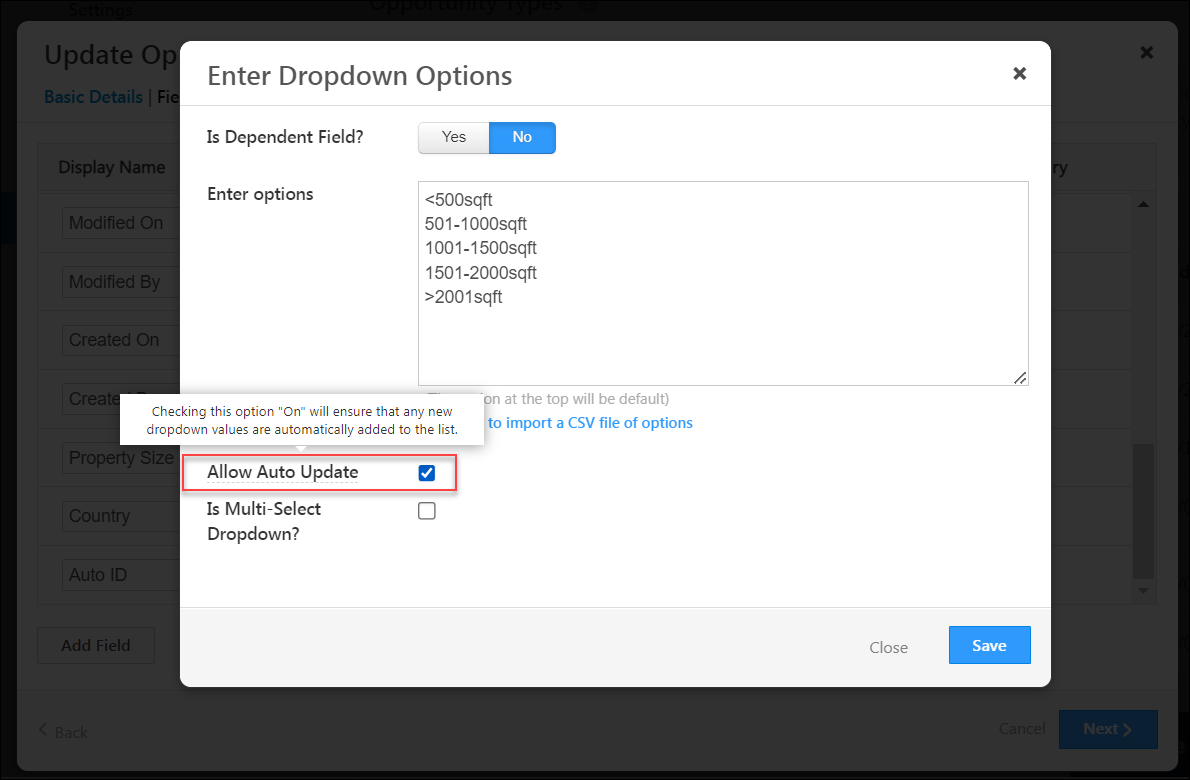
Enable Dynamic Forms on Offline Mode in the Mobile App

Feature Overview

Offline-compatible dynamic forms can be used on the mobile app without an internet connection. You can enter information on the form and save it as a draft. However, you can only submit the form once you’re back online. These saved drafts will be displayed under Offline: Pending Sync.

Offline-compatible forms are displayed on the Manage Forms page as shown below –

LeadSquared - offline compatible form

Note: In order to identify whether an existing form is offline-compatible or not, the form needs to be republished.


Enable Dynamic Forms in Offline Mode

To enable dynamic on offline mode –

  1. Navigate to My Profile>Settings>Mobile app>Permissions and under Offline Leads, enable the Allow Access setting.
  2. Navigate to My Profile>Settings>Mobile App>Additional Settings and under Forms, enable the Offline Dynamic Forms setting.
  3. On the mobile app –
    1. Tap LeadSquared - Mobile app menu.
    2. Tap Setting icon.
    3. Tap Offline and and enable the Leads setting.

Note: Offline-compatible forms will be accessible to users only for the following Add lead work areas for mobile in the Portal Designer

  • Lead list 
  • Lead Smartviews 
  • Leads Near me
  • Accounts
  • Opportunities 
  • Home builder 

LeadSquared - Enable dynamic forms in offline mode


View Saved Dynamic Forms

To view the saved drafts of the dynamic forms on the mobile app –

  1. Tap LeadSquared - Mobile app menu.
  2. Tap Offline: Pending Sync.
  3. Tap Forms. and select the relevant saved form to view.

LeadSquared - Offline forms in mobile


Limitations

A form cannot be offline-compatible if it has any of the following:

  • Fields –
    • Email OTP
    • Phone/PhoneText OTP
    • Iframe
    • LOS
    • Account
    • Associated lead field
    • Associated opportunity field
    • Lead CFS field
    • Grid/tiles
    • File export field
    • QA/Bar code field
    • Payment(Not supported in Mobile Apps)
    • Captcha (Not supported in Mobile Apps)
  • Rules:
    • Set Value from Lapp/API/Mavis
    • Set Options from Lapp/API/Mavis
    • Data From File Lapps


Any Questions?

We’d love to answer your questions or hear your own unique use cases. Feel free to share your experiences in the comments section below.

How to Share a Lead via Email

You can share a lead’s information with other users in your account over email.

Note: To give a user temporary view or edit access to a lead, see How to Share Leads for a Limited Duration.

Follow these steps to share a lead via email –

  1. On the main menu, navigate to Leads>Manage Leads.
  2. Hover your cursor over the actionsSettings iconwheel, then click Share Via Email.

share via email

On the Share Lead Info Via Email pop-up,

  • Use the Email to field to add more users you want to send the email to
  • Use the Notes field to add relevant information or context to the email

Click the Email button when you’re done.

share via email popup

The selected users will now receive an email like the one shown below. They can click the View Lead Detail link to navigate to the Lead Details page in LeadSquared. Note that only users with permission to view the lead will be able to see the lead details page.

share lead email


Any Questions?

Did you find this article helpful? Please let us know any feedback you may have in the comments section below. We’d love to hear from you and help you out!
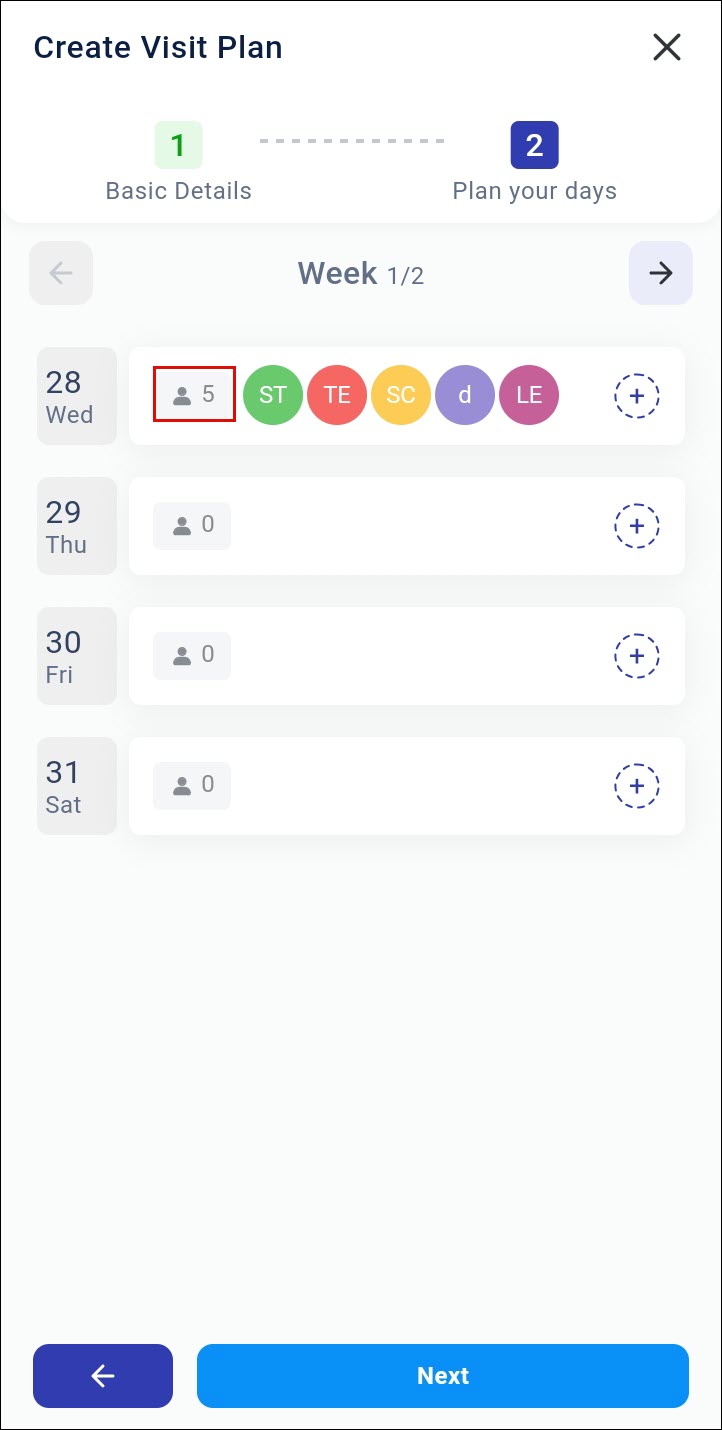
Exotel Connector

1. Feature Overview

This Connector enables you to integrate Exotel with your LeadSquared system, if you are using Exotel for business to capture the leads with their phone number directly in your LeadSquared account. The features of this Connector are –

  • Prevents lead leakage by tracking phone calls as leads and activities.
  • Ability to make outbound calls (click to call) and automatically track the calls in Lead Activity History.
  • Access call recordings of inbound and outbound calls.
  • Route incoming calls from existing leads to respective lead owners. (Sticky agent)
  • Displays lead information pop-up to LeadSquared Users when an incoming call is received.


2. Prerequisites

  • You must be an Administrator user to install and configure the Connector.
  • You should have an active Exotel Account and must have access to its panel.


3. Procedure

  1. From the default LeadSquared dashboard, navigate to Apps>Apps MarketplaceThe Marketplace window appears.

LeadSquared Exotel Integration

2. In the left pane, click Telephony and select Exotel Connector from the right display pane.

LeadSquared Exotel Integration

3. Click Install. Once the installation is completed, you are redirected to the section where you can configure the connector.

4. Under the Settings section, click Configure. The Configure Exotel V2 appears.

LeadSquared Exotel Integration

Note: You can Disable, then Remove the connector from here at any time after installation and configuration.

You can configure the following features for Exotel –

  • Virtual Numbers
  • Call Route
  • Agent Popup
  • Call Logs
  • Click 2 Call

3.1 Virtual Numbers

Virtual Number is your Exotel Phone number given by the Exotel Telephony provider. To obtain Exotel Phone numbers log onto your Exotel account and click ExoPhones tab under Admin.

LeadSquared Exotel Integration

Add the ExoPhone number in Virtual numbers section (on popup) in the Phone field and Tag it with a name for reference and click Save.

LeadSquared Exotel Integration

Note: International phone numbers are also supported in the virtual numbers (Caller Id) field. For more information, see Organization Settings – Advanced Configuration.


3.2 Call Route

You may Route calls made by the existing Leads in LeadSquared to their respective Lead Owners using Call Route.

Note – Call Route is not mandatory and you may use Sticky Agent feature of Exotel to route calls to the first agent who answered lead’s call earlier.

However, if you wish to enable call routing to lead owners, follow the procedure below –

  1. Copy the Call Route URL from the Call Route tab on popup.

LeadSquared Exotel Integration

ii. From the Exotel Panel navigate to App Bazaar>Installed Apps and click Edit Call App.

LeadSquared Exotel Integration

iii. Paste the copied URL in the Dial Whom section of the Connect Applet in the Exotel Panel.

Note – Paste the URL in all places of the call flows wherever the Connect applet is used.

LeadSquared Exotel Integration


3.3 Agent Popup

You can enable incoming call notifications for agents who see it as an Incoming call popup on active LeadSquared pages. To do this –

  1. Copy the Screen popup URL in the Agent Popup tab of the Configure Exotel pop-up.
  2. Click on Enable button to enable Agent popup notifications.

LeadSquared Exotel Integration

iii. On the Exotel panel, go to App Bazaar and click Edit Call AppThe Call Flow setup appears.

LeadSquared Exotel Integration

iv. In the Call Flow, paste the ScreenPopup URL in Create Popup section of the Connect Applets.

This ensures a popup is shown when a call lands on an Agent’s phone number.

LeadSquared Exotel Integration


3.4 Call Logs

All Inbound and Outbound calls made through Exotel Telepony service can be tracked in LeadSquared in Lead Activity Stream available under Leads Menu.

  1. Copy the Webhook URL for Call Logs.

LeadSquared Exotel Integration

ii. In the Exotel Panel, go to App Bazaar and click Edit Call App to view the call flow setup.

LeadSquared Exotel Integration

iii. Under Voice Applets, find Passthru Applets and place the Call Log Webhook URL in Information Pass Through section on the Passthru Applet. Information Pass Through sends the call log details to LeadSquared.

Note – Passthru Applets is found in Connect Applets to post call logs after a call ends. Passthru can also be used in the Voice Mail Applets also in cases where the call was not answered by any agent. Ensure All Passthru applets are provided by Call Log webhook URLs so that no calls are missed in LeadSquared.

LeadSquared Exotel Integration


3.5 Click 2 Call

You can enable click to call feature for your Users to be able to initiate outbound calls to leads directly from LeadSquared.

  1. Add the Exotel API Key and Servide ID in the text boxes as shown in the image below.
  2. Click Enable, and then click Save.

To obtain API Key & Service Id from Exotel –

  1. From your Exotel home window, go to My Accounts>Settings and select the API Settings tab.
  2. Exotel SID is the Servide Id. Copy the value and place it in Service Id on LeadSquared configuration popup.
  3. Exotel Token is the required API Key. Paste the value of Exotel Token in configuration popup.

LeadSquared Exotel Integration


4. Making Click 2 Call (Outbound Calls) using Async APIs

Use LeadSquared’s Async API framework to ensure more reliable call logs posting for outbound calls.

  1. First, you must enable Async APIs for your account. Navigate to My Profile>Settings>API and Webhooks>Async API, and click Yes to enable it.

Async API Keys

ii. Then, navigate to My Profile>Settings>Organization Settings>Advanced Configurations, and enable the Enable Async APIs for Telephony (Capras) setting.

Once these settings are enabled, the Async APIs will be used to post call logs for outbound phone calls made from LeadSquared. This will be visible in the telephony call logs (navigate to My Profile>Settings>API and Webhooks>Telephony Logs). When you view the call log data, the Async API URL will be visible. For example –

https://asyncapi-in21.leadsquared.com/2/api/telephony/logoutboundcall/4f4b088ffa0a7afd9c617061bd7920b72d?xapikey=<x-API-key>

Exotel Integration with LeadSquared


5. Outbound calls through Exotel

LeadSquared allows you to make outbound calls, through the Exotel Connector.  After your connector configuration is done you will see an option to initiate a call in three places –

  • Manage Lead

LeadSquared Exotel Integration

  • Lead Details

LeadSquared Exotel Integration

  • Lead Activity Stream

LeadSquared Exotel Integration

Exotel is successfully integrated and configured in your LeadSquared Account.

Note – Please Ignore the Single Sign-on and Call Disposition sections. These essentially are for other cloud telephony connectors.

For any queries please write to us at support@leadsquared.com.


Any Questions?

Did you find this article helpful? Please let us know any feedback you may have in the comments section below. We’d love to hear from you and help you out!
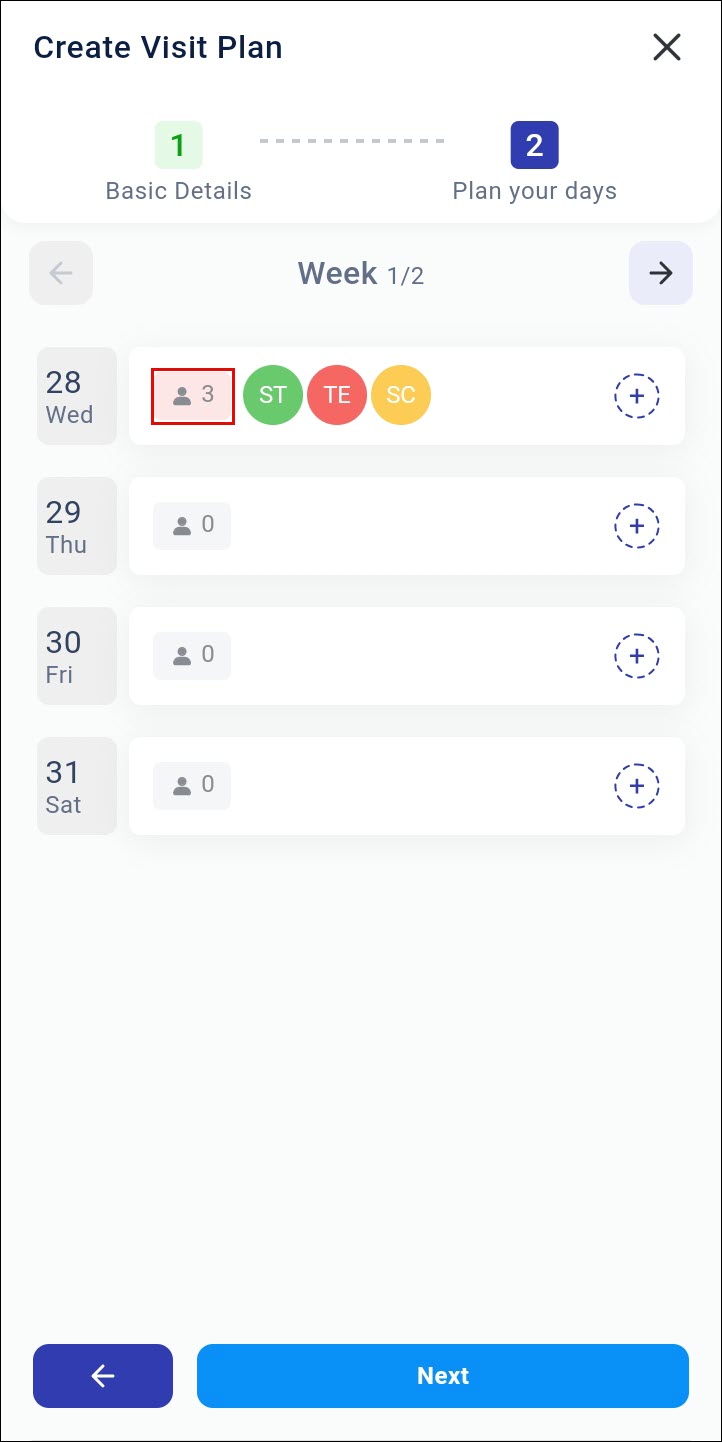
Integrate Super Receptionist right from SR Panel

Integrate Super-Receptionist with LeadSquared

Super Receptionist  (SR) is a personal reception hosted virtually in a Cloud Telephony environment.

If you are using Super Receptionist for your business, you can integrate it with LeadSquared to capture the lead with its phone number directly in your LeadSquared account.

Super Receptionist connector in LeadSquared allows you to:

  • Track incoming calls from leads.
  • Create Leads with phone number.
  • Merge phone numbers with existing lead details.
  • Direct/Route incoming calls from leads to respective lead owners.
  • Make outbound calls using Click to call feature
  • Track outbound calls.
  • Agent Call Notification Popup can be enabled for Users when an Inbound call is routed to them.

Prerequisites:

  • You must be an Admin User of your LeadSquared account.
  • Your LeadSquared plan supports telephony integration
  • You are using the Super Receptionist (Knowlarity) service. It is configured and active.

Essentially SR – LeadSquared Integration can be done from both the panels, you may choose either of the two per your convenience.

This article describes the procedures for integration from Super Receptionist panel.

For Integration Set-up procedure from within LeadSquared Application see:

Super Receptionist Connector (Version 2)

Integrate Super Receptionist from SR Admin Panel.

Procedure:

A. You would need the following from LeadSquared Account:

1. API Access Id & 2. Secret Key from your LeadSquared Account.

here is how you can obtain these:

Navigate to My Accounts > Settings > API and Webhooks.

Click on Show Secret Key.

Incase you do not find Access Key and Show Secret Key button on the grid, click Generate key.

You will see an API Access Key popup with API Access Id and Secret Keys.

Copy the Access Id and Secret Key.

B. Now, login to SR panel and navigate to Settings > Integrations.

Locate LeadSquared and click Enable Now.

Sr Panel for Integrations

You will see LeadSquared Configurations page.

Enter or Paste the Access Id and Secret Key (copied earlier) in the corresponding fields;

Select SR Number & Click Save.

Super Recep Panel settings

That is all, your Super Receptionist Account is now integrated with your LeadSquared Account.


For help with Integrating your SR account with LeadSquared from within your LeadSquared Account refer to:

Super Receptionist Connector (Version 2)

Custom Dashlet Builder App

1. Feature Overview

You can build Custom Dashlets to monitor lead stats straight from your dashboard. You can control who gets to access these dashboards and display specific dashlets to different users.


2. Prerequisites

  1. To install the Custom Dashlets Builder app, you have to be the Administrator of your LeadSquared account.
  2. Once the app is installed, Administrator & Marketing users can build/create custom dashlets and add them to the library for users to use/add these dashlets to their custom dashboards.


3. Types of Dashlets

  1. Lead Distribution by 1 Lead Field.
  2. Lead Distribution by 2 Lead Fields.

These Dashlets can be specifically created for 2 kinds of user roles –

  1. All Lead Access – Admin, Marketing & Sales Manager roles
  2. Restricted/Sales User Access – Sales Users roles.

Dashlets thus created will be available for users based on the lead access specified.


4. Installation

  1. From the main menu navigate to Apps>App Marketplace, select the Analytics Category and under the Custom Dashlets Builder app click Install. Alternatively, you could just search for the app directly from the Apps Marketplace.
  2. Once installed, hover the cursor over the SettingsSettings iconicon and click Configure.

Custom Dashlet App


5. Create a New Dashlet

Now that the app is installed, Admin/Marketing users can start building custom dashlets from Dashlet Builder available under the Apps Menu.

  1. On the main menu, navigate to Apps>Dashlet Builder.
  2. Click Add Dashlet.
  3. After filling in the necessary fields (described below), click Preview to see what your dashlet will look like.
  4. Click Save when you’re done.
Note: There is no limit to the number of Custom Dashlets you can create. However, you can add a maximum of 12 Custom Dashlets to your dashboard at a time.

dashlet builder

Here are the fields you need to populate to add a new dashlet –

 Field Description
Name Enter a name for the dashlet
Description Enter a description
Height Height of the dashlet in pixels. This helps dashlets with large content render better on your dashboard. 360 px is the default height.
Dashlet Type
  1. [All Leads Access] – Lead Count distribution by field:
    Admin, Marketing & Sales Managers will have access to this dashlet. It will show you the count of leads for one field (e.g. Lead Stage).
  2. [All Leads Access] – Lead Count distribution by two fields:
    Admin, Marketing & Sales Managers will have access to this dashlet. It will show you the count of leads for two fields. Select one as Lead Label Field and the other as another as Lead Column Field.
  3. [Sales User Acess] – Lead Count distribution by field:
    This dashlet will only be visible to Sales users. It will show you the count of leads for one field.
  4. [Sales User Acess] – Lead Count distribution by two fields:
    This dashlet will only be visible to Sales users. It will show you the count of leads for two fields. Select one as Lead Label Field and the other as another as Lead Column Field.
Select Report Type This option will only be available for the following dashlet types –

  • [All Leads Access] – Lead Count distribution by field
  • [Sales User Acess] – Lead Count distribution by field

You can choose to render these dashlets in tabular form, as pie charts or as bar graphs.

Apply Fixed Filter You can filter in or filter out the results by setting the appropriate filter for the dashlet. For example, if you wish to filter in/out leads of any specific Lead Stage you can add this filter.

Here’s what a Lead Distribution by a Lead Field (Lead Stage) dashlet looks like –

Dashlet by 1 lead field

And here’s an example of lead distribution by 2 Lead Fields (Lead Stage Vs Lead Source) –

Dashlet with 2 fields


6. Add a Dashlet to a Dashboard

To add custom dashlets to dashboard, navigate to the dashboard and click Add Dashlet.

Adding a Custom Dashlet

In the Add Dashlets pop-up, under Select Category, select Custom. Select your custom dashlet, then click Add.

Adding a dashlet to the dashboard

For any queries, feel free to write to us at support@leadsquared.com.


Any Questions?

Did you find this article helpful? Please let us know any feedback you may have in the comments section below. We’d love to hear from you and help you out!

Super Receptionist Connector (Version 2)

Integrate Super-Receptionist with LeadSquared

Super Receptionist  (SR) is a personal reception hosted virtually in a Cloud Telephony environment.

If you are using Super Receptionist for your business, you can integrate it with LeadSquared to capture the lead with its phone number directly in your LeadSquared account.

Super Receptionist connector in LeadSquared allows you to:

  • Track incoming calls from leads.
  • Create Leads with phone number.
  • Merge phone numbers with existing lead details.
  • Direct/Route incoming calls from leads to respective lead owners.
  • Make outbound calls using Click to call feature
  • Track outbound calls.
  • Agent Call Notification Popup can be enabled for Users when an Inbound call is routed to them.

Prerequisites:

  • You must be an Admin User of your LeadSquared account.
  • Your LeadSquared plan supports telephony integration
  • You are using the Super Receptionist (Knowlarity) service. It is configured and active.

You can now Integrate Super Receptionist account with your LeadSquared in the following 2 ways:

1. From LeadSquared Application (Detailed Procedure is described below)

2. Directly from Super Receptionist Panel. (For procedure refer to the below article)

Integrate Super Receptionist right from SR Panel

Below is the Procedure to:

Integrate Super Receptionist from LeadSquared Application

To integrate Super Receptionist with LeadSquared account you would just need to get the following:

  1. API from Super Receptionist panel.
  2. The Virtual Numbers associated with the SR account.

Here is the procedure to obtain the API Key and virtual numbers from your SR account panel.

A. Get your SR Virtual Number and API Key.

Log in to your Super Receptionist account to get the API Key and Virtual Number(s).

Your Super Receptionist phone number is your Virtual Number. Copy and Note it.

SR number 1

For API key : Navigate to SETTINGS > CALL FLOW > PLAN SETTINGS

Plansettings

In Plan Settings scroll down to the bottom of the page to find the API key of your SR account.

Copy and Note the API Key.


Setting up the Super Receptionist App in LeadSquared

 I. Navigate to APPS -> Apps Marketplace and click on “Telephony” from the list of categories.

You may also search for Super Receptionist.

You will see Super Receptionist V2. Click Install.

SR v2

Clicking on the connector, you will be redirected to Super Receptionist connector details page.

Hover the cursor over Settings and click Register option.

SR v2 register

If you wish to Register later the App will be available for you in Show Installed Apps tab section.

V2 sr

Once you click register you will see a pop-up, where you can register using the SR API Key and Virtual Numbers.

Key in the SR API key & Virtual Numbers obtained earlier. Refer to Step A.

Click Register.

SR reg popup

Once registered a success message appears and all the set-up will be automatically done for you both in SR panel and LeadSquared Super Receptionist App Configuration.

That is all.

Super Receptionist App is successfully configured and integrated with your LeadSquared account.


Here are the features that are configured automatically.

1. Call Logs

2. Click to Call

3. Agent Popup for Incoming calls

Note: Agent Popup needs a few necessary conditions to be satisfied, refer to the Agent popup details below.

4. LeadSquared Call Route Feature: 

Besides the first 3 features, LeadSquared also enables you to route the calls from existing leads to their respective Lead Owner.

To enable Lead Route your SR account must support the feature. Procedure to set-up is described in detail below.


Call Log:

All Inbound and Outbound calls made through Super Receptionist account can be tracked in LeadSquared in Lead Activity Stream available under Leads Menu.

Lead Activity Stream

LAS 2

Click 2 Call:

Users can now initiate Outbound calls to leads directly from LeadSquared.

Make outbound calls through SR connector in LeadSquared.

LeadSquared allows you to make outbound calls, through the Super Receptionist connector.  After your SR connector configuration is done you will see an option to initiate a call in three places:

  • Manage Leads (including lead page inside Lists)
  • Lead Details
  • Lead Activity Stream.

Manage Leads

C2C Manage Leads

Lead Details

Call enabled

Lead Activity Stream

LAS

3. Agent Popup: 

Real-time Inbound Call Notification can be shown to the Users in the form of an Incoming Call Popup, whenever an inbound call from a lead (made to your SR number) is routed to the LeadSquared User.

Note: Incoming calls matching a lead’s secondary phone number will be tracked without creating a duplicate lead.

Below is an image of sample Inbound Call Pop-up for you.

popup with view details

  • Users can capture lead data in the fields on popup and Save the data for the Lead.
  • Any call notes captured in the ‘Notes’ field on pop-up will be added as a note for the Lead in Lead details page.

Customize Agent Pop-up Form: The Pop-up form can also be customized to add required fields to it in your LeadSquared account.

  • Please note: A few mandatory fields can not be removed from the Agent Pop-up Form.

Navigate to My Account > Settings > Customization > Lead Forms. Select Agent Pop-up Form from drop down.

Agent popup form customization

Customize and Save the form.

Necessary Settings for the Popup to appear:

In your LeadSquared account make sure you have Users having phone numbers corresponding to your agents in Super Receptionist.

  • Associate respective SR Agent Phone numbers  to the Users of your LeadSquared account.

An Administrator can do this while Creating Users or by Editing existing Users.

You can update phone number of your LeadSquared users at My Account -> Settings -> Users & Permissions:

User Settings


Also, Users can associate a phone number in their LeadSquared account (It has to be same as their Agent phone number in SR account).

To Associate phone number Navigate to : My Account > Settings > Account Settings > My Profile

Select Show incoming Call Pop-up. This enables Agent Call Notification.

Associate phone number for Agent


 4. Call Route :

This feature enables automatic routing of calls from an existing lead to the respective Lead owner in LeadSquared automatically.

The Webhook URL (Lead Route URL) has to be deployed in your Super Receptionist Account.

In the Installed Apps section, locate Super Receptionist (V2) and click on Configure option seen on gear icon.

Call Route

configuration popup appears.

Call-Route-SR-update

Procedure to Setup Route Call Webhook in SR account: 

R1. Log In to your SR account and navigate to SETTINGS > HOOK API > Click Add API button.

Hook API

Add API pop-up appears.

R2. Add the Route Call Webhook next.

  • Select GET as the Request type.
  • You may enter any name as the Name for API or simply “Route Call Webhook” for reference.
  • Paste the corresponding Webhook URL that was copied and noted earlier.
  • Click ADD

route call webhook

R3. Setup LeadSquared CALL ROUTING API in SR account for each extension.

Now you can setup the routing of calls from existing leads to their respective Lead Owners in LeadSquared.

Navigate to Settings > Call Flow > Rules > After Answer Rule.

Edit each or required Extension/Rule where Phone is chosen as Action.

EDIT Rules

Once you click Edit option the After Answer Rule window opens up (For the chosen Rule)

  • Select YES for both Enable Fallback Rule and Use API for Agents options.
  • Next, from WhotoCall API select the relevant API name – Route Call Webhook, that you have specified earlier (In Step R2).
  • Also, you must select a Fallback Agents to receive calls in case the Lead Owner‘s number is busy.

Route API

Save Rule once these steps are complete.

save Call Route

Now, Once these settings are done, all incoming calls from leads will be forwarded to their respective lead owners and then to fallback agents (Incase the Lead owner is busy).

You may edit more “After Answer”  extensions in similar way.

Capture Sales Activities

1. Feature Overview

The Sales Activity feature lets you capture important information related to each sale (e.g., product sold, sales owner, date, order value, etc.). Depending on the nature of the business the Sales Activities are also known as Customer Sign-up, Order Capture, Purchase Order, Paid Subscription, New Registration, Enrollment, New Deal, etc.

These activities sum up to give you the total Revenue generated which can be tracked and analysed using the Sales and Revenue Reports and the LeadSquared Goals feature.

Note: This article describes how users (typically sales users and sales managers) can post sales activities on leads. To configure sales activities to reflect your business requirements, Admins can refer to Sales Activity Management.


2. Prerequisites

  • Only Admins and Marketing Users can configure sales activities.
  • Once configured, all users can post sales activities on leads.


3. How it Works

  1. Navigate to the Manage Leads or Lead Details page on LeadSquared.
  2. Select the option to add a new sales activity against a lead.
  3. Enter the appropriate details and save the activity.


4. Add Sales Activity for a Lead

Sales Activities can be added by Administrators, Sales Users, and Sales Managers.

4.1 Add an Activity From Manage Leads Page

1. Navigate to Leads>Manage Leads.

Sales activity leads nav

2. Alongside the relevant lead, hover your cursor over the LeadSquared icon and select New Sales Activity.

Sales activity new sales 2

3. Enter the relevant details in the New Sales Activity box –

Sales Activity Field Description
Status Select the status of the lead for the new sales activity.
Product Select the product being sold.
Order Value Enter the order value or deal size for the sales activity.
Sales Date Select the date and time of the sale.
Sales Owner Select the owner for the lead.

Once you’re done, click Save.

Note:

  • You can edit the Sales Activity Fields on the Settings page.
  • You can create multiple products that your users can choose from while creating a sales activity.

Sales activity new sales 1

4. If you would like to add an attachment (for example, an invoice) to the sales activity, click on the Attachments tab. Click Upload and select the required attachment. Once the attachment is uploaded, click Save and Close. Once the activity is saved, it is captured in the Activity History panel.

Sales activity upload 2


4.2 Add an Activity From Lead Details Page

1. Navigate to Leads>Manage Leads.

Sales activity leads nav

2. To view the Lead Details page, click the name of the relevant lead. Next, click on Sales Activity.

Sales activity new sales 11


5. Edit or Delete Sales Activity

5.1 Edit a Sales Activity

  1. On the Lead Details page, Under the Activity History tab, click on the sales activity edit icon against the lead activity.
  2. Make the required changes and click Save and Close.

Sales activity edit

5.2 Delete a Sales Activity

  1. On the Lead Details page, under the Activity History tab, click on the  sales activity delete icon against the lead activity.
  2. Enter a cancellation note and click Save.

Sales activity delete

5.3 Advanced Search

You can use advanced search to find leads where custom fields of activities contain or don’t contain data.

  1. Navigate to Leads>Manage Leads.
  2. Click on Advanced Search.
  3. Enter the search criteria for the activity and sales field you are searching for.
  4. Click on + Add to add the search criteria.
  5. Click Find Leads.

Sales activity advanced search

Note:

  • The default currency can be specified in the Sales Activity Settings by an Administrator.
  • Sales Activity can be renamed in the Sales Activity Settings by an Administrator to match your requirement.
    • Example: An education business may call it Admission or Enrollment.
  • Sales Activities can also be added through Smart ViewsManage Lists, and List Details page.


Any Questions?

Did you find this article helpful? Please let us know any feedback you may have in the comments section below. We’d love to hear from you and help you out!

Export Your Data from LeadSquared

1. Feature Overview

Before you deactivate or close your account, make sure you back up your data by exporting it from your LeadSquared account. This article details how you can export data from LeadSquared.

Note:

  • To export larger data sets of lead, activity, and opportunity data, refer to Large Exportable Reports.
  • If the value of a field starts with the following characters + , – , = , | , @ they will be enclosed within quotes in the exported CSV file. This is done to prevent issues that may arise in Excel (such as format issues, excel injections, etc.) as a result of special characters in the cells.


2. Export Leads

Note: You can only export 100,000 leads at once If you’d like to export more, refer to  How to Export More than 1 Lakh Leads?


3. Export Activities

To export system or custom activities, refer to Export Activities.


4. Export Opportunities

To export opportunities from LeadSquared, refer to Export Opportunities.


5. Export Users

To export users from LeadSquared, refer to Manage Users.


6. Export Email Campaign Data

Navigate to Marketing>Email campaign.

  • To export data from email campaigns –
    1. Hover your cursor over Actions.
    2. Click Export Campaign data.

LeadSquared - Export campaign data

  • To export specific lists of leads from the completed Email Campaign Reports (like leads that clicked on the email, leads that ignored the email, etc.) –
    1. Scroll sideways and hover your cursor over LeadSquared - Settings icon.
    2. Select View Report.
    3. Alongside the relevant list of leads, hover your cursor over Actions and click Export Leads.
Note: You can export upto 100,000 leads from the Email Campaign Reports.

LeadSquared - Export leads from email campaign report


7. Export Tasks

To export tasks from your LeadSquared account, refer to How to Create Tasks and Schedule Reminders?


8. Export Accounts

To bulk export multiple accounts from LeadSquared, refer to Accounts Management – Feature Guide.


9. Export Data from Mavis


10. Export SIERA Reports

To export data from SIERA Reports, refer to SIERA Feature Guide.


11. Export Audit Logs

To export your audit history reports, refer to LeadSquared Security Settings – Audit Logs.


12. Export Payment Logs

To export your payment logs, refer to Payment Logs.


Any Questions?

Did you find this article helpful? Please let us know any feedback you may have in the comments section below. We’d love to hear from you and help you out!

How to Configure Mobile App Notifications

Configure notification for your LeadSquared application in your mobile.

Set up device notifications for your users using LeadSquared mobile app. You can setup notifications for task reminders, new leads and lead assignments for your users.

Follow the the below instruction to install and configure mobile app notification.

  • Log on to your LeadSquared account in a web browser .
  • Go to Apps -> Apps Marketplace and click Mobile from the Categories section on the left pane of the window as highlighted in the below image. The LeadSquared Leadsquared Mobile App Notification appears.

2016-01-14_15-47-21

  • Click Install . Once the installation is complete, click Leadsquared Mobile App Notification and the Leadsquared Mobile App Notification window is displayed.

To configure:

  • Under Settings , click Configure. The Configuration pop-up box appears

2016-01-14_15-58-27

2016-01-14_16-04-25

  • Select the options , which sends the notifications when actions are performed.
  • Once selected , click Save Settings

There is also an option in the mobile application of LeadSquared to control to notification of the app.

You will receive the notification in your mobile to make sure that you do not miss any lead.

If you wish to disable or remove:

  • Go to Settings page of the Application and you will have an option to remove it or disable.

View a Lead’s Documents/Images in a Slideshow

1. Feature Overview

You can now view a slideshow of all the images that have uploaded to a lead in the Custom Field Sets (CFS). To know more, see Custom Field Sets.

2. Creating Custom Field Sets

  1. You will have to create a CFS for your lead. To do this, navigate to My Profile>Settings>Leads>Manage Custom Field Set, and then click Create.
  2. Once you have successfully created a CFS, you will have to add it to your lead.

Create Custome Field Set


3. Adding Custom Field Sets to Leads

  1. Navigate to Leads>Manage Leads, and click on any lead.
  2. Under the Lead Details tab, click on the edit Edit icon.
  3. Scroll down to the CFS you created, and upload relevant images under each category.
  4. Click Save once you have uploaded the images.

View Images in Custom Field Sets


4. Configuring the Custom Lead and List Action connector

    1. Navigate to Apps>Apps Market Place, search and Install the Custom Lead and List Actions connector.
    2. After installing the app, hover on the icon and click Configure.
    3. In the Lead Grid Row Action column, click on +Add Actions.
    4. Under Action Label, enter the name of the action you are creating. We’ve called it “View Documents”.
    5. For Action Type, choose Show as Popup.
    6. In the Callback URL box, paste –
      https://{hostname}/Widget/Slides?slideCode=1&entityId=@{Lead: ProspectID,}
      • Substitute “{hostname}” with the host of the region in which your account was created.
      • We have used “in21.leadsquared.com” for the Indian region (Mumbai). This would be –
        https://in21.leadsquared.com/Widget/Slides?slideCode=1&entityId=@{Lead: ProspectID,}
      • For India (Hyderabad), use “in22.leadsquared.com”
      • For the US region, use “us11.leadsquared.com”.
      • For the Singapore region, use “run.leadsquared.com”.
      • For the Ireland region, use “ir31.leadsquared.com”.
      • For the Canada region, use “ca12.leadsquared.com“.
    7. The HTTP Method should be GET.
    8. Click Save.
    9. Close the window, and reopen it again by hovering on the icon and clicking Configure.
    10. You can now see that your Lead Grid Row Action has been created.

Custom Lead and List Actions


5. View List Action

  1. Navigate to Leads>Manage Leads.
  2. Against any lead, under the Actions tab, hover on the Action Icon icon. You can view the List Action that was created.
  3. Click on the List Action item, and you can view the image slideshow.

View Images in Custom Field Sets


Any Questions?

Did you find this article helpful? Please let us know any feedback you may have in the comments section below. We’d love to hear from you and help you out!
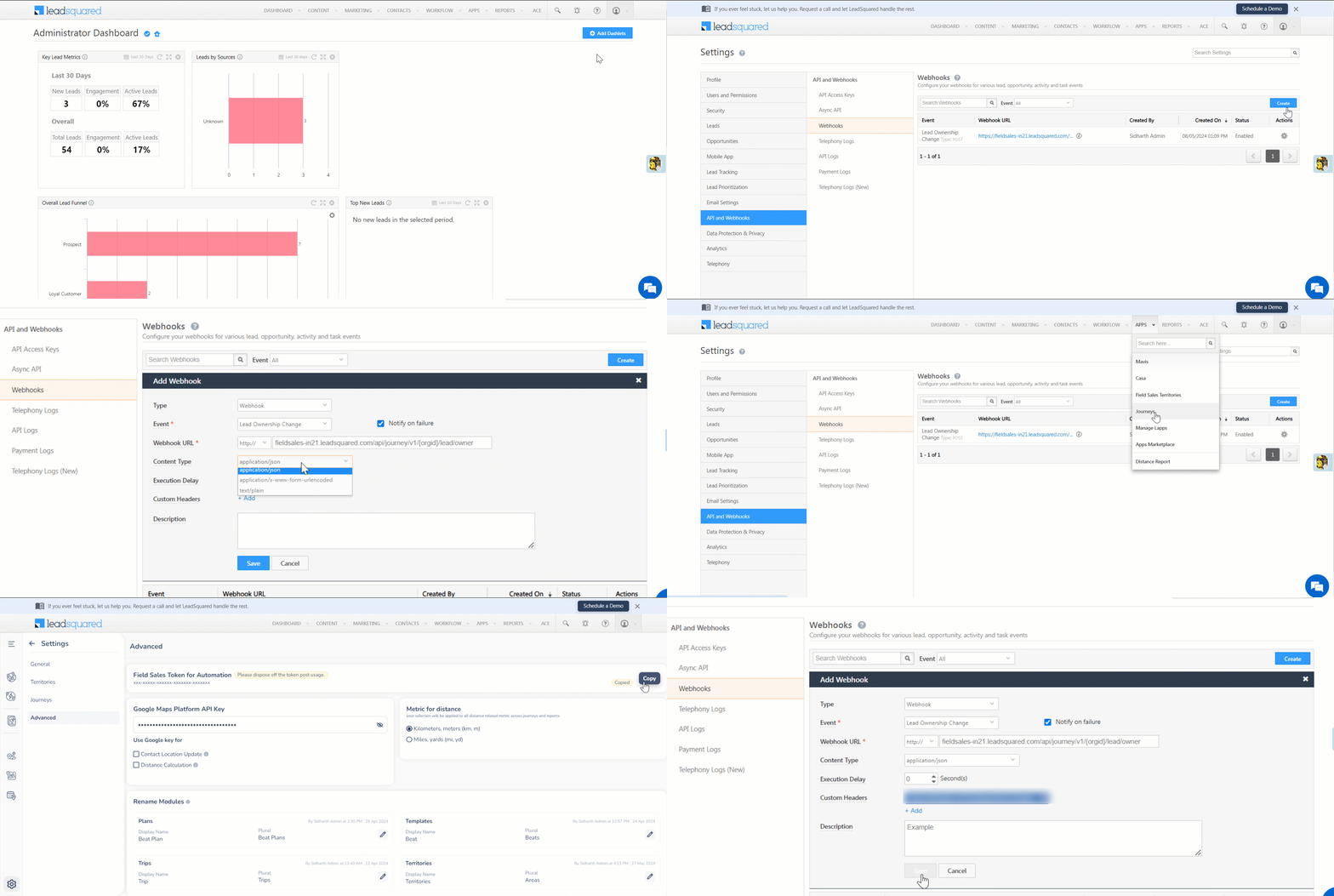
Capturing Leads from Gravity Forms in LeadSquared

Important: If you’re looking to integrate Gravity Forms with your LeadSquared account after 1st January, 2023, install the new Gravity Forms connector. The connector listed in this article does not support new installations after the specified date.

1. Feature Overview

Many companies use Gravity Forms on their WordPress sites to capture leads. We provide an integration with Gravity Form to get these leads into LeadSquared.


2. Prerequisites

  1. Gravity Form should be installed in your WordPress account. The version of Gravity form should be 1.9.10.16 and above.
  2. You should have LeadSquared Administrator access


3. Procedure

  • To download the file, from the LeadSquared dashboard, navigate to Apps>Apps Marketplace and Gravity Form.
  • Login to your WordPress account.
  • Navigate to Plugins>Add New.

2016-01-11_12-30-11

  • On the Add Plugins page, you will have the option to Upload Plugin as shown in the below image.

2016-01-11_12-38-34

  • In the next page, Choose File option is available. Choose the downloaded zip file.
  • Once done, click on Install Now.
  • Then click on the Activate Plugin as shown in the below image,

2016-01-11_12-44-05

  • The plugin is now activated.

Follow the below steps to synchronize Gravity Form and your Leadsquared account.

  • Once the Plugin is activated you will be able to see Gravity Forms Leadsquared Add-On.
  • ClickSettings on Gravity Forms Leadsquared Add-On.

2016-01-11_12-49-34

  • In the Settings page, you have to provide Access Key and Secret Key of your LeadSquared Account.
  • You will find your API Access Key and Secret Key in the Settings page of your LeadSquared Account.

2016-01-11_12-54-40

  • If the give Access Key and Secret Key is correct then you will see a tick mark as shown in the above image. If the key is incorrect, you will see an (X) symbol in red.
  • Now you can Gravity Form fields to LeadSquared fields.
  • On the Forms column, click on Add New as shown in the below image, or edit your existing forms.

2016-01-11_13-42-37

  • Click on Form Settings and choose LeadSquared from the drop-down as shown below image
  • Now click on Add New as directed below

2016-01-11_13-52-53

  • Now you have to set the appropriate feed settings between the Gravity Form and Leadsquared.
  • You can also specify the Lead Owner for all the leads which are from Gravity Form that you are designing in Feed Settings
  • Also, you can customize the Lead Source.

2016-01-11_14-10-26

  • Once the Settings are done, click on Update Settings.

You are Gravity Form is ready to capture leads and push it to Leadsquared.

Note – If you would like to capture the lead source and enable tracking, kindly follow the below steps in additional.

While creating form create a new field (Single Line Text ) and name the field as “ProspectID”. For this field please provide Custom CSS class name as “ProspectID gform_hidden”.

test

Once you’ve completed this, click Save or Update. In Form Settings, go to LeadSquared, add a new field and map it to the Prospect Id in Gravity Form filed.
Leave the Lead Source field blank as shown in the below image.

test2


Any Questions?

Did you find this article helpful? Please let us know any feedback you may have in the comments section below. We’d love to hear from you and help you out!
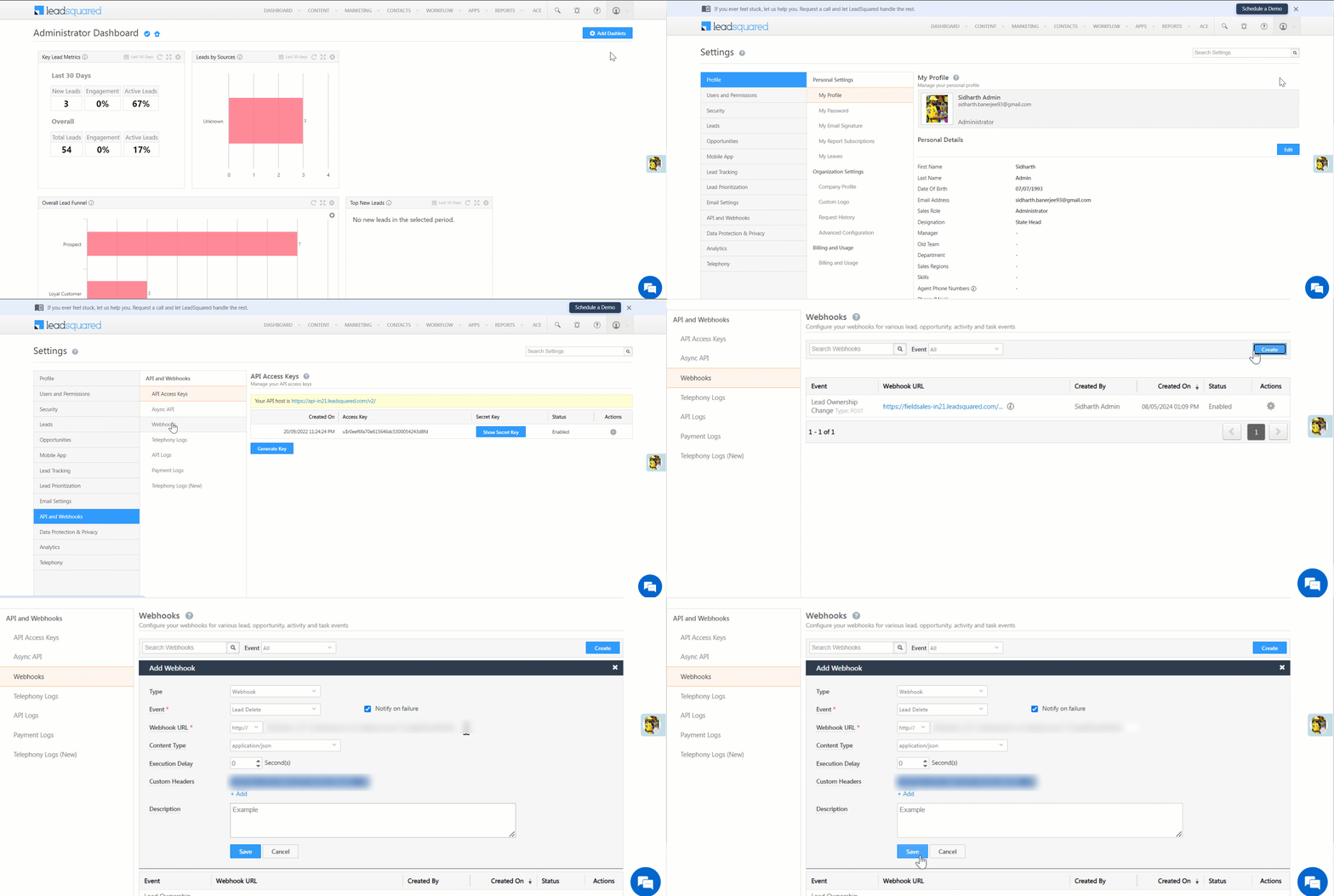
Reverse IP Lookup

1. Feature Overview

The Reverse IP Lookup setting allows you to automatically view the location (City, State and Country) of a lead that’s captured from a landing page. The location of these leads is displayed on the Lead Details page.

LeadSquared - location on vcard


2. Prerequisite

To configure this setting, you must be the Admin user of your LeadSquared account.


3. Enable Reverse IP Lookup

  1. Navigate to Settings>Lead Tracking>Reverse IP Lookup.
  2. Alongside Enable Reverse IP look-up, click Yes or No based on whether you want to capture the lead’s location or not.

LeadSquared - Reverse IP lookup


4. FAQs

Why is the Country field auto-filled in my form submissions?

  • Issue: When a LeadSquared form is embedded on a website, the Country field is being captured automatically, even though it is not included in the form.
  • Possible Cause: This happens when the Reverse IP Lookup feature (detailed above) is enabled. This feature automatically detects and fills the Country field based on the IP address of the lead submitting the form.
  • Resolution:
    If this behaviour is not required, you can disable the Reverse IP Lookup feature described above.


Any Questions?

Did you find this article helpful? Please let us know any feedback you may have in the comments section below. We’d love to hear from you and help you out!
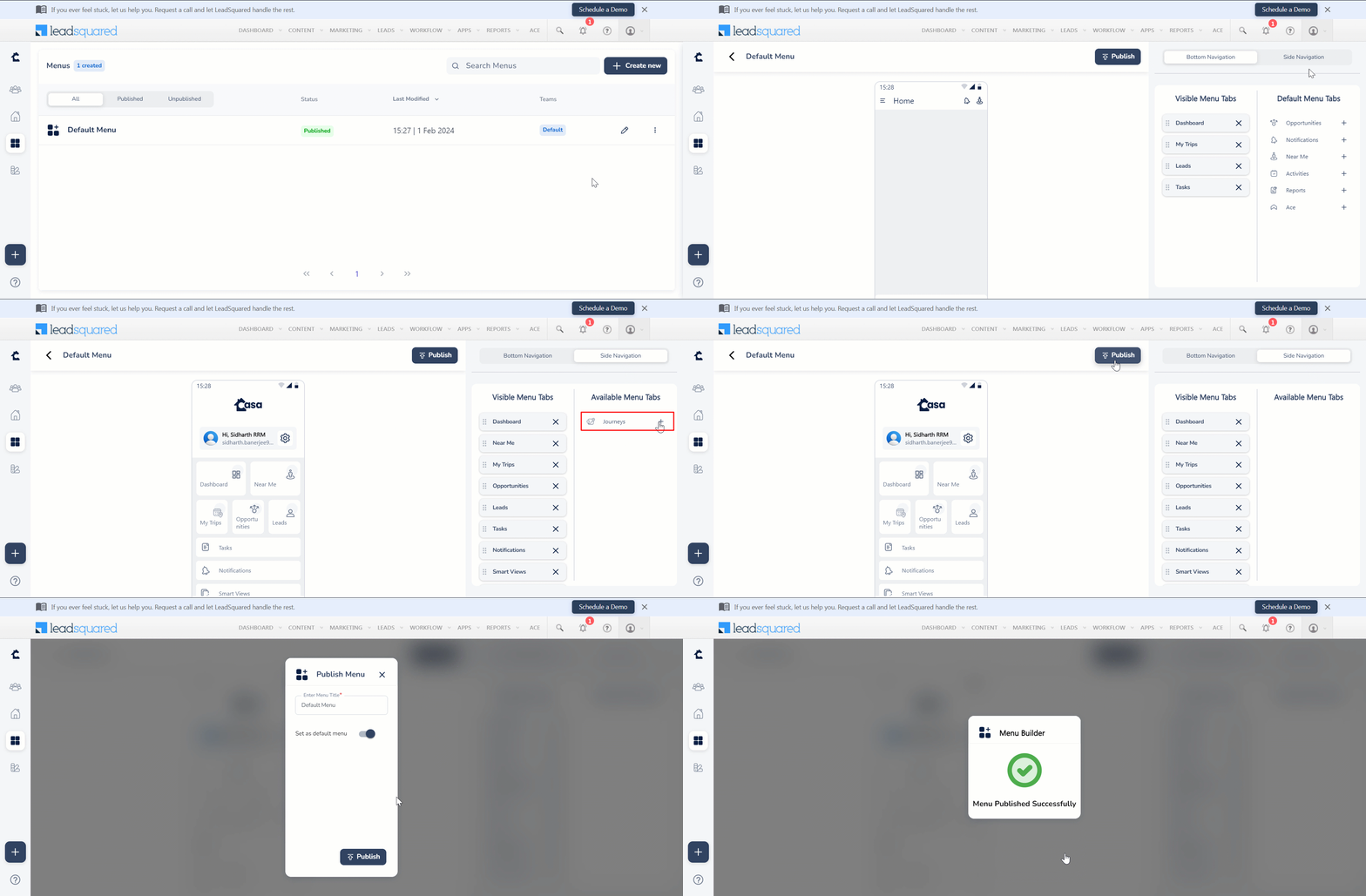
Embed Lead Capture Form in email

1. Feature Overview

This procedure shows how to embed a LeadSquared Form Widget in an email.


2. Create and Publish the Form Widget

Read this article to create and publish a LeadSquared Form Widget.


3. Embed Form Widget into an Email

  1. Copy the Form Widget’s JavaScript code.
  2. Navigate to Marketing>Email Campaigns and click on + Create Email Campaign.
  3. Add an HTML block to your Email and insert the JavaScript code into the Content Properties.

The Form Widget to capture leads is now embedded into your email.


email campaign

Email Settings – Blocked Email Address Domains

1. Feature Overview

This setting allows you to block certain domains from receiving your emails.

Note: 


2. Prerequisite

You must be the Admin of your LeadSquared account.


3. How it Works

  1. From your LeadSquared account, navigate to My Profile>Settings>Email Settings>Blocked Email Domains.
  2. Click the Block button.
  3. Under Block Domain, enter the Domain Name and Notes in the relevant fields.
  4. Once you’re done, click Save. The domain you’ve entered is blocked.

Blocked Domains in LeadSquared


Any Questions?

Did you find this article helpful? Please let us know any feedback you may have in the comments section below. We’d love to hear from you and help you out!
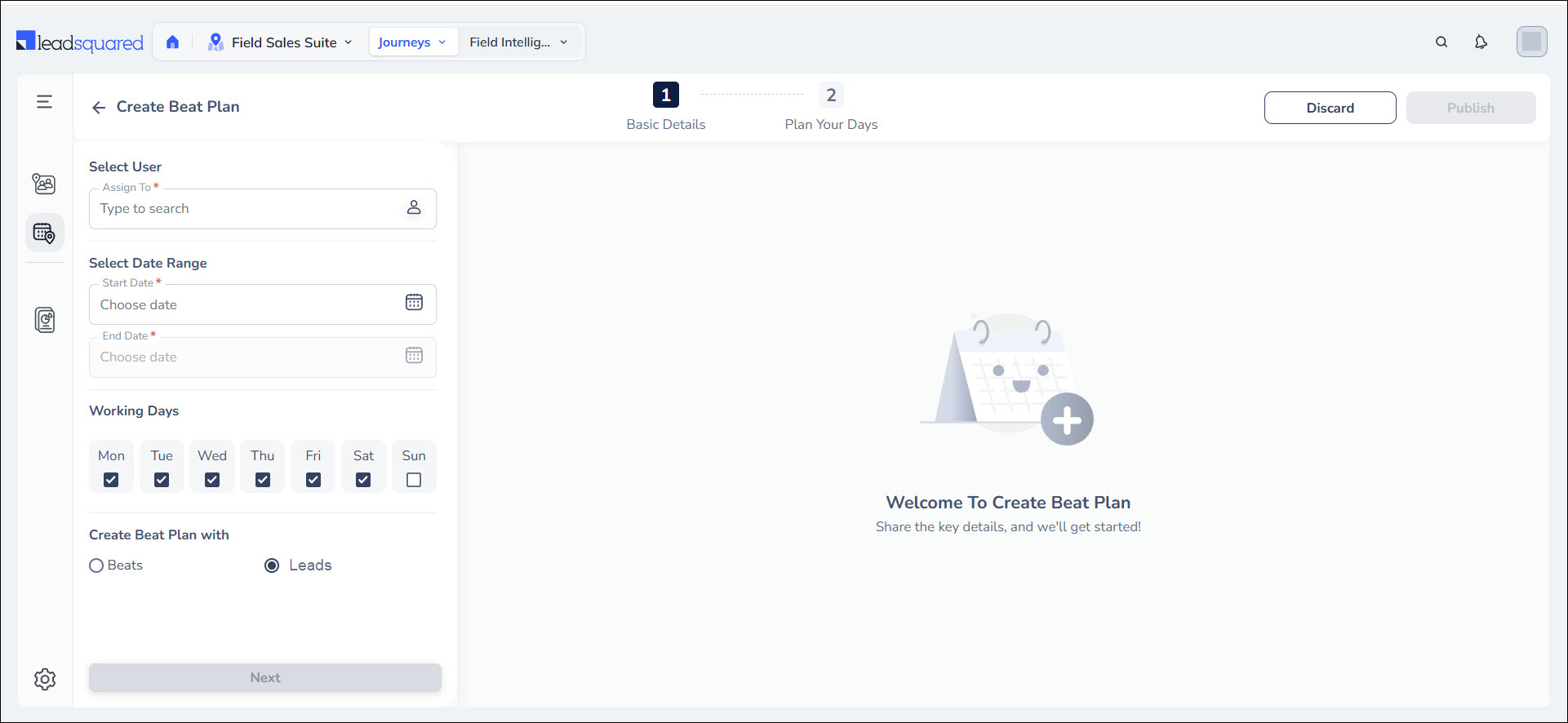
LeadSquared Generic Telephony Connector

1. Feature Overview

LeadSquared Generic Telephony Connector (LGTC) allows you to integrate any cloud telephony service with LeadSquared and it works across all regions. Your developer would need to understand the standard format of data to be posted into LeadSquared.

Note: For all new implementations, we suggest configuring LGTC as an instance within the Universal Telephony Connector. This allows you to not only integrate multiple telephony providers but also leverage powerful features like team mapping.

LeadSquared Generic Telephony Connector has the following features:

  • Capture Call logs
  • Click to Call
  • Agent Popup
  • Call Routing
  • Call Disposition
  • Single sign-on API

Follow the steps below to configure the LeadSquared Generic Telephony Connector in your account –


2. Prerequisites

  • You must be an Administrator to install and configure this connector.
  • You may require coding experience to configure the connector with your telephony provider.


3. Installation

Navigate to Apps>Apps Marketplace>Telephony, and under the LeadSquared Generic Telephony Connector, click Install 

screen1


4. Configuration

Click on Settings>Configure

screen2


Name

Enter the name of the Telephony service provider and save.

name


Virtual Numbers

Add virtual numbers and tag name one by one and save it.

virtual


Call Route

This API is used to get the lead/opportunity owner. It is setup up automatically.

  1. Copy the Call Route API URL from Call Route API tab on the popup and deploy it in your cloud telephony account.
  2. Use HTTP GET method to send the data. Please refer to the usage section to understand how to send the data.

LeadSquared Generic Telephony Connector


Agent Popup

You may enable Real-time Inbound Call Notification to the User, seen in the form of an Incoming Call Popup, whenever an inbound call from a lead (made to your virtual number) is routed to the LeadSquared User.

Note:

  • Incoming calls matching a lead’s secondary phone number will be tracked without creating a duplicate lead.
  • If you have multiple leads with the same phone number, you can pass the LeadId in the Agent Popup API. This will ensure that the correct lead details appear in the agent popup. For e.g., "LeadId": "4c70ce73-0732-4977-85a2-fb49a978b85c".
  1. Copy the Agent Popup API URL from Agent popup tab and deploy it in your cloud telephony account.
  2. Use HTTP POST method to send the data to LeadSquared in JSON format.
  3. Enable Agent Popup by selecting the checkbox.

Please refer the ‘Usage’ section to understand how to send the data.

updated agent popup api

The agent panel gives you a convenient way to manage your call center actions directly from your LeadSquared account. You can add a custom URL here, and append mail merge parameters (click the help help icon). The Use External URL option allows you to configure a custom URL to show/load the agent pop-up.


Call Log

All Inbound and Outbound calls made through your Telephony account can be logged in LeadSquared by setting up Call Logs.

After a call (incoming or outgoing) you can post the call logs to LeadSquared. This ensures that each phone interaction is logged in LeadSquared.

When your Telephony provider calls the LeadSquared API, data can be pushed into LeadSquared using POST method in JSON format.

{

"SourceNumber":"%2b919611795983",

"DestinationNumber":"%2b919611795980",

"DisplayNumber":"%2b919020897874",

"StartTime":"2015-08-20 18:26:38",

"EndTime":"2015-08-20 18:26:38",

"CallDuration":"12",

"Status":"Answered",

"CallNotes":"Enquired about product",

"ResourceURL":"server/filename.extension",

"Direction":"Inbound",

"CallSessionId":"080673309211440075398",

"CallerName":"Rakesh",

"CallerCity":"Bangalore",

"CallerState":"Karnataka",

"CallerCountry":"India",

"CallerZipCode":"560078"

}
 Property Sample Value Description Mandatory
 SourceNumber +919611795983 For Inbound Call-  Lead’s contact  number
For Outbound Call-  Caller’s Number or  Agent’s number
 Yes
DestinationNumber +919611795980 For Inbound Call-  Caller’s Number or  Agent’s number
For outbound Call-  Lead’s contact  number
Yes
DisplayNumber +919020897874 Virtual(DID) Number provided by the provider Yes
StartTime 2015-08-20 18:26:38 Start time of the call Yes
EndTime 2015-08-20 18:26:50 End time of the call Yes
CallDuration 12 Duration of call in seconds Yes
Status Answered Status of the call, can be Answered, Missed, Voicemail Yes
CallNotes Enquired about a product Additional notes about the call No
ResourceURL Server/filename.extension URL of the file with a recording of the conversation No
Direction Inbound Inbound or Outbound Yes
CallSessionId 080673309211440075398 Call Unique Identifier No
CallerName Ram Caller’s Name No
CallerCity Bangalore Caller’s City No
CallerState Karnataka Caller’s State No
CallerCountry India Caller’s Country No
CallerZipCode 5600102 Caller’s zip code No

You will find the Call Log API URL in Call Log API tab on the popup, deploy it in your cloud telephony account to log inbound and outbound phone calls.

Please refer to the usage section to understand how to send the data.

calllog

Note: CallSessionId should be unique to avoid posting duplicate call logs.

Click 2 Call

The Click2Call feature enables your sales reps/agents to place an outbound phone call just by clicking the lead’s phone number (on the Manage Leads or Lead Details pages). If you use the Opportunities feature, click 2 call can be used to call leads from the Opportunity Management and Opportunity Details pages as well.

Depending on the capabilities of your telephony provider, it can be configured using either a server-side API or a client-side script.

Server-side API

This is the default configuration option.

Your telephony provider’s Click2Call API is configured here, and you can append mail-merge parameters (like agent phone number, lead phone number, etc.) to the API URL to facilitate the calling functionality.

  1. Pass the Click2Call API in the URL textbox.
  2. You may optionally pass custom headers to the API for authentication.
  3. Select the HTTP method needed by the telephony operators Click2Call API.
  4. Map a keyword from the response of the Click2Call API. Typically we use a keyword like “success”. This lets our system know that the API request fired correctly and a response was received.
  5. Click the Enable Checkbox checkbox.

LeadSquared Telephony Features

Client-side Script

For telephony providers with JavaScript SDKs, the Click2Call functionality can be configured using a client-side script. The outbound phone call functionality will be handled by the script and the call will be initiated via the browser to the telephony provider.

  1. Enter the URL of the Javascript file, which must be hosted on the LeadSquared domain (external domains are not supported). The JS file will be published only after an internal review process.
  2. You can pass data to the script using mail-merge parameters (like agent phone number, lead phone number, etc.).

LeadSquared Telephony Integration

Note:

  • For a sample JS file template, please reach out to your account manager
  • Additionally, a flag called Is Softphone Enabled must be checked for each agent, in the user settings UI. This also disables the “Agent Panel” for the agents.

LeadSquared User Settings


Call Disposition

When the call is ended between User and client, some of the telephony providers will not free the agent to take another call unless the current call is disposed, so the call has to be disposed with appropriate values.

After integration, the user can dispose calls from LeadSquared.

For it Create a Custom dropdown field in LeadSquared (say Disposition) with Call disposition options/values.

Now when the call is ended agent can select appropriate disposition value on Call/Agent-Notification Popup and dispose the call and get ready for the new call.

  1. Deploy URL provided by your telephony service in URL field with necessary parameters.
  2. Select the HTTP method in which your telephony service accepts the data.
  3. Select the request and response details.
  4. You can initiate the following actions (and make them mandatory if required) once a call is disposed –
    • Create a task.
    • Create a custom activity.
    • Update a lead field.

LeadSquared Telephony Integrations


Single Sign-on API

This API will help you to embed LeadSquared within your telephony application.

Use Single sign-on API and use HTTP POST method to send data to LeadSquared in JSON format. And to get lead details use Lead Details API.

Please refer to the usage section to understand how to send the data.

Single


Integrate with Opportunities

You can integrate the LeadSquared Generic Telephony Connector (LGTC) connector with LeadSquared Opportunities. To know how to do this, please refer to Opportunity Integrations in Telephony.

This will enable you to track phone call interactions with your leads, for each opportunity or potential deal. Completed calls will get posted as activities, against the respective opportunities, on the Opportunity Details page.


Any Questions?

Did you find this article helpful? Please let us know any feedback you may have in the comments section below. We’d love to hear from you and help you out!
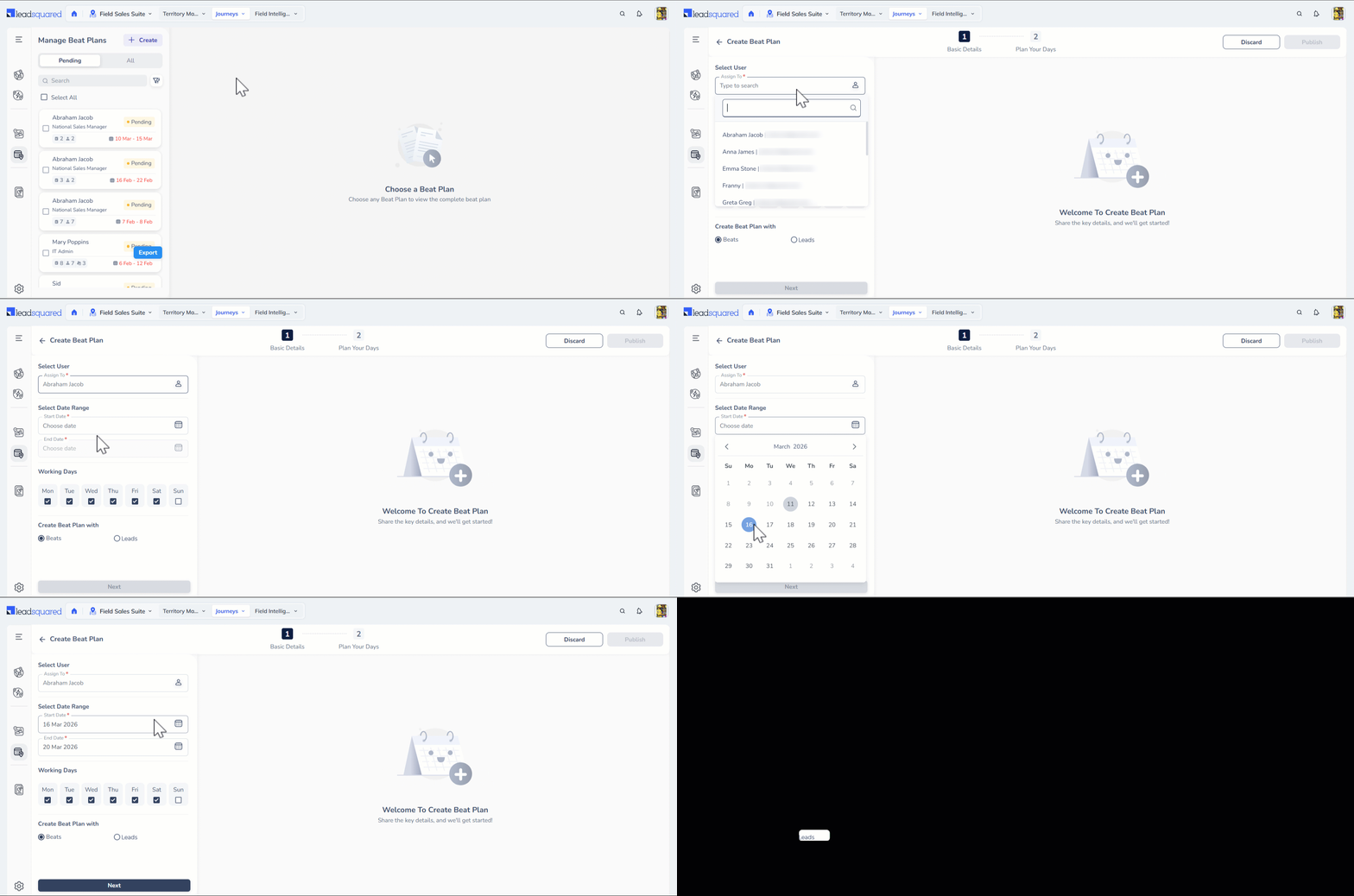
Advanced Search: Find Leads Where Activity Fields Contain/Don’t Contain Data

1. Feature Overview

You can use Advanced Search to find leads where a custom activity field either contains or does not contain data. This is useful for identifying gaps in your activity records — for example, finding all leads whose Home Visit activities are missing a scheduled date.

For a full guide to Advanced Search, see Advanced Search in LeadSquared. To learn how to create custom activities and their fields, see Custom Activities and Scores.


2. How It Works

When you create a custom activity, you can add custom fields to capture additional details about that activity. Advanced Search lets you filter leads based on whether those fields have been filled in, using the Contains Data or Does Not Contain Data conditions. You can also apply a time period to narrow the results further.


3. Search Leads by Custom Activity Field

  1. Go to Lead Management>Leads.
  2. Click + Filter, and select + Advanced Filters.
  3. Click + Add Condition, in the search criteria dropdown, select Select Lead Activity Is and choose the relevant custom activity (for example, Home Visit).
  4. Select the custom field you want to evaluate (for example, Scheduled Date).
  5. Select Contains Data or Does Not Contain Data depending on what you are looking for.
  6. Select a time period, click + Add, then click Show Results.

Advanced Search Find Leads Where Activity Fields Contain or Don’t Contain Data


Any Questions?

Did you find this article helpful? Please let us know any feedback you may have in the comments section below. We’d love to hear from you and help you out!

Email Settings – Blocked Email Address List

1. Feature Overview

If you have any leads in your system-

  • Who have unsubscribed
  • Who have invalid email addresses
  • To whom emails have bounced
  • Who have marked your emails “Spam”
  • Who your users manually check the Do Not Email field when adding or editing a lead
  • Who’s Do Not Email field was checked, when importing the lead into LeadSquared

They will show up in the Blocked Email Address List, along with the reason as to why they’ve been blocked, and a note explaining the same. There are no actions available for you to perform on this page. You can only view the list.

Note:

  • If you want to email a lead who’s part of the Blocked Email Address List, you must manually edit the lead, and uncheck the Do Not Email field.
  • To block an entire email domain from receiving emails, see Block Email Domains.
  • To opt-out all leads from receiving emails by default, and send emails only to leads that manually opt-in, see Data Protection and Privacy Settings.
  • For more details on Email Settings, see Email Settings – Feature Guide.


2. Prerequisite

You must be the Admin of your LeadSquared account.


3. Block Emails to Individual Leads

To block specific email addresses from receiving your emails –

  1. Navigate to Leads>Manage Leads and click on the relevant lead.
  2. Click Lead Details.
  3. To edit the lead details, click Icons.
  4. Alongside Do Not Email, click Azure checkbox.
  5. Click Save.
Note: You can unblock emails to the lead by following the same steps.
LeadSquared - Block Emails to Individual Leads


4. View Blocked Email Address List

To view this list, from your LeadSquared account, navigate to My Profile>Settings>Email Settings>Blocked Email Addresses.

Blocked Email Lists in LeadSquared


Any Questions?

Did you find this article helpful? Please let us know any feedback you may have in the comments section below. We’d love to hear from you and help you out!

Can I send attachments with my Email Campaigns in LeadSquared?

Yes, you can add attachments to your email campaigns. To enable this feature, contact your account manager or reach out to support@leadsquared.com.

Note:

Lead Quality Criteria – Setup

1. Feature Overview

Lead Quality Criteria lets you define rules that evaluate leads against your ideal customer profile and assign each lead a quality score between 0 and 10. This score helps you prioritize leads most likely to convert.

Rules are built around lead attributes (fields) that matter to your business. Each attribute is assigned a weightage, and value-based conditions determine the score assigned for each attribute. The final quality score is a weighted combination of all attribute scores.

To know more about leads, please refer to Lead Management – Feature Guide.


2. Prerequisites

You must be an administrator or marketing user to set up Lead Quality Criteria.


3. How It Works

  1. You select the lead fields (attributes) that indicate lead quality for your business — for example, Location, Age, or 12th Grade Results.
  2. You assign a weightage to each attribute to reflect its relative importance (for example, City at 50%, Results at 30%, Age at 20%).
  3. For each attribute, you define value rules that map specific field values or ranges to a score out of 10.
  4. LeadSquared evaluates each lead against these rules and calculates a weighted quality score between 0 and 10.

Once published, the quality score is visible on the Lead Details Page and on the Manage Leads page under Lead Quality.

Note: The first-time score calculation may take a few minutes depending on the number of leads and rules in your account.

Lead quality criteria view


4. Set Up Lead Quality Criteria

  1. Go to My Profile>Settings>Lead Prioritization>Lead Quality Criteria.
  2. Click Create, or edit an existing criteria.
  3. In the Choose Lead Quality Attributes pop-up, select the lead fields you want to use to evaluate quality.
  4. Assign a weightage to each attribute (click the save icon next to the weightage once you’re done). Equal weightage is applied by default if no changes are made.
  5. Click Define Attribute Score, then select the lead fields to which you want to assign a quality score.
  6. For each attribute, define value rules that assign a score based on the field value or range.
  7. When you are done defining rules:
    • Click Save & Publish to apply the criteria, or
    • Click Save to continue defining rules for additional attributes before publishing.

Example

For a high school, lead quality might depend on three attributes with the following weightage and rules:

Attribute Weightage Rule Score
City 50% Is “Bangalore” 10
Is any other city 5
12th Grade Results 30% 85–99% 10
75–84% 6
Below 75% 4
Age 20% 18–21 10
Over 21 4
Under 18 8

Lead quality criteria setup


Troubleshooting

Quality score not reflecting or incorrect after lead import

When leads are added manually, the quality score updates immediately. For imported leads, the score can take up to 4 hours to reflect. If the score is still not updated after that time, contact support@leadsquared.com.


Any Questions?

Did you find this article helpful? Please let us know any feedback you may have in the comments section below. We’d love to hear from you and help you out!

Database Usage of Your LeadSquared Account

1. Feature Overview

This article helps you understand your account’s database usage and how storage is distributed across different entities. Through LeadSquared’s Database Size report, you can monitor database usage to improve system performance and reduce storage costs.

Note: On the Manage Subscription page, you can view your active plan and storage limits. Use the Database Size report to keep track of your usage.


2. Prerequisites

You need to be an Admin user to access this report.


3. Database Usage

To check your Database Usage, navigate to Reports>Reports Home and search for the Database Size report.

Navigation to database usage report

This report provides a breakdown of storage usage across different entities in your account. Each entity has two key columns: the total number of records for each entity and its total storage size in Gigabytes.

Here’s a description of each entity –

Entity Name  Description
Leads This entity stores all the lead data in your account. For example, lead name, lead phone number, etc.

To free up space, consider deleting lead data you no longer require.

Leads Audit This entity stores certain changes or audits related to a lead such as Owner assign history, lead merge history, leads that were deleted, etc.

Once leads are deleted, audit data related to those leads is also deleted.

Activities and Opportunities This entity stores all the Activities and Opportunities (if enabled) data in your account. For example, opportunity details, activity details, etc.

To free up space, consider deleting activities and opportunities data you no longer require. Read the following article to delete custom activities in bulk: Bulk Export and Delete Data.

Activities and Opportunities Audit This entity stores certain changes or audits such as activities or opportunities that were deleted.

Once activities and opportunities are deleted, audit data related to them are also deleted.

Accounts This entity stores all the Account data. For example, the different account created, owners of each account, etc.

To free up space, consider deleting accounts you no longer require.

Note: The Accounts feature must be enabled for this entity.
Accounts Audit This entity stores certain changes or audits such as accounts that were deleted.

Once accounts are deleted, audit data related to them are also deleted.

Note: The Accounts feature must be enabled for this entity.
Tasks This entity stores all the Task data. For example, task types, upcoming tasks, etc.

Once tasks are deleted, audit data related to those tasks are also deleted.

Email Records This entity stores all Email Campaign data.

To free up space in this entity, consider deleting email campaigns you no longer require.

Change Logs This entity stores data related to user check-in and check-out data.
User This entity stores data related to Users. For example, user history, user permissions, user configuration, etc.

To free up space, consider deleting user data you no longer require.

Forms & Process This entity stores data related to Forms & Processes.

To free up space, consider deleting forms and processes you no longer require.

System Data This entity stores miscellaneous data that does not fall into any of the above entity categories.


Any Questions?

Did you find this article helpful? Please let us know any feedback you may have in the comments section below. We’d love to hear from you and help you out!

How to Set Web Browser Notifications for Task Reminders in your LeadSquared CRM?

This Help Article allows you to understand how to set web browser notifications for task reminders in your LeadSquared CRM. These browser notifications allows you to remind about the upcoming tasks in your LeadSquared CRM.

The task reminder notifications pop-up based on the time period you specify to remind while creating a task. Please see the below image for reference.

LeadSquared Tasks

A sample task reminder notification is shown in the image below:

LeadSquared Tasks

  • If your task is associated with a Lead, clicking the task reminder notification redirects to the corresponding Lead Details window.
  • If your task is not associated with a Lead, clicking the task reminder notification redirects to the corresponding task detail.

Prerequisite

  • You should use either Google Chrome, Mozilla Firefox or Opera as your web browser. Compatibility with other web browsers are not guaranteed.
  • Your Google Chrome browser must be of version 50 or higher
  • Your Mozilla Firefox browser must be of version 44 or higher

Procedure

How to Enable Notifications for your Web Browser?

Google Chrome

  • Log on to LeadSquared system. The default dashboard appears and also a pop requesting to show notifications appears.

LeadSquared Tasks

  • Click Allow you want the reminders to pop-up.

Mozilla Firefox

  • Log on to LeadSquared system. The default dashboard appears and also a pop up requesting to show notifications appears.

LeadSquared Tasks

  • Click Always Receive Notifications, if you want the reminders to pop-up.

How to re-enable Notifications for your Web Browser?

Google Chrome

If you want to re-enable the task reminder notifications after blocking, follow the steps below:

  • Go to your  LeadSquared system and click the Site Info from the address bar.

LeadSquared Tasks

  • Click Notifications and select Use global default (Ask). A new message appears below as highlighted in the image below:

LeadSquared Tasks

  • Click Reload. The LeadSquared window reloads and new permissions takes effect.

LeadSquared Tasks

Mozilla Firefox

If you want to re-enable the task reminder notifications after blocking, follow the steps below:

  • From your Firefox browser, go to your LeadSquared system and click the Site Info from the address bar.

LeadSquared Tasks

  • The permission is set to block in the Receive Notifications drop-down. Select Always Ask and reload the pageA pop up appears requesting to receive notifications or not.

LeadSquared Tasks

Note: Notifications do not work properly, if multiple users of your LeadSquared CRM use the same browser in the same computer.

Example: Consider if a Sales User logs onto your LeadSquared CRM. The user gets the pop-up box requesting to show the notification. The User allows it and creates a task based on his requirement.

After this, consider that an administrator logs onto your LeadSquared CRM by using the same browser in the same computer. The administrator not only does not receive a pop-up box requesting to show the notification but also receives the task reminders which was set by the Sales User. The following error message appears in the Task Grid/Lead Details Page, if you click  the task reminder.

”Task not found/Lead not found” 

This browser specific issue happens because once a LeadSquared user allows the notification using the Receive Notification pop-up box, it is stored in the browser based on the user details. If another LeadSquared user logs onto your LeadSquared CRM using the same browser, the previous user details are used and the Receive Notification pop-up box does not appear. The tasks corresponding to the previous user also appears which is not valid to you.

Implementing LeadSquared Tracking via Google Tag Manager

1. Feature Overview

Google Tag Manager (GTM) is a free application that allows you to add code snippets to your website/mobile application without having to directly access their codebase every time. GTM provides a single script to be placed in your website – once installed, custom scripts can be added as “tags” within GTM, based on various “triggers” that you’ve identified. You can use Google Tag Manager to set up tracking on your LeadSquared website.


2. Get LeadSquared Tracking Code

To get your LeadSquared website’s tracking code –

  1. From your main menu, navigate to My Profile>Settings>Lead Tracking>Tracking Script.
  2. Copy the code snippet that’s listed on this page.

LeadSquared Tracking Script

Note: If you’ve already installed LeadSquared tracking script within your website, you’d have to delete it while implementing tracking through Google Tag Manager.


3. Set Up the Tags in GTM

Within GTM, follow the following steps –

  1. Sign in to your GTM account and select the relevant container from the Accounts tab. If you haven’t yet set up your GTM Account, please refer to GTM Setup.
  2. Add a new tag and select type as Custom HTML Tag. Name the tag as “LSQ Tracking Script” and click Continue.
  3. Paste the copied code snippet from LeadSquared into the HTML field.
  4. Open up Advanced Settings and set the Tag firing priority to any value (for eg, 5). Tag firing priority ensures that a tag with higher value gets fired before tags of lower value.

After you complete the above steps, your screen should look like this –

GTM


4. Set Up Triggers

Select All Pages as the trigger. This is to ensure that the LeadSquared tracking script is present on every page of your website.

All pages


5. Finishing Up

  1. Click Create Tag and select Publish on the top right corner. GTM will now add the LeadSquared tracking script to your website.
  2. Check if the tags are fired within GTM. On the top-right menu, under Publish, select Preview. Your GTM account is now in Preview mode.

Preview mode

    • Open up your website on the same browser. The Tag manager debugger would open up and you can check if the tag you have just created have been fired.

Debugger


iii. Checking if the tracking script is installed in LeadSquared. On using GTM, the Tracking Script page will show the message, “Tracking Script has not been installed on the website.”, as the application doesn’t currently have the facility to check if it has been installed through GTM. To resolve this –

    • Right click on your website and select Inspect element.
    • Select the Console tab and type in MXCProspectId or pidTracker. If successfully installed, on clicking enter, no error would come up.
Note: This method will work depending upon the permissions provided by your website. For further support, please reach out to support@leadsquared.com.


Any Questions?

Did you find this article helpful? Please let us know any feedback you may have in the comments section below. We’d love to hear from you and help you out!

Advanced Search: Find Leads with Activities in the Last or Next N Days

1. Feature Overview

LeadSquared’s Advanced Search lets you filter leads based on whether a specific activity, or any activity, has taken place within a given number of days. This is useful when you need to act on leads based on recent engagement — for example, following up with leads who had a phone call in the last 5 days, or identifying any leads with recorded activity in the last 2 days.

This article covers activity-based searches using the Last N and Next N Days conditions. For a full guide to Advanced Search, including filtering by lead details, tasks, email activity, and landing page activity, see Advanced Search in LeadSquared.


2. How It Works

Advanced Search filters leads across two broad categories: Activity (actions a lead has performed) and Lead Details (field values on the lead record). For activity-based searches, you select the activity type and a time condition. LeadSquared then returns all leads that match the criteria from the Manage Leads page.

Two time conditions are available:

  • Last N lets you define a rolling lookback window — enter a number and choose Days or Hours (for example, “5 Days” returns leads with matching activity in the past 5 days).
  • Next N Days lets you look ahead, returning leads with activity scheduled in the upcoming N days.


3. Search Leads by Activity Using the N Condition

  1. Go to Lead Management>Leads.
  2. Click + Filter, and select + Advanced Filters.
  3. Click + Add Condition, in the search criteria dropdown, select Lead Activity.
    • To search for a specific activity type, select it from the list (for example, Phone Call or Form Submitted).
    • To search for any activity, select Is Any Activity.
  4. Set the time condition:
    • Select Last N and enter a number, then choose Days or Hours to search for activity in the past N days or hours, or
    • Select Next N Days and enter a number to search for activity scheduled in the upcoming N days.
  5. Click + Add to apply the criteria, then click Show Results.

Advanced Search Find Leads with Activities in the Last or Next N Days


Any Questions?

Did you find this article helpful? Please let us know any feedback you may have in the comments section below. We’d love to hear from you and help you out!

Why Do I See a Difference in the Number of Conversions in Adwords and LeadSquared?

Sometimes you would see different conversion numbers in LeadSquared reports and Google Adwords reports. There are several factors, that cause this. Let’s discuss the most commonly observed ones.

Before that, you need to understand how Google Adwords reporting works, because there are several “conversion” metrics there, and you might not be looking at the right ones.

It’s recommended that you read this initial section carefully as not understanding how Google tracks conversions would cause the most observed discrepancies.

So, this is how Adwords attributes conversions:

1. 

If Adwords plays a part anywhere in the conversion funnel, even if the conversion happened eventually through Organic search (or any other source), Adwords attributes the conversion to the last Adwords click.

Let’s assume the conversion path looks like this (it might seem long, but it generally happens, and it happens over several days)

Action 1: Searches for “Keyword” on Google and clicks on Ad 1 –> Doesn’t fill out the form (no conversion)

Action 2: Searches for “Keyword” on Google and clicks on an organic listing and lands on your website –> Doesn’t fill out the form (still no conversion)

Action 3: Searches for “keyword” on Google and clicks on Ad2 –> Doesn’t fill out the form

Action 4: Searches for “keyword” on Google, and clicks on another Organic listing –> Fills out a form and converts.

Here, Adwords would attribute conversion to “Ad2”, and the conversion would be counted on the date when this ad was last clicked or seen.

2. 

This happens within the conversion window set by you – maybe you have set it as 7 days (default is 30 days).

So, if the difference between the click on “Paid Search Keyword 2” and Conversion is more than 7 days, this conversion will not be attributed to Adwords at all, even if the conversion happens on the landing page associated with the Ad.

Now that you understand this, let’s discuss the two metrics that would be key to your conversion measurement. There are several other conversion metrics as well, and I would discuss them as and when the need arises in the article:

Converted Clicks and Conversions

Conversion Metric 1: Converted Clicks

This means the number of ad clicks that led to the conversions. For instance, with 1 ad click, a person may have filled out 4 forms. But Converted Clicks would show you 1 as the value here. So, it tracks unique conversions

So, ideally this is a good metric to look if you want to track unique conversions.

Conversion Metric 2: Conversions

This means the number of total conversions that happened as a result of Adwords (remember, Adwords could have played just an intermediary role in bringing about these conversions as well).

So, in the above example, where with 1 ad click, a person has filled out 4 forms. You would see”4” under the Conversions column.

So, if this is the metric you are looking at while comparing conversions, it would always be much higher than the actual “unique conversions” that you would see in LeadSquared

So, what metric do you need to check?

1. So, ideally in Adwords, “Converted Clicks” would be the metric you should see, when you are comparing Adwords reports against the number of unique leads you see in “LeadSquared landing page report”.

2. Alternatively, in LeadSquared, you can set “Campaign Source” as “Pay per Click Ads,” and “Source Campaign” as “Your Source Campaign Name” in the lead view for that particular time range in LeadSquared. (Check the image below).

LeadSquared-Advanced-Search-Report---Sources

Remember, you need to compare this against “Converted Clicks”, not “Conversions.” (This would work only if you are using a landing page with UTM parameters/tracking script in your ads).


Conversion Tracking Methods

The number you see under these two columns in Adwords – “Converted Clicks” and “Conversions” would depend on the Conversion Tracking Method you use, which in turn would depend on your actual conversion actions (are you conversions equivalent to sales – ecommerce, or are they equivalent to lead capture). You can set up different methods for your different goals, but make sure that you place the correct tracking scripts on the relevant pages.

There are two types of conversion tracking methods – “All” and “Unique.”

Choosing these settings would affect how conversions are counted in Adwords. Most of you would have created a script long ago, and might have selected an option that you might want changed now to have accurate conversion settings in both Adwords and LeadSquared. If you edit it, you’ll have to place the new script on the post-submission page one more time.

You can get to this screen by clicking on Tools –> Conversions –> Create New/Edit Old. Most of you would be using the Website Conversion option:

conversion-tracking-methods

Let’s suppose you have planned to track all conversions using one tracking script only. In that case, it would be best if you select “All” option because you can see Unique Conversions under “Converted Clicks” anyway.

So, if, through 1 click, 4 downloads happen on your website, then “Conversions” would show 4 and “Converted Clicks” would show 1.

Coming to the direct reasons for disparities now!


1. The lead gets created using a complex path, instead of a direct one. 

Direct Path: Ad Click –> Conversion on the LP associated with the ad.

Indirect Path: Ad Click –> Landing Page Visit –> Website visit –> Conversion on a landing page not associated with the ad.

Now, this is just an example of an indirect path. There can be multiple indirect paths (Adwords should be just one touch-point somewhere in the path, and the conversion is attributed to it in Adwords reports.)

Someone might click on the ad, reach the landing page for which you are looking at the report and instead of filling the form goes ahead to check out your website.

Now, this would be counted as a conversion in adwords, however, it would not show up in LeadSquared under the landing page associated with the ad.

Instead, it would show up under the landing page/form the lead eventually filled out.

So, you would not see this conversion counted in that particular landing page report, but you would see it under “Converted Clicks” in Adwords reports.


2. You may have set different time filters in LeadSquared and Adwords

This one might seem quite obvious, but it happens quite a lot. Just check whether the date range in the campaign/ad group/ad you are trying to analyze is set as “Past 30 days” if it’s set as past 30 days in the landing page report.

Time-filters---Adwords


Time-Filters---LeadSquared


3. You aren’t using a landing page exclusively for an Adwords campaign/ad group

You might be doing this by design, as it’s not really easy to create 100 landing pages if you have 100 ads running in your account. However, what you must do is use tracking scripts (UTM parameters for all these different ads/ad groups, otherwise you’ll not be able to track which lead is coming from which particular campaign.)

If this is the case you would see a higher conversion number in LeadSquared landing page report, than in the Google campaign conversion report.

So, instead of looking at the landing page report, you should look at the Lead view, and set “Pay per click ads” as the lead source, the same timeline that you are checking in Adwords, and set an Advanced filter to check “Source Campaign”  – “Whatever Campaign Name you gave while setting UTM parameters,” and then look at the number of leads.


4. View-through conversions (relevant for display campaigns)

Sometimes conversions might happen in this manner. One person sees your ad on search/display campaign, but does not click on it. Now this same person can come back and fill out a different form (from some other campaign – say Facebook or organic search) in 15 days. (I am assuming that your conversion window is greater than 15 days).

These conversions will be counted in Adwords as view-through conversions. You’ll see a huge discrepancy if you look at the View-through conversions and try to compare it against the landing page report in LeadSquared, as these conversions happen on different landing pages/forms.

See the numbers in the image below:

  1. Converted clicks = 6
  2. Conversions = 8
  3. View-through conversions = 97 (these leads would be captured in LeadSquared but would be scattered across different landing pages – remember, Adwords would make this attribution even if display ad had some role to play, and wasn’t key in the conversion.)

Viewthrough-Conversions


5. Conversion tracking code is placed in pages that aren’t actually conversion areas

Google Adwords tracking script should be placed in the post-submission page.

Sometimes people make the mistake of placing it in the landing page associated with the ad. When that happens, then every click would count as conversions thus showing a higher number in Adwords reports than in LeadSquared.

Tracking Script


6. If you have used 2 landing pages within the specified time period, but are looking at only one landing page report.

Sometimes, within an Adwords campaign, you might have created multiple ads and used multiple landing pages.

However, you might make the mistake of looking at the reports only for the landing page currently in use. When that happens, you would see a higher number of conversions in Adwords than you would see in that particular landing page report.

Say For the month of August, you used Landing Page A from 1st to 15th August in an ad. On 16th, you decided to change the landing page; to not lose the past data, you would ideally pause the current ad and make another copy of it wherein you’ll change the landing page to Landing Page B.

Total leads

Now, on 31st, when you analyze this particular Ad for the entire month of August, you might look at LeadSquared analytics only for Landing Page B, and therefore, see faulty data.

You might also make the mistake of only looking at the currently running ad data in Adwords (because by default “all enabled ads” view is in use.)

In both these cases, you would see a discrepancy in the conversions recorded by Adwords and LeadSquared. In the first case, the data in LeadSquared would appear less (as, you are not looking at the landing page that was in use before 16th August). In the second case, the conversions tracked in Adwords would be less.

Total Conversions for August in LeadSquared = Leads in (Landing Page A + Landing Page B).


7. Different time zone settings between Adwords account & LeadSquared account

LeadSquared would capture your leads immediately, and they would start showing up under the particular campaign/landing page reports.

However, if there is a difference between the time zone in Google Adwords account settings (maybe IST), and the time you have chosen to run the ads (EST – if you are targeting American audience), there would be a lag in counting the conversions, and the conversion counting would be a bit late.

Consider this if you are looking at recent conversions (say today’s or yesterday’s data)


8. Conversion delays because of Conversion windows

Generally in Adwords reporting, the conversions would be attributed to the time the impressions/clicks took place (last click before the conversion), not the actual conversions.

So, in LeadSquared landing page report, you would see a lead that converted yesterday, but in Adwords conversion reports you would see this same lead attributed to one week earlier, when the last impression/click for that particular ad had taken place.

If you look at your conversion time lag report, you’d be able to better understand what’s your general difference is between the time an ad is viewed/clicked and the actual conversion.

In the below screenshot, I can see that some conversions happen several days after the click as well, so even though in Adwords reports, these conversions would be counted against day 1 (if you look at the reports 12+ days later), however, in LeadSquared landing page reports these 7 conversions would be counted for the days when the lead capture actually takes place.

Time-Lag-in-Conversion

This might affect the historic conversion data you see in Adwords and LeadSquared as well, because the conversions are counted at different points.


9. Conversion Tracking Settings

Conversion-Type

While setting up your conversion actions, “category” is another choice that you need to make. Now, if you have chosen a wrong option while creating the conversion script, then your conversions showing up in Adwords would always be wrong. For instance, if you generate leads but have set up “View of a key page” / “Purchase/Sale” as the conversion category, you would see more number of conversions in Adwords than in Landing Page report. This is less frequent but might happen.


10. The visitors/leads have disabled cookies

The conversion tracking in Adwords would not happen if the lead has disabled cookies in his/her browser; however the lead will be captured in LeadSquared. So, you would see more leads in landing page report than in adwords conversion report.


11. Conversion tracking script was never initiated

The lead clicked on the ad, viewed a landing page, and instead of filling out that form, went to the website, and filled a web form/landing page that does not have a TY page associated with it – instead has a pop-up box.

Now, in LeadSquared this particular lead would be attributed to PPC, because that’s where it came from, but Google would not track this as a conversion, as the conversion script was never initiated for this.


12. You are trying to measure conversions for a very short timeline

You might check yesterday’s conversions in Adwords and you see 4 conversions, however in LeadSquared, you see only 2 conversions from that particular campaign, yesterday. This happens because of Google’s method of allocating conversions – the actual conversion might have happened today (therefore LeadSquared doesn’t show these leads in yesterday’s data), but Google will allocate it to the last click (which probably happened yesterday).

You can correct this easily by putting a longer time range. For instance, when we see this problem, we increase the timeline to past 7 days, and the conversions in the two reports generally match.

How can you avoid some of these problems?


1. Read the initial section of this article, and understand how conversion tracking works

2. Use Tracking URLs (UTM parameters):

It might not be possible for you to use different landing pages for different campaigns. However, what you can do is create tracking URLs for different ad groups/different ads, so that while looking the reports in LeadSquared, you can find the correct number by using Campaign Source and Campaign Name as parameters.

When you are using tracking urls, you can look at the conversions in LeadSquared by going to “Manage Leads” section, and putting the filters of “Time” – “Created on,” Lead Source as “PPC/Pay per click,” and “Advanced Filter” with “Campaign Name” “Campaign Medium” (based on whatever UTM parameters you used), and you would see a more accurate number.

So, these are a few of the reasons you would see a discrepancy in the conversion analytics in Adwords and LeadSquared. I would explain the other conversion parameters in a later post and add other reasons for discrepancies as and when I find them.

Lead Follow-up Analysis by User Report

This Report allows you to find which leads were contacted and which were not in a given time period.

Use

  • Helps to Quickly Analyse the Performance of User(s) based on the Activities they post on Leads while following up with them for business.
  • Offers the flexibility of choosing one or  multiple specific type of Activities you might wish to consider for analyzing Lead Followup by the Users at a time.
  • Provides User wise information on the number of ‘Leads owned by the User‘, ‘Leads with Activity (specified)’ and Leads Not Contacted (based on the specified Activities – considered while running report).

To access this report:

  • From the default LeadSquared dashboard, go to My Account -> Reports Home -> User Activity Reports -> Lead Follow-up Analysis by Owners. The Lead Follow-up Analysis by Owners Report window appears.

LeadSquared Reports

This report also offers the flexibility of analysis of Lead Follow-up based on the following parameters:

1. Leads Created in Date Range

You can selectively choose leads created in certain time range.

LeadSquared Reports

2. Activity Time Range

You can specify the time range to see Activities added during that time period/range.

LeadSquared Reports

3. Filter by User (s)

You can consider generating the report for One or More than one or All Users of your LeadSquared account at once to gauge performance.

You can Check all or multi-select a few Users from the Filter by Users drop-down list as required.

LeadSquared Reports

4. Lead Stages

You may select from Lead Stages to analyse lead followup status. You may do it one Stage at a time or  multi select various Lead Stages for analysis.

LeadSquared Reports

5. Activity Types

You can selectively choose the type of Activities (choose one or multi select a few) that you would wish to consider to gauge/analyse Lead Followup done by the Users.

LeadSquared Reports

Once the parameters are specified, click Run Report to generate required report.

LeadSquared Reports

Contact Form 7 to LeadSquared – LeadSquared WordPress Suite

Important: If you’re looking to integrate Contact Form 7 with your LeadSquared account after 1st January, 2023, install the new Contact Form 7 connector. The connector listed in this article does not support new installations after the specified date.

1. Feature Overview

This article shows you how to capture leads from your WordPress Contact Form7 to your Leadsquared account.


2. Prerequisites


3. Procedure

Activate Contact Form 7 to LeadSquared in LeadSquared WordPress Suite.

1

After activating Contact Form 7 to LeadSquared. Click on Contact and Add New to create new contact Form or click Edit on an existing form.

2

You will see Add New Contact Form page with default field tags.

  1. Name the Form – This name will be seen as the form title/header where the form is deployed on website.
  2. Using Form-tag Generator you would need to create/generate field code of required LeadSquared fields. (one at a time)

3


3.1 Form-tag Generator :

  1. Form-tag Generator is button that has various field (Datatype) options to choose from.
  2. Choose the options tagged with LeadSquared to integrate LeadSquared fields with the Contact Form.
  3. Select appropriate Data Type of LeadSquared to see the Fields of that datatype available in your LeadSquared account.
  4. For example: If you select LeadSquared Text all ‘Text’-type of fields in your LeadSquared account will be listed.

4


Note: Only the LeadSquared tagged fields will be mapped to your LeadSquared account.

Meaning, any field without Leadsquared tag would not capture/store lead data in your LeadSquared account.


3.2 Lead Source tracking:

Lead Source tracking can be achieved by using this shortcode [tracking] in your contact form:

Once done, Save the Form to generate Shortcode of the form that can be used in your website.

 5

Note 1: For Lead Source tracking to work, full Tracking should be enabled for your LeadSquared account.

Note 2: WordPress plugin for LeadSquared Tracking Script needs to be installed on your website.

Click here to download the plugin

Tracking Leads in LeadSquared

  1. A visitor submits his information in your WordPress website.

form-fill1

  1. The visitors details are captured in the Manage Leads page in LeadSquared.

lead-tracked

Comments to LeadSquared

1. Feature Overview

Comments to LeadSquared is one of the plugins of LeadSquared WordPress Suite. It allows you to capture leads form WordPress post’s comments.
For existing leads, it helps you to track each comment as an activity under Lead Activity History. If the comment is with a new lead, the new lead is added in LeadSquared and the comment is tracked under Activity history of that new lead.


2. Prerequisites

You should have an active LeadSquared WordPress Suite, along with Configured Security Credentials.


3. Procedure

1. After installing LeadSquared WordPress Suite, click Comments to Lead to activate it.

1i

2. Click Comments to LeadSquared which you would find under LeadSquared menu, on the left side of the screen.

2

3. It opens the Comments to Lead Configuration window where you can set up your comments form. If you would like to track each comment as an Activity, enable Track Each Comment as Activity and select an Activity type which will be added automatically when a comment is posted.

Map LeadSquared fields with default WordPress Comments fields and click Save.

3

4. As soon as you approve a visitor’s comment, a lead will be created with the comment as an Activity.

4

5. You can view the lead in your Manage Leads page.

5


Any Questions?

Did you find this article helpful? Please let us know any feedback you may have in the comments section below. We’d love to hear from you and help you out!

LeadSquared Forms in WordPress

This module allows you to use LeadSquared published forms in your WordPress account to capture leads.

Prerequisites

You have activated LeadSquared WordPress Suite.

Configured Security Credentials. Ignore if you have already configured.

You have published forms or landing pages in your LeadSquared.

Procedure

After activating LeadSquared WordPress Suite, Activate LeadSquared Form.

Forms

Click on “Forms” tab which is under LeadSquared tab.

9

Click on “Add New” button to add a new form which is already published in your LeadSquared account.

10

Enter a relevant name for the form.

Select your form from the dropdown which is displayed towards right side.

Click on “Load” to view the preview of the selected form.

Click on “Publish” to generate a code for the form.

11

After clicking publish, a code will be generated for that form.

12

Copy the code and paste in your page, post or widget to use the form.

How do I find if LeadSquared tracking script is on my website?

By installing LeadSquared tracking script on your website, you can track the lead visits on your website in your LeadSquared account. Please see this to know about Installing tracking script on your website.

How do I find if LeadSquared tracking script on my website.

On successful installation of Leadsquared tracking script on your website, you can find your tracking script as shown below.

  • Open your website
  • Right click and click on ‘ View page source ‘
  • Press ‘ CTRL+ F ‘ keys from your keyboard and search for ‘ mxradon ‘ keyword.

view page source

tracking

Note:

  • The Leadsquared tracking script is unique for each account, so your script will contain a unique id OR Leadsquared account number.
  • On finding the tracking script in your website, the unique id there in the tracking script must match with your Leadsquared account number.

You can find your Leadsquared account number as shown below.

acc no

Related resources :

To know about Deploying the tracking Script on your website
To know about I have deployed the website tracking script, but visitor visits are not being tracked. What could be the issue?

How do I configure MSG91 SMS provider with LeadSquared

It is now possible to integrate MSG91 SMS service with LeadSquared. Please follow the below procedure to configure & setup MSG91 SMS service with your Leadsquared account.

Prerequisite

You must be an Admin User of your LeadSquared Account.
You must have created an account with MSG91 SMS service
You must have MSG91 – API key.

Procedure

Step-1: To setup SMS app, navigate to Apps -> Apps Market place > and select SMS App and click on Install button.

SMS app

Step-2:  On installing the app, Click on SMS app it will be redirected to SMS connector details page, hover the mouse over Settings button to configure the appp.

configureOR, On Installing the app, you’ll spot the SMS app in Show in installed app to Configure the app.

config sms

Step-3: Configure the SMS app in the following order:

  • Select SMS account type as Global (MSG91),
  • Specify the Sender ID,
  • Specify MSG91 – API key
  • Click on Save Settings button to complete the configuration of SMS app.

SMS

On clicking Save Settings, you’ll see the confirmation message. Now, you’re set to send SMS to your leads.

Step 4: To send SMS to your leads across the world, navigate to Leads -> Manage leads -> and select the desired lead record and click Send SMS option.

Send sms
Send SMS to List of Leads
To send SMS to list of leads, navigate to Leads > Manage list > select your list > hover the mouse over Action icon and click on Send SMS.

Send sms's

It is also possible to send SMS to list of leads from list details page.

SMS to list

Step 5: Choose your SMS template and click on Send Message to send SMS to your leads.

Send sms


Once the SMS is sent you can see the log in Lead Activity History.

Lead detaisl

How to use the LiveChat connector

LeadSquared LiveChat connector enables all chat conversations and offline messages (called tickets) to be captured in LeadSquared. For existing leads, it helps you to track each chat conversation as an activity under Lead Activity History. If the conversation is with a new lead, the new lead is added in LeadSquared and the conversation is tracked under Activity history of that new lead.

Prerequisites

You should be Admin user of LeadSquared to access the connector.

Procedure

To add LiveChat Connector, follow these steps:

Browse to Apps > Apps Marketplace, select LiveChat connector and click on ‘Install’ button

Live chat

Configuring LiveChat Connector

On Installing the app, click on LiveChat connector where you will be redirected to Live chat connector details page. This is not yet ready to be used.  You need do two simple configuration steps to make it functional.

configure

OR. on installing Live chat connector click on Show installed apps tab to configure Live chat tool.

Live config

This will open up the LiveChat Connector Configuration dialog.

Source and Activity

  • If a chat conversation happens with a new lead, the Source will be set to “LiveChat” by default. You can again change this configuration.
  • Each chat conversation will be tracked as an activity in LeadSquared.  Select the activity that you want to associate with chat. If you don’t find a matching activity, create it first and then come back to the configure connector section.

Once your settings are complete, click “Save Settings”.   You will see a message on the top on config windows:

As the message suggests,  to start capturing LiveChat in LeadSquared, add the displayed URL in your LiveChat  Webhooks. Copy the displayed URL. It will be in following format:

https://livechat.leadsquared.com/Capture.aspx?OrgID=<your org id>&AccessToken=<your access token>

Login to your LiveChat account and navigate to LiveChat settings (click on the gear icon on the header) -> Integrations -> Webhooks.

You need to then add the Webhook URL that you receive on LeadSquared connector window on two events:

1. When chat ends, select all the “Data types”

2. When Ticket is created, and include the “ticket” data.

Chat End Webhook


The first one captures all chat conversations while the second one will capture all “offline” messages.

Ticket Created Webhook

Save the changes.  All LiveChat chat conversations will start getting tracked in LeadSquared:

Lead Details

Add Landing Page Hosting Domain

1. Feature Overview

The Website and Landing Page Domain settings allow you to associate your business/brand domains (and sub-domains) with your LeadSquared account. We track website visits on these domains and post them as activities against your leads. In addition, you can also host Portals and Landing Pages built with LeadSquared on sub-domains created under your main domains.

Note: To add multiple domains to your LeadSquared account, see Configuring Multiple Domains in LeadSquared.


2. Prerequisites


3. Adding Landing Page Sub-Domains

The default domain to host LeadSquared landing pages is <yourdomainname>.viewpage.co.
viewpage.co is a domain name owned by LeadSquared.

Alternatively, you can host landing pages created using LeadSquared on your own sub-domain. For example, page.yourdomainname.com 

3.1 Add a CNAME Record in Your DNS

First, add a CNAME record in the Domain Name System (DNS) server where your website is hosted (GoDaddy, Hostgator, Bluehost, etc.).
The CNAME record must point your landing page sub-domain (e.g., page.yourdomainname.com) to cloud.viewpage.co. Your service provider will have documentation available on this. Here are some docs of popular hosting providers

Note: The settings in your DNS may take up to 48 hours to reflect.

3.2 Configure the new sub-domain on LeadSquared

Once the DNS settings take effect, go to your LeadSquared account and –

  1. Add a new website domain as described in the previous section.
  2. Next, click Create to add a new domain.
  3. Under purpose, click Landing Page Hosting.
  4. From the drop-down, select the domain added in step 1.
  5. Enter the sub-domain name.
  6. Click Save.

add new landing page domain

Your landing page is now live. You’ll see a green tick green tick alongside the sub-domain.

landing page verification

You can add multiple landing page sub-domains across your primary domains. To mark a sub-domain as primary, hover your cursor over the settings  icon, then click Set as Primary.


Any Questions

If you still have questions, please leave us a comment below.

Tracking Landing Page Submission on same Page in Google Analytics and Facebook

1. Feature Overview

LeadSquared offers you to track the visitor trend on the same Landing Page by using conversion scripts. If you want to track form submissions using Google conversion script and Facebook conversion pixel code by redirecting a visitor to a Thank You page, then click here for help.

This article explains the process of tracking form submissions using Google conversion script and Facebook conversion pixel code, without redirecting a visitor to another page.


2. Prerequisites

  • Obtain the conversion script from your Google Analytics account (click here for help).
  • Obtain conversion pixel from Facebook (click here for help).
  • You must complete steps 1 and 2 of creating a landing page.


3. Procedure

3.1 Add Google Conversion Script to a Landing Page

  1. In Step 4 of the Landing Page builder scroll down the Embed JavaScript section. Paste the Google Conversion Script in Inside Head tab.
  2. Replace the nine digit value in ‘conversion_id’ with your Id in below-mentioned script.
  3. Replace the value in ‘conversion label’ with your conversion label value and click Next to proceed.

Download Google Conversion Script

Tracking Landing Page Submission on same Page 1


3.2 Add Facebook Conversion Pixel to a Landing Page

  1. In Step 4 of the Landing Page builder scroll down the Embed JavaScript section. Paste below mentioned Facebook Conversion Pixel in the Inside Head tab.
  2. Replace the nine digit value in ‘conversion_id’ with your Id in below-mentioned script.
  3. Replace the value in ‘conversion value’ with your conversion label value
  4. Replace the variable in ‘conversion currency’ with your currency value and click on Next to proceed .

Download Facebook Conversion Pixel

Tracking Landing Page Submission on same Page 2

References https://developers.facebook.com/docs/ads-for-websites/conversion-pixel-code-migration


Any Questions?

Did you find this article helpful? Please let us know any feedback you may have in the comments section below. We’d love to hear from you and help you out!

Change Email Id of LeadSquared User

1. Feature Overview

Admin users can update the email Id (or user Id) of existing users. This helps when –

  • You want to replace an old LeadSquared User with a new one.
  • You want to display a different email Id for users when they send emails to leads. For example, rather than sending emails from bob@mycompany.com, you want to display support@mycompany.com.

Note – This is a restricted feature. If you want to enable it for your account, please contact support@leadsquared.com


2. Procedure

How to change the email Id –

  1. Navigate to My Account>Settings>Users and Permissions>Users.
  2. In the Users list, under the Action column, hover over the wheel icon alongside the user whose email Id you want to change, then click Edit.
  3. On the Edit User pop-up, in the top section, click the pencil icon alongside the user’s email Id.
  4. Type in the new email Id then click the tick icon. You’ll get a prompt saying User updated successfully. You can now close the pop-up.

Changing User Email Id

Note – Once the email id of the user is udated, an automated email to set the password for the user’s account will be sent to the new email Id. The user can set a new password and access the account.


Any Questions?

Did you find this article helpful? Please let us know any feedback you may have in the comments section below. We’d love to hear from you and help you out!

User Roles and Access Rights

You can control access to different features and data by associating roles to users. When a new LeadSquared account is created, the first user automatically assumes the Administrator role. Admins have access to all features based on your account plan.


Manage Users

Administrators can see the roles of existing users, navigate to My Profile> Settings>Users and Permissions>Users:

admin user access


Roles and Permissions

To assign user roles, refer to Manage Users. There are 4 user roles to choose from –

User Role Access Rights
Sales User
  • Can access only the Leads assigned (where the user is the Lead Owner)
  • Cannot access Marketing Functions like Email Campaigns, Landing Pages, Autoresponders, Automation
  • Sales Users can be associated in groups, to know details about creating and managing groups please refer Manage Groups
Sales Manager
  • Can access ALL leads (leads assigned to any user)
  • Cannot access Marketing Functions like Email Campaigns, Landing Pages, Autoresponders, Automation
  • Limited access to Settings
Marketing User
  • Can access ALL leads (leads assigned to any user)
  • Can access all Marketing Functions
  • Limited access to Settings (more than Sales Manager but less than Administrator).
Administrator
  • Complete access to everything
Super Administrator
  • Can apply permission templates to restrict access given to administrator users
  • Can set administrator users as super admins

You can also control permissions at a more granular level using permission templates. For more information, see How to control lead export and lead delete permissions for users? 


Any Questions?

If you have any questions related to user roles and access right, please let us know in the comment. We’ll be happy to help.

Tag Your Leads

Important:

  • For customers onboarded after 17th January 2023, the Lead Tag Manager feature will not be available.
  • For customers onboarded before the said date, if the feature was not enabled on your account before 17th January 2023, the feature is no longer available for you.

1. Feature Overview

Once you’ve created Lead Tags on your account, assign these tags to your leads. When tags are assigned to multiple leads, enter the lead tag in the Quick Search bar to identify all the leads that share a common tag.

Note: When you use the Quick Search bar, if the lead tag contains more than one word (e.g., New York City), put the tag name in quotes like “New York City”.

Lead Tags


2. How it Works

You can tag leads as follows:

  • Tag a lead from the Manage Leads page.
  • Tag multiple leads at once from the Manage Leads page.
  • Tag a lead from the Lead Details page.

Tag can be a word or a phrase of words. The maximum number of characters allowed per tag (tag length) is 50.


3. Tagging from the Manage Leads Page

You can tag one lead at a time or multiple leads from the lead details page –


3.1 Tagging One Lead at a Time

  1. Under the Actions column, hover your cursor over the settings Settings icon icon corresponding to the lead you wish to tag,
  2. Click Add Tag from the list of actions.

Add tag to a lead

On the Tags pop-up,

  1. You’ll be able to add tags by selecting from the available tag options.
  2. If you have permission to add new tags, you can key in the new tag name and press Enter.

121 tag popp


3.2 Tagging Multiple Leads at Once

  1. Select one or multiple leads by selecting the checkbox alongside the Lead Name.
  2. Click the Tags button to add tags to the selected leads.

Tags-in-Manage-leads

On the Tags pop-up,

  1. You can add tags by selecting from the available tag options.
  2. If you have permission to add new tags, you can key in the new tag name and press Enter.

Tags in ML popup

Leads with tags can be identified with the golden/yellow tag icon seen next to the leads on the Manage Leads page.

Manage-Leads-tag-icon

To see or edit the tags of a lead, click on the Tag icon. You’ll see a pop-up where you can add more tags or delete the existing tags as required.


4. Tagging Leads from the Lead Details Page

You can also tag a lead from the Lead Details page. You’ll see Tags section a little below the Vcard to the left of the page, click the Add a tag link to select from the available tag options.

Lead details Tags

You can also add new tags and press the Enter key to add a tag to the lead.

Lead details tags 2

All the tags attributed to the lead can be seen in the Tags section.


5. Searching for Tags with Quick Search

You can search for tagged leads using Quick Search.

  • If the Tag has a single word, use it directly in the quick search bar.
  • If the tag is a phrase comprising of two or more words, use double quotes while searching the leads. E.g., “Web Services”.

Search-Tags


Any Questions?

For any queries, feel free to leave us a comment below.

Capturing UTM Parameters

LeadSquared allows capturing value of UTM Parameters from URLs where the underlying page is a LeadSquared Landing Page. It can be a full landing page or one having just landing page ‘Form’ of LeadSquared.

If you are new to concept of UTM parameters, please check this article.

A typical URL with UTM parameters will be like:

http://pages.myleadsquared.com/Parallax-Example1?utm_source=PPC&utm_medium=adwords&utm_campaign=Apr2014&utm_content=none&utm_term=Landing%20Page&utm_device=mobile&utm_network=airtel

This URL contains following parameters:

  1. utm_source:  The values in this is captured in “Lead Source” field of Lead record in LeadSquared
  2. utm_medium: The values in this is captured in “Source Medium” field of Lead record in LeadSquared
  3. utm_campaign: The values in this is captured in “Source Campaign” field of Lead record in LeadSquared
  4. utm_content: The values in this is captured in “Source Content” field of Lead record in LeadSquared
  5. utm_term: The value of this field will be captured in lead field shows schema name is mx_utm_term.
  6. utm_device: The value of this field will be captured in lead field shows schema name is mx_utm_device.
  7. utm_network: The value of this field will be captured in lead field shows schema name is mx_utm_network.

For the first 4 parameters (utm_source, utm_medium, utm_campaign, utm_content) are capture by LeadSquared automatically in the corresponding system created lead fields (Lead Source, Source Medium, Source Campaign, Source Content).

To capture other, you should create corresponding Custom Fields yourself.

  • the custom field must have the same name as url field
  • the custom field name must start with “utm”  (or UTM or Utm — case does not matter)
  • it can be with or without underscore (“_”)
  • it is not case sensitive

For example, the custom field for utm_term URL parameter can be “UTM Term” or “Utm_Term” or “utm_Term” etc.

A custom field has two names “Display Name” and “Schema Name”.  The schema name for custom fields with Display Name “My Custom Field” will me “mx_My_Custom_Field”.  “mx_” is a prefix that indicated it’s a custom field and then the display names are combined using underscores.

For custom utm parameters, LeadSquared looks for match between URL parameter name and schema name of the field.

Schema Name

For example, for a URL parameter “utm_network”, LeadSquared will look for field having schema name as “mx_utm_network” (matching is not case sensitive).

Once you have created custom fields, you can build/update URL accordingly. An example:

http://pages.myleadsquared.com/Parallax-Example1?utm_source=PPC&utm_medium=adwords&utm_campaign=Apr2014&utm_content=none&utm_term=Landing%20Page&utm_device=mobile&utm_network=airtel

Submission on such URL will result in lead record similar to:

utm captured data

Why are UTM parameters not being captured in LeadSquared?

Ensure you’ve configured UTM parameters on your website and correctly installed the LeadSquared Tracking Script. If the issue still persists it may be because your web tracking license limits are exhausted –

  1. Navigate to Settings>Profile>Billing and Usage.
  2. Under Website Tracking, check the Max Web Events and Web Event Tracking sections. If you’re limits are exhausted, you need to purchase more licenses.
Note: UTM parameters are not captured on a visitor’s first visit to the website. The LeadSquared tracking script captures UTM parameters only when a lead is identified (e.g., via form submission or tracked event). If a user visits the site for the first time without filling out a form, their UTM parameters will not be stored.

LeadSquared Billing and Usage

Can I update system fields for UTM parameters (e.g., Source, Campaign, Medium) through Landing Pages?

No, system fields for UTM parameters cannot be updated through Landing Pages. However, you can capture UTM values by creating custom fields and mapping them accordingly.

Quick Search

1. Feature Overview

The Quick Search feature allows you to search for leads from the Manage Leads page using text-based queries. You can find leads by entering full words, partial words, multiple keywords, excluded terms, or exact phrases in the search box.

Quick Search supports multiple search formats to help retrieve leads based on names, email addresses, locations, company names, or other lead field values. This makes it easier to locate specific leads without manually applying filters or scanning through lead lists.


2. Prerequisite


3. Quick Search

To perform a quick search, you can click Search on the Manage Leads page.

leads quick search


4. Full Word Search

If you enter a full word in the search box (e.g., a city, first name, etc), the Manage Leads page will display all the leads that have the word as one of their values.

For example, if you enter “Sharma” in the search box, you will receive all the leads that have the word “Sharma” in any of their lead details.


5. Partial Word Search

Format: *

You can search for leads in your account with partial words by adding and asterisk (*) after the word. Your page will display all the leads associated with that partial word.

For example, if you enter Mich*, you will receive leads with Michael, Michelle, Michigan, etc as values in the lead details.

Note:

  • The asterisk (*) must be entered after the word. If not, no results will be displayed.
  • This feature is not supported for ESS tenants.


6. Multiple Word Search

Format: ++

You can search for leads using a combination of words by adding a plus sign (+) before each word.

For example, if you want to find John from California, you must enter +John +California in the search box.

Note:

  • You can use his method to search for a full name since it is the combination of First Name and Last Name.
  • If you try searching for a combination of words without using the given format, your page will display all the leads with either of the values entered. E.g., if you search for John Walters, you will get different leads with the name, John or Walters as one of their values.


7. Filter Leads

Format: +

You can filter out leads by entering a combination of words with a minus sign () before the word you don’t require in the lead field.

For example, if you want to find a lead with the name Sharma who is not in Mumbai, you can search for +Sharma -Mumbai.


8. String Search

Format: “”

You can search for a specific string of words by enclosing it in double quotes.

For example, if you want to find a lead working at Apple Inc., you should search for “Apple Inc.“.


9. Troubleshooting

1. I’m searching the lead’s ‘Secondary Email Address’ field but I’m unable to correctly retrieve the lead.

Since the ‘Secondary Email Address’ is a text type field (String), enclose your search within double quotes. For example “johndoe@example.com”.


Any Questions?

Did you find this article helpful? Please let us know any feedback you may have in the comments section below. We’d love to hear from you and help you out!

Add a Conversion Button to Your Landing Page

You can use a Conversion Button directly on a landing page besides the conventional way of using it in a form. The purpose of this would be to redirect the user to your company’s website, or to allow the user to download any document, or may be even to encourage users to try out your company’s product or service.

Procedure:

To Add a Conversion Button or Call To Action(CTA) button in your LeadSquared Landing Page:

If you are using Responsive Template/Designer follow these steps:

1. In Step 2 of creating a Landing Page:

a) Select the Section on the page/canvas where you want to add a CTA button.

b) Click on CTA Block from the Tool bar to add it to the required Section.

CTA in Responsive designer

2. To customize the CTA button double click on it or click on the block to see the block settings icon appear on top right corner of the block. Hover the cursor on the block settings to see list of options & click on Edit option.

Edit CTA block

CTA Block Designer opens.

3. Select one of the available Templates.  You can edit/customize the Text and Button here by double clicking on each element separately. 
RESP CTA TEMPLATE

4. Double click on the Text-element to see HTML Editor where you can create nice headline for the button. Save the headline once it is ready.

HTML Editor for CTA headline

5. Double click the Button to see Button Designer.

a) In Button Properties panel you can Name it and customize the Text on it, provide a hyperlink and set the Target window for the redirect web page on button click.

Button Designer edited
b) In Button Style panel you can customize the look and feel of the button. You can play with the options for designing the Button and the Text on it to get a desired CTA button on the landing page.

Click Save once the button is customized.

button style
6. You can also customize CTA Block using the block properties panel on the right of the Landing page Designer.

CTA Block properties

For help with the customizing the block properties and a complete understanding of the responsive editor/designer refer to Building Responsive Landing Pages

Building Responsive Landing Pages using LeadSquared.   (Downloadable PDF guide)

Slideshow on building responsive landing pages.  (Slideshare slideshow) 

Add a responsive slider content in Landing pages

You can now add a responsive slider with images or text in LeadSquared responsive landing pages.
Note that you have hosted the images and have the URL of it. Please contact support team if you need any assistance with the image URLs.

Prerequisites:

• You have logged in to LeadSquared.
• You have uploaded the images used for slider and have the URL ready.
• All the images used for slider are in same dimensions.
• You are using Responsive landing page editor to perform this operation.

Procedure:

• Choose Responsive landing page template/blank template.

• Add a HTML block on the top of the landing page where you need the slider.

• Double click the block to open the editor, click on  Source-in-landing-pages 2 to go to the HTML source view of the html block.

Download below attached code and paste it there.

• Customize the code by replacing sample image URLs with your image URLs.

• Add your desired captions at the sample caption text. (You can remove it, if not required)

• Click ‘Save’ after all the changes are done.

Below is the illustration of code:

Responsive slider

Click here to download the code.

The image indicators should be added in landing page Style Editor.
• Click on ‘styleeditorStyle Editor’ and select ‘StyleSheet 2’
• Add these two codes at the bottom of the existing code.

• Use below code to add color codes for indicators:
.carousel-indicators .active { background-color : red;}.carousel-indicators li { background-color : green; } 

• Use below code to add position of indicators:
.carousel { position:relative;}.carousel-indicators { bottom: -40px; }

• Click ‘Save’ and publish the landing page.

Note:
1. First item’s Class tag and List (li) tag should be marked Active
Eg:- ” {class=”item active”} and {li class=”active”} “;
2. The Width of the image is set as 100% in the above code and it can be changed based on your requirement
Eg: max-width:640px
3. You can also add captions to the images by replacing text in ‘Add your desired caption’ in the attached code.

Get Sitemap of Landing Pages

You should get sitemap of your landing pages in LeadSquared and submit it in your Google Webmaster account to make the pages indexable & searchable.

Click here to know about Google Webmaster 

By informing Google Webmaster  about your landing pages, your pages will start being indexed by Google and they may gradually start appearing in search results on relevant keywords.

Prerequisites:

  1. Your LeadSquared landing page domain setting is done and complete. Check: How to Publish Landing Pages within your Domain Name? 
  2. You have Admin or Marketing User role in LeadSquared
  3. There should be at least one published landing page in your account

Steps to generate the sitemap for landing pages

Step 1: Navigate to Marketing  -> Landing Pages and publish at least one landing page. If you already have published pages, just un-publish and republish at least one.  Note: This step is required since publishing a page only triggers fresh generation of sitemap file.

Step 2: Select “Access Sitemap”:

Access Sitemap

If you see any error, check the “Common Errors while Generating Sitemap” section in this article.

Step 3: If sitemap file generation is successful, XML file will open up in a new browser tab. It shows the sitemap.xml file for your landing page sub-domain.  In the screenshot shown below landing page sub-domain is http://pages.myleadsquared.com and sitemap URL is http://pages.myleadsquared.com/sitemap.xml .

SitemapXML

Step 4: Now login to your Google Webmaster account and add your landing page sub-domain as a site.  The example below shows adding pages.myleadsquared.com as a site.

Add Site

Add Site popup

Step 5: Submit the sitemap file. You just need to  type “sitemap.xml” in the textbox.

submit sitemap

Step 6:  Test the sitemap file and make sure there are no errors.

Test Sitemap

The sitemap is successfully submitted.

Common Errors while Generating Sitemap

You encounter one of the following errors if your landing pages are not published recently or cName setting is not done properly.

1)  404- File or Directory Not found:   Unpublish and republish at least one landing page to get rid of this error.

Server Error - Landing Page needs to be republished

2)  404- Not found:   This happens when cName setting is updated in LeadSquared but the cName record in DNS does not exist. Please check your DNS and make sure that the cName associated with landing page sub-domain is up to date. Please check: How to Publish Landing Pages within your Domain Name? 

cName setting is not working

3) The specified key does not exist: If you see an XML message with heading starting as “This XML file does not appear…”, it means the LeadSquared Landing Page domain setting is not done. Please check: How to Publish Landing Pages within your Domain Name?  to complete this setting.

cName Setting not done

How to pre-populate Landing Page Form fields?

You can auto-populate or show pre-populated Form fields in Landing Pages when a lead clicks the URL links you provide in Email Campaigns or one to one emails to leads.

This can be achieved by adding additional parameters to the Landing Page URL while drafting or composing an email in LeadSquared. URLs with additional parameters are often termed as Dynamic URLs.

When a lead clicks on the URL links in the email, the lead details will appear in the Form fields without leads having to type-in their details.

Procedure:

1. The basic URL of your landing page will be of the form:

http://subdomain.yourdomain.com/Landing-page-Name. Lets call it Base URL of the Landing page.

For example http://pages.likeleadsquared.com/Test-Landing-Page.

2. To the base URL add parameters using Mail-Merge fields available in Email Personalization section in the Email Composer, while drafting the email.

Email with Dynamic URL

Dynamic URL:

Dynamic URL enlarged view

3. Understanding Additional Parameters added to the URL:

A dynamic URL can be built using  5 blocks/elements. They are:

a. Base URL – The URL of the Landing Page itself          b.  ? (A Question Mark)         

c. Schema Name of the Field          d. = (Is eqauls to)         e. & (Ampersand)

Here is an example of a dynamic URL with one additional parameter added.

http://pages.likeleadsquared.com/Test-Landing-Page?FirstName=@{Lead:FirstName,}


4.
In the above URL you can see ” ?  after the landing page name and ” FirstName=@{Lead:FirstName,} ” following it.

FirstName is the Schema name of leads first name field.

And @{Lead:FirstName,} is its mail merge field added using Email Personalization section.

5.  The Schema Name can simply be taken right from the Mail Merge field itself. Explained below.

Mail merge field @{Lead:FirstName,} : Here “Lead” specifies that it is a Lead field and “FirstName” is the Schema Name of Lead’s First Name field.

6. Quick steps to build a URL with additional parameters:

    A. Add Base URL in the email body.

http://pages.likeleadsquared.com/Test-Landing-Page

     B. After base URL place a question Mark ‘?’

http://pages.likeleadsquared.com/Test-Landing-Page?

    C. Insert/add mail-merge field of required Lead Field next to ? using Email Personalization section.

http://pages.likeleadsquared.com/Test-Landing-Page?@{Lead:FirstName,}

    D. Take the Schema Name from the Mail merge field and insert Schema Name= in between ? and @ in the above URL.

http://pages.likeleadsquared.com/Test-Landing-Page?FirstName=@{Lead:FirstName,}

    E. To add another parameter, place & (Ampersand) next to the first parameter and add SchemaName=Mailmerge field of the required Lead Field as shown below:

http://pages.likeleadsquared.com/Test-Landing-Page?FirstName=@{Lead:FirstName,}&EmailAddress=@{Lead:EmailAddress,}

Similarly you can add more lead field parameters to the URL in the same pattern.

For Example:

http://pages.likeleadsquared.com/Test-Landing-Page?FirstName=@{Lead:FirstName,}&EmailAddress
=@{Lead:EmailAddress,}&Phone=@{Lead:Phone,}&mx_City=@{Lead:mx_City,}

7. Once the URL is ready hyperlink it with itself in the email to make it clickable.

hyperlink Dynamic URL
Hyperlink Dynamic URL to make it clickable

The links in the email you send will now be clickabel and will pre populate the lead details in the form fields.
(Provided the lead details corresponding to the lead/leads are available in your LeadSquared Account)

What happens when a Lead receives an email:

The system replaces the mail-merge fields in the email by the actual lead data of respective leads receiving the emails.

Here is how the url link appears in the email:

received email

A click on the link leads to the landing page with pre-filled lead fields.

prefilled lead fields

In case there is no data in any of the fields for a lead, the field will be shown blank.

Capturing Leads from Website forms

You can capture Leads from your website in LeadSquared. There are three common ways of doing it:

  1. You can create and embed an LSQ Form Widget on your web page or landing page
  2. For WordPress sites:  Use LeadSquared’s Contact  Form 7 Plugin
  3. Use LeadSquared API to capture Leads

Embed LeadSquared Form Widget on your website

An LSQ Form Widget acts as a “lead magnet”. An example of a lead magnet is a special deal offered to customers in exchange for their contact details. It can be a discount code, webinar, white paper, ebook, template, inquiry form, or another resource.

With LeadSquared, you can create and embed an LSQ Form Widget on your web page or landing page and start capturing leads in minutes.

For WordPress sites:  Use LeadSquared’s Contact 7 Plugin

Other than Form Widgets, If you have a site built on WordPress, you can also use Contact Form 7 to capture Leads. Leads from Contact Form 7 can be captured in LeadSquared using our plugin for it.

Check this help article to use the plugin

Use LeadSquared API to capture Leads

If you don’t want to make any changes to your website and still want to capture leads in LeadSquared, you may use our APIs.

LeadSquared supports REST APIs, and we accept and return JSON data.

Step 1:  Get Access Key and Secret key of an Admin user of LeadSquared

Step 2: Get  lead meta data  using GET call on https://api.leadsquared.com/v2/LeadManagement.svc/LeadsMetaData.Get?accessKey=<accessKey>&secretKey=<secretKey>

Replace <accessKey> and <secretKey> with the value you got in Step 1.  Check the SchemaName of the fields from the data that you get. SchemaName is the internal name of the field that you will use in all your Lead API calls.

Step 3: Prepare data that needs to be posted as JSON. An example is given below.

[ { "Attribute": "EmailAddress", "Value": "john.smith@acmeconsulting.co" }, { "Attribute": "FirstName", "Value": " John" }, { "Attribute": "LastName", "Value": " Smith" } ]

Step 4: POST the data on –

https://api.leadsquared.com/v2/LeadManagement.svc/Lead.Create?accessKey=<accessKey>&secretKey=<secretKey>

Here are help articles on using APIs:

  1. API Overview
  2. Lead Management API
  3. Sample Code

‘Star’ your Leads

1. Feature Overview

The Star feature allows you to mark important leads from the Manage Leads page for quick access later.

When you star a lead, it is automatically added to the Starred Leads List, available under the Manage Lists page.

This feature helps you temporarily group and track leads without modifying lead data or creating manual lists. The Starred Leads List is automatically maintained based on your actions.


2. Use Case

You can use the Star feature to manage leads that require focused attention.

For example:

  • Star leads that require follow-up.
  • Access them collectively from the Starred Leads List.
  • After completing the required action, un-star the lead to remove it from the list.

This allows you to maintain a dynamic working list without creating additional manual filters or static lists


3. How to Star Your Leads

  • Select one or more leads on the Manage Leads page.
  • Click the Star option to mark them.
  • Starred leads are automatically added to the Starred Leads List.
    • Navigate to Lead Management>Lists>Starred Leads.
  • If you un-star a lead, it is automatically removed from the list.
  • The list updates in real time based on your actions.

You can star individual leads or multiple leads in bulk.

Note:

  • User-Specific Setting:
    Starring a lead is personal to the logged-in user. If you star a lead, it will appear as starred only in your account. Other users will not see the lead marked as starred in their login, even if they have access to the same lead.
  • Automatic List Management:
    The Starred Leads List is system-generated. You cannot manually add or remove leads from this list except by starring or un-starring them from the Manage Leads page.
  • No Impact on Lead Data:
    Starring a lead does not modify any lead fields or properties. It functions only as a visual and organizational marker.

how to star leads


Any Questions?

Did you find this article helpful? Please let us know any feedback you may have in the comments section below. We’d love to hear from you and help you out!

LeadSquared Reports

1. Feature Overview

You can use the LeadSquared Reports feature to analyze your marketing and sales business processes. It helps you track and manage the activities performed by the lead and your users, across all LeadSquared features. The reports available to you will depend on your user role and the permissions enabled by your Administrator.


2. Reports

To view all your LeadSquared Reports, follow these steps –

  1. Navigate to Reports>Reports Home.
  2. Click All Reports.
  3. Scroll through the list to find your report, or use the search bar.

Navigate to LeadSquared Reports

2.1 Pinned Reports

You can pin reports by clicking the LeadSqaured Pin report iconicon. Pinned reports will appear in the Pinned Reports section.

Leadsquared pinned reports

2.2 Report Tags

Additionally, you can organize and find your Reports through Tags. Reports can be tagged and re-tagged by Administrators –

  1. Click on the leadsquared reports 3 dot icon icon.
  2. Select Edit Tag(s).
  3. Select your tag(s).
  4. Click Save.

Leadsquared report tags


3. Save Reports and Schedule Delivery

You can save or bookmark a report and schedule its delivery at a later time –

  1. Navigate to Reports>Reports Home and select the required report.
  2. On the top right side of your window, click LeadSquared - Bookmark report.
  3. Enter the name of the bookmark and click Save.
  4. To view your saved reports, click .
  5. To schedule your report’s delivery, click .
  6. Enter the relevant details and click Create Schedule.

Save and schedule leadsquared reports


4. SIERA Reporting

LeadSquared SIERA is a new-gen reporting module that empowers users to generate custom reports and dashboards. If SIERA is enabled in your account, the listing page will comprise two sections: Reports and Dashboards. Additionally, you will have access to the Create Report and Create Dashboard modules within their respective sections. Reports created using SIERA will have a SIERA tag on the report card.

Siera

Moreover, the Report Builder in SIERA features the Expression Builder module, enabling users to create custom formulas for building reports.

expression builder nav

Note: This is a paid feature, to enable it contact support@leadsquared.com. Read the following articles for more details on SIERA Report Builder –


5. Report Management

LeadSquared’s Report Management is aimed to help admins configure appropriate reports for their users. Each team/group/individual has their respective requirements, goals, and KPIs to track.

report management hierarchy

With LeadSquared Report Profiles you can manage report and dashboard access for your users. Using Profiles, you will be able to design the report listing page for all your users. While some reports may be common and may be available to all users, certain reports can be configured to be accessed by a select few. 

Report Management my space 1


Any Questions?

Did you find this article helpful? Please let us know any feedback you may have in the comments section below. We’d love to hear from you and help you out!